


Project Description
KONTORHAUS DISTRICT


Key Facts at a Glance
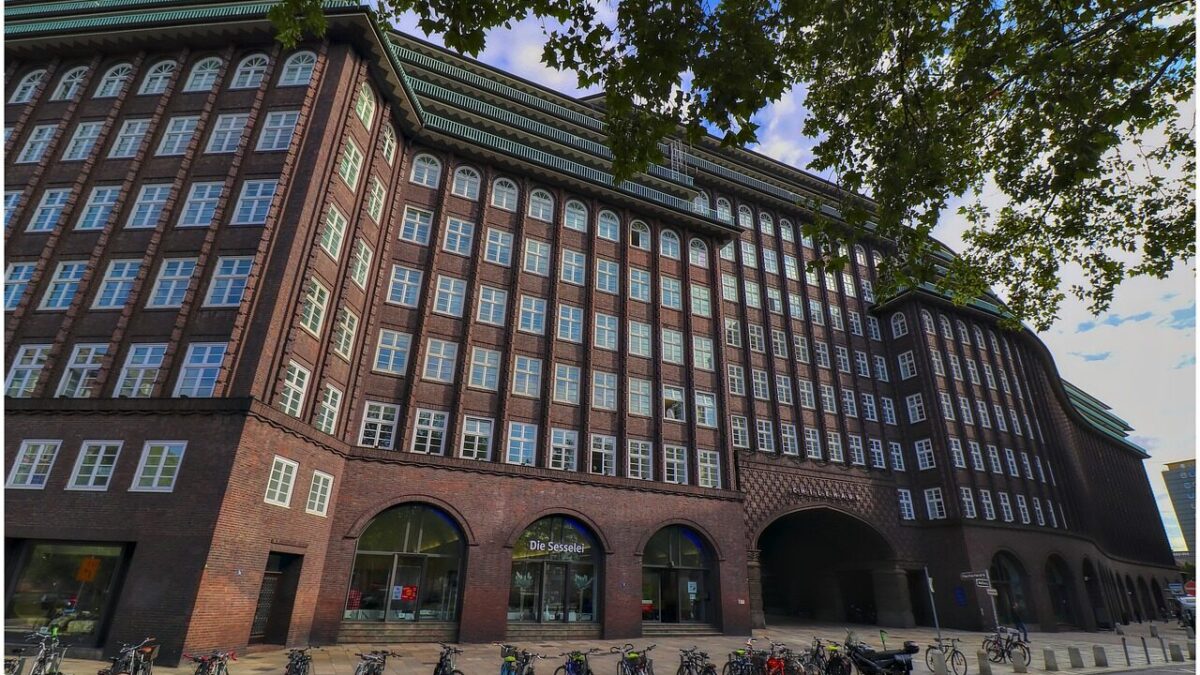
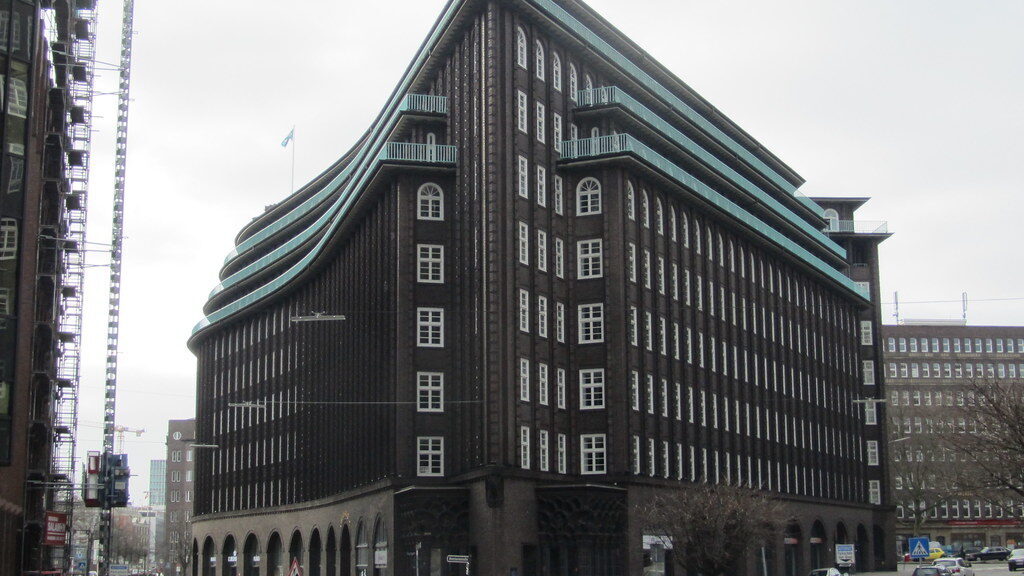
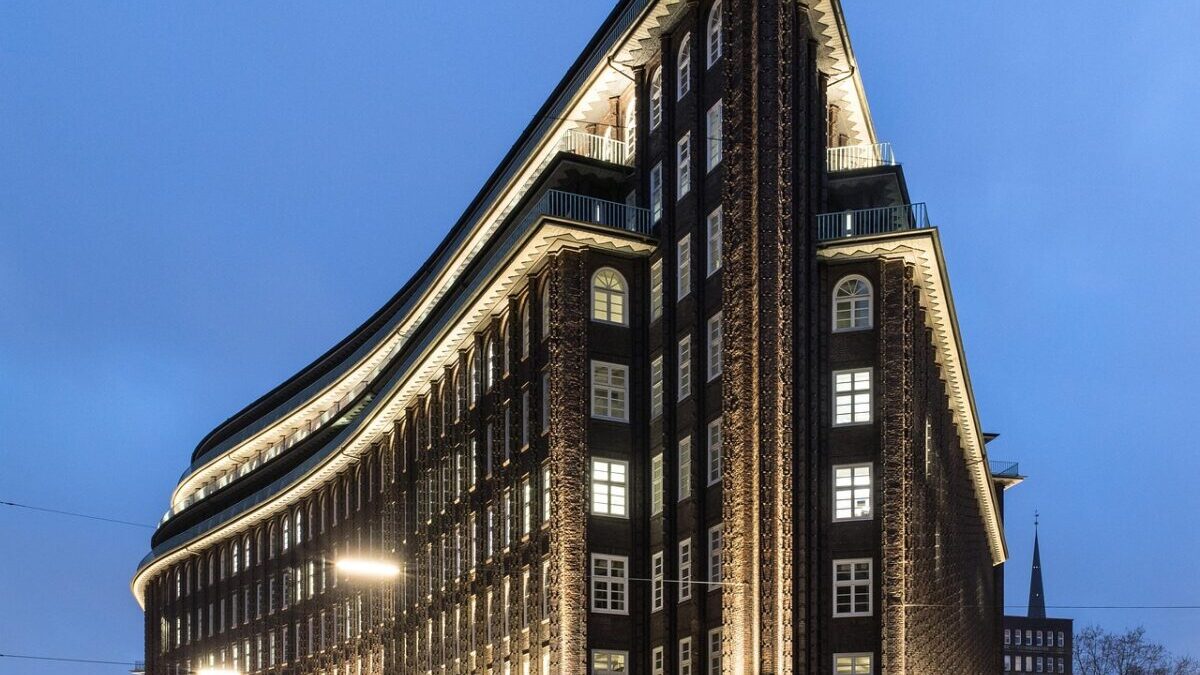
Hamburg’s Kontorhaus District is a historic commercial quarter in the southeastern part of the Old Town, constructed between the 1920s and 1950s as a district dedicated exclusively to office buildings (*Kontorhäuser*). It stands as an outstanding testament to the history of modern urban development and the architectural movement known as Brick Expressionism. In 2015, the district—along with the adjacent Speicherstadt (Warehouse District)—was designated a UNESCO World Heritage Site. It is particularly renowned for iconic structures such as the ship-bow-shaped Chilehaus, the Meßberghof, and the Sprinkenhof, all of which are considered masterpieces of modern functional architecture.
Historical Background and Development
Until the end of the 19th century, the area now occupied by the Kontorhaus District consisted of a dense, labyrinthine network of narrow alleys—a neighborhood with poor living conditions that posed significant health risks. Following a devastating cholera epidemic in 1892 and the rapid economic expansion of the Port of Hamburg, the city authorities initiated a radical urban redevelopment project.
Under the direction of chief architect Fritz Schumacher, a vision emerged in the 1920s for a modern, functional district designed exclusively for the booming trade sector, shipping companies, and commercial offices—a novelty in European urban planning, as it marked one of the first instances where residential and professional spaces were strictly separated. Consequently, the district remains virtually uninhabited at night, while serving as the administrative heart of global trade during the day.
Architectural Style: Brick Expressionism
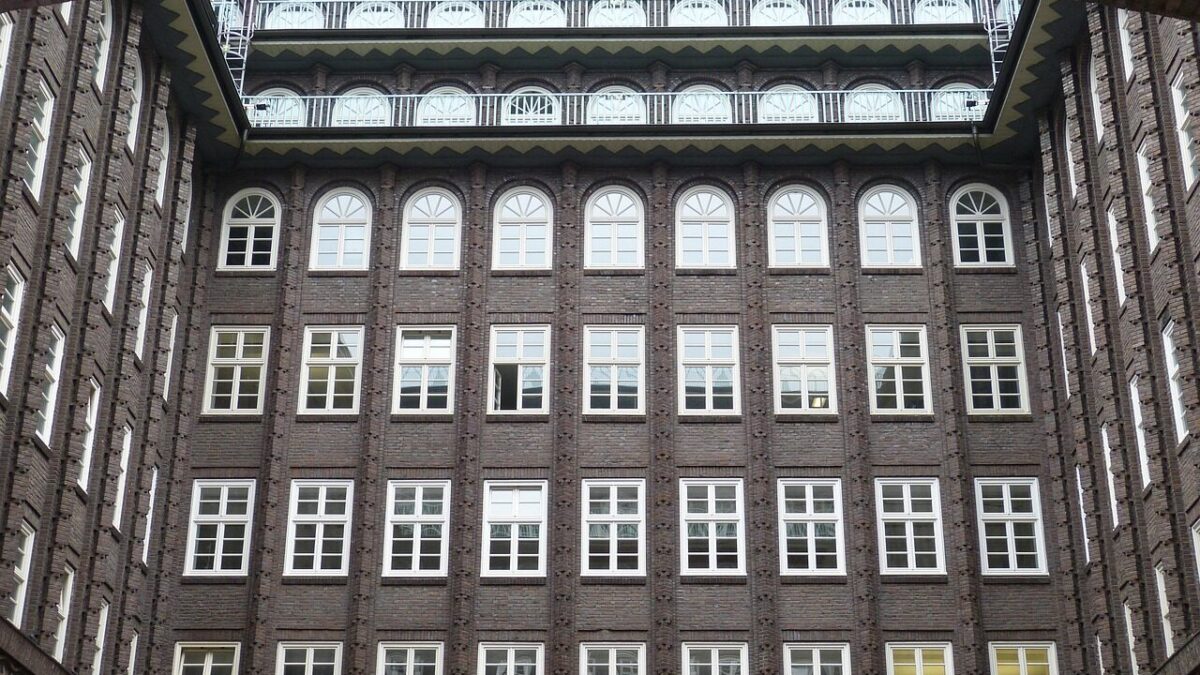
In terms of its built environment, the Kontorhausviertel serves as an exceptional example of the Brick Expressionism (*Klinkerexpressionismus*) that characterized the Weimar Republic. Since Hamburg lacks any significant natural stone resources, dark-fired clinker brick became the ideal material: weather-resistant, robust, and aesthetically versatile.
- Renowned architects such as Fritz Höger, the brothers Hans and Oskar Gerson, and Rudolf Klophaus utilized steel-reinforced concrete skeleton construction.
- Despite their massive scale, the buildings appear surprisingly light, thanks to delicate facade articulation, artistic brick patterns, expressionistic architectural sculpture (often created by sculptors such as Richard Kuöhl), and recessed upper stories.
The district’s most defining buildings
- The Chilehaus: The undisputed landmark and architectural masterpiece of the district, it was built between 1922 and 1924 based on designs by Fritz Höger and commissioned by the shipping magnate Henry B. Sloman (who had made his fortune in the Chilean saltpeter trade). Its most striking feature is the sharp, pointed eastern facade facing Fischertwiete—reminiscent of a ship’s bow—which made the building world-famous. With its ten stories and sweeping, curved lines, it stands as one of the most spectacular examples of architectural Expressionism.
- The Meßberghof (originally the Ballinhaus): Also constructed between 1922 and 1924 by the Gerson brothers, this building is notable for its elegantly curved, convex street-facing facade and represents one of Hamburg’s earliest experiments with high-rise architecture.
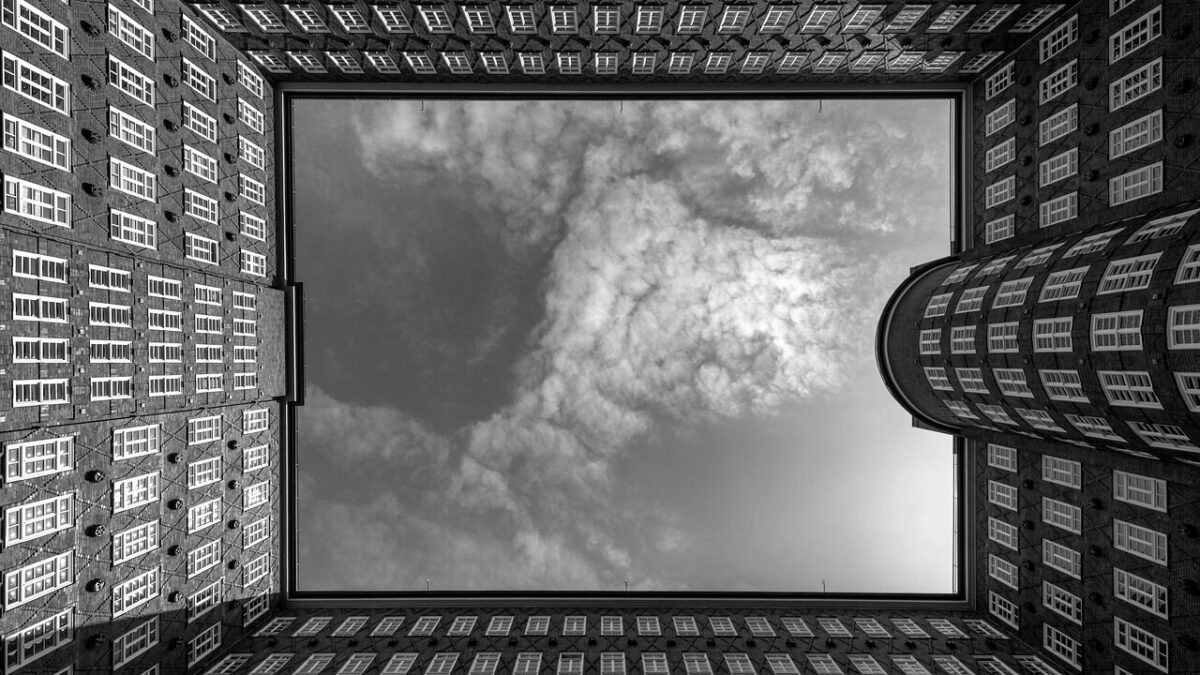
- The Sprinkenhof: Built in several phases between 1927 and 1943 by Fritz Höger and the brothers Hans and Oskar Gerson.
At the time, it was the largest office complex in Hamburg and is distinguished by a grid-like façade adorned with decorative brickwork, reminiscent of the structure of a punched card.
- The Mohlenhof: A more understated yet architecturally highly elegant office building (*Kontorhaus*) (1927–1928)—designed by the firm Klophaus, Schoch und zu Putlitz—which survived the Second World War almost unscathed and features a striking sculpture of Hermes at its main entrance.
Contemporary Significance and UNESCO Status
Unlike many other areas in Hamburg’s city center, the Kontorhaus District survived the Second World War relatively well. To this day, the majority of these buildings are used primarily as office space by agencies, law firms, and government authorities.
In July 2015, the district—together with the adjacent *Speicherstadt* (warehouse district)—was inscribed on the UNESCO World Heritage List. UNESCO’s justification highlights how these ensembles uniquely and cohesively reflect Hamburg’s rapid rise in international trade around 1900, as well as the architectural innovations of the modern era. A stroll through Burchardplatz and the surrounding streets still conveys the impressive flair of the “Golden Twenties” in a major European global trading metropolis.
unavailable
none
free




The Kontorhaus District is centrally located in Hamburg’s Old Town (Altstadt) and is easily accessible by both car and public transport.
By Public Transport:
- U-Bahn (Subway): The U1 line stops right at the edge of the district at the Meßberg station. Alternatively, the Steinstraße U-Bahn station (also on the U1 line) is just a few minutes’ walk away. The Rathaus and Jungfernstieg stations are also within a short walking distance.
- S-Bahn (Urban Rail): The Hauptbahnhof (Central Station) and Landungsbrücken/Stadthausbrücke stations are within reach—though they may require a slightly longer walk or a short detour—with the U-Bahn generally offering closer access.
- Bus: Bus line 111 serves stops in the immediate vicinity (such as Spitalerstraße or the area around Meßberg).
By Car:
- Route: The Kontorhaus District is highly accessible by car via major arterial roads, such as Willy-Brandt-Straße / Ludwig-Erhard-Straße (B4/B5), which border the district to the north.
- Parking: As this is a historic office and commercial district, on-street parking is typically in high demand and subject to fees. However, there are several multi-story and underground parking garages in the immediate vicinity, such as the facility near the Speicherstadt or those located around Burchardplatz and the Chilehaus.

