


Project Description
AUSSENALSTER


Key Highlights
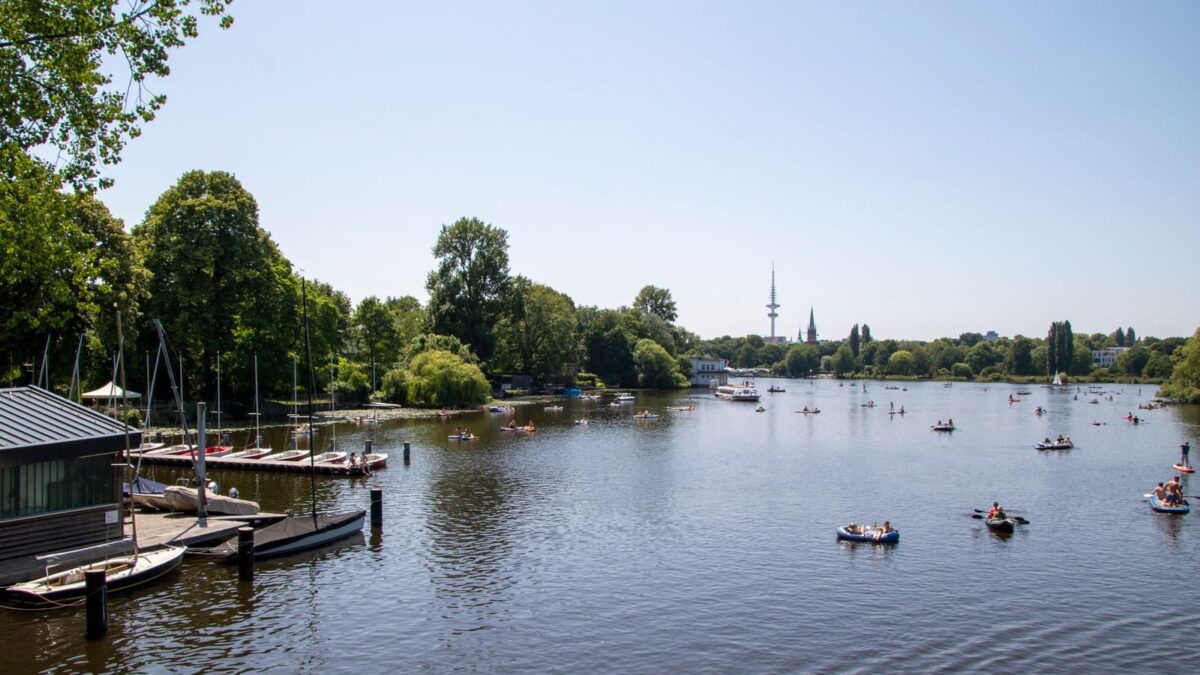
The Outer Alster (Außenalster) is the “blue heart” of Hamburg and one of the city’s most distinctive natural and recreational oases. Spanning approximately 164 hectares, this larger, northern section of the dammed Alster lake offers a striking contrast to the surrounding urban metropolis. Framed by expansive parks, tree-lined avenues, and neighborhoods filled with magnificent villas, it uniquely blends opportunities for relaxation and sport with the quintessential Hanseatic way of life.
Origins and Geographical Setting
Historically, the Alster basin was created starting in 1235, when the Alster River was dammed to power mills. Today, the division between the smaller Inner Alster (Binnenalster) to the south and the vast Outer Alster is marked by the Kennedy and Lombard Bridges (Kennedybrücke and Lombardsbrücke).
The Outer Alster borders some of Hamburg’s most upscale and verdant districts, including Harvestehude, Rotherbaum, Winterhude, Uhlenhorst, and St. Georg. Its shoreline is defined by historic architecture, mature, shade-giving trees, and exclusive residential addresses—all of which contribute to the area’s sophisticated atmosphere.
A Haven for Water Sports
The water is a hive of activity throughout the year. The Outer Alster is considered one of Germany’s most popular inner-city destinations for sailing and water sports.
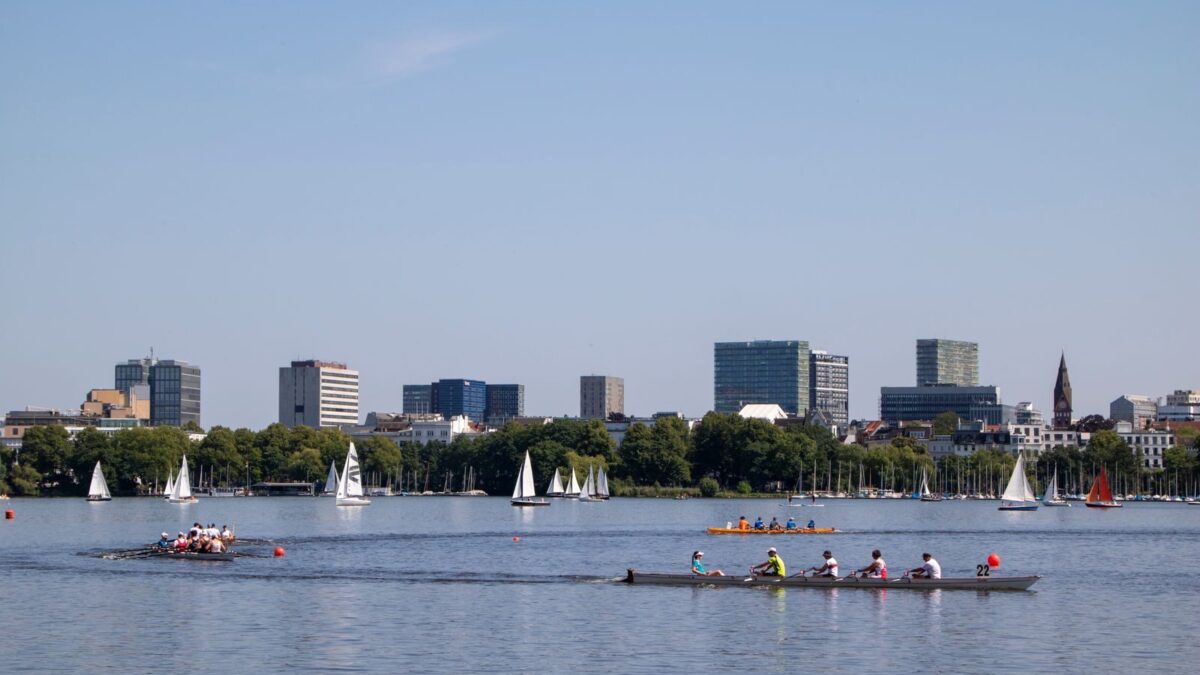
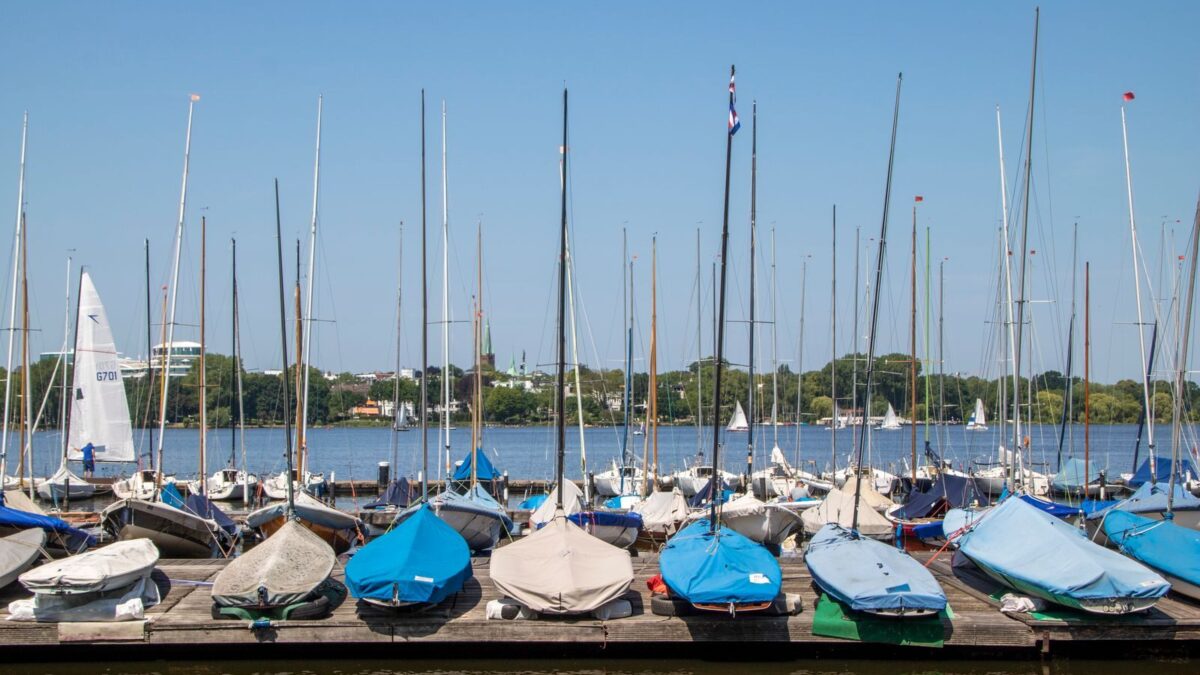
- Sailing & Rowing: The area is home to numerous long-established sailing and boating clubs. When the wind is right, the lake is dotted with hundreds of sailboats.
- Paddling & Modern Trends: In addition to traditional rowboats, the waters are frequented by stand-up paddleboarders (SUP), kayakers, and those in pedal boats.
Boat rental stations located directly on the shore make water sports accessible to everyone.
The Alster Circular Path: A Route for Runners and Strollers
The famous lakeside path, which encircles the entire Outer Alster (Außenalster), measures exactly 7.4 kilometers in length.
- For Athletes and Pedestrians: The route is flat, accessible throughout, and marked with half-kilometer stones. Every day, it attracts thousands of joggers, walkers, cyclists, and dog owners.
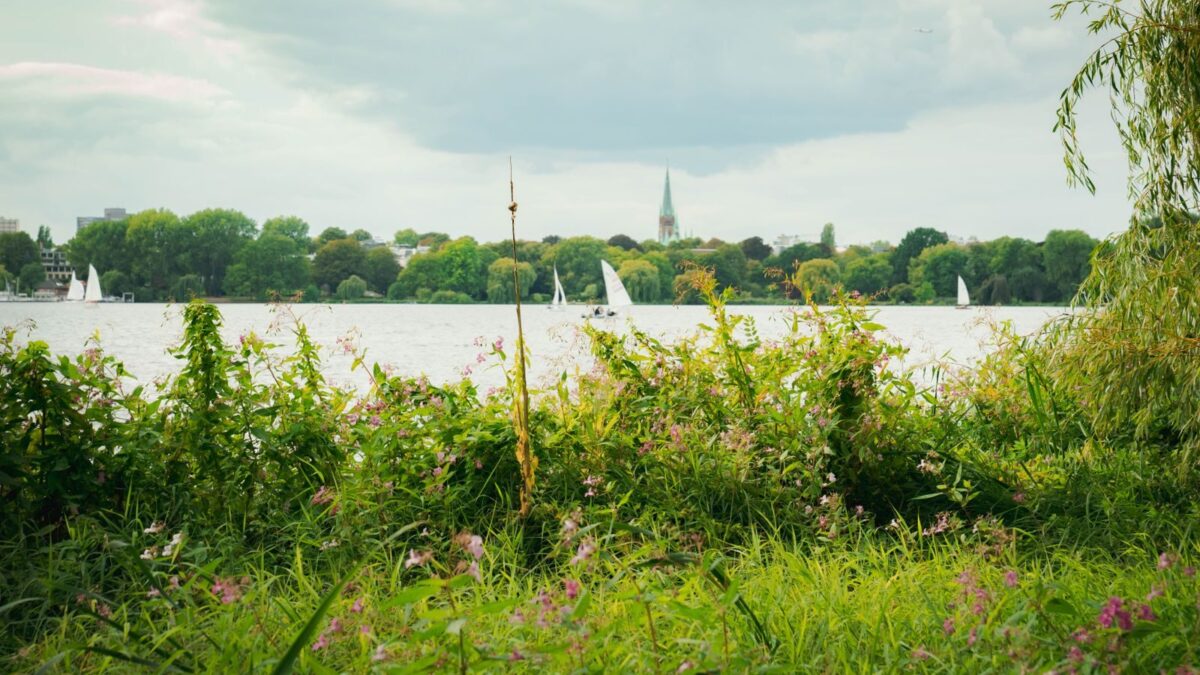
- Atmosphere and Highlights: Along the path, one finds a succession of well-maintained green spaces—such as the Alsterpark and the Alster meadows (for instance, at Schwanenwik)—as well as idyllic inlets (like the Feenteich). The iconic white Hamburg park chairs are scattered throughout, inviting visitors to linger and take in the surroundings.
- Views: The eastern shore, in particular, offers a spectacular view of the Hamburg city center skyline—a popular subject for photography, especially at sunset.
Significance for Quality of Life
The Outer Alster is far more than just a lake; it is a central landmark that defines Hamburg’s identity. It serves as a perfect example of how urban metropolitan life and nature-oriented recreation can seamlessly intertwine. Whether for an energetic morning workout, a relaxing stroll through the greenery, or a picnic while watching the sunset, the Outer Alster embodies the high quality of life in this Hanseatic city like few other places can.
unavailable
none
free




By Public Transport:
-
- U-Bahn (Subway): Lines U1 (with stops such as Hallerstraße or Lohmühlenstraße), U2, and U3 (e.g., Mundsburg or Uhlandstraße) all bring you close to the water. Depending on which bank you wish to reach, stations around the Binnenalster (such as Jungfernstieg) are also good options.
- S-Bahn (Urban Rail): The Dammtor (S11, S2, S5) and Hauptbahnhof (Central Station) stops are excellent starting points for a short walk to the water.
- Bus: Numerous bus routes—including high-frequency services like the “City-Bus” line 19—stop at various points along the Alster, such as Schwanenwik or Kennedybrücke.
By Car:
-
- Getting There: The lakeshore is easily accessible by car via major arterial roads (such as Kennedybrücke/Lombardsbrücke, which separate the two sections of the lake, or the “Ring 1” orbital road).
- Parking: Parking spaces directly along the shore are scarce and in high demand. It is advisable to use nearby parking garages (for example, in the Rotherbaum or Harvestehude districts, or near the city center/Dammtor). Furthermore, many street sections around the Alster require payment via parking meters.

