


Project Description
HERBERTSTRASSE


Key Facts at a Glance
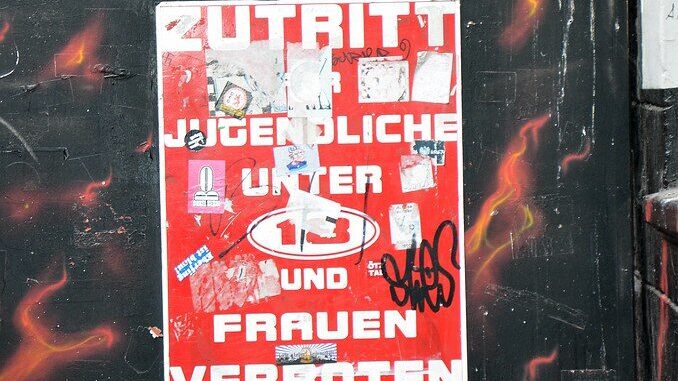
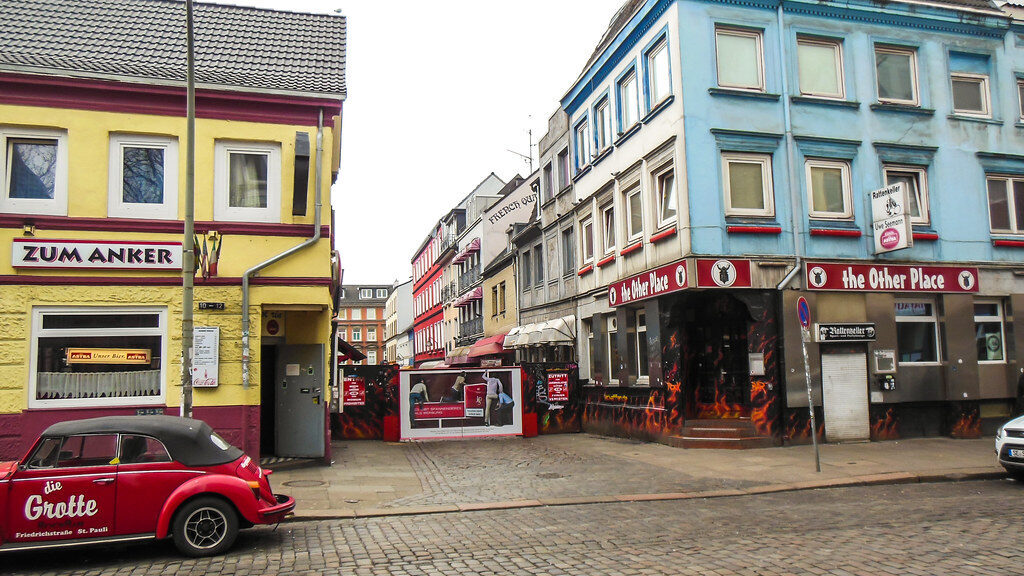
Herbertstraße in Hamburg’s St. Pauli district is arguably the most famous and mysterious side street off the Reeperbahn. It serves as the historic hub of Hamburg’s red-light district and remains the only street in Germany subject to strict access restrictions: iron gates at both ends block the view, and women and minors are traditionally prohibited from entering. Behind the colorful display windows, sex workers present themselves in a setting deeply rooted in the local traditions of the Kiez (the neighborhood).
Historical Origins and Name
The history of the street dates back a long way. It received its name in 1895—derived either from an old Hamburg bourgeois family or a local field name (though the exact origin remains somewhat obscure in the annals of St. Pauli).
By the late 19th and early 20th centuries, the area surrounding Hamburg’s harbor and the Kiez had become a magnet for the maritime industry, leading to a massive expansion of prostitution. In 1922, the Hamburg municipal administration of the time—influenced by contemporary moral reform movements—decided to concentrate prostitution within specific streets, selecting Herbertstraße for this purpose. The street was physically sealed off to keep the “respectable public” and young people away.
The Iron Gates and Access Restrictions
The most striking features of Herbertstraße are the two gates located at the corners of Davidstraße and Hans-Albers-Platz.
- The Regulation: Officially, Herbertstraße is a standard public street. However, since the city of Hamburg tolerated prostitution there and established a legal framework for it, local residents and brothel operators took the initiative in the 1930s to install privacy screens and gates.
- Who is allowed inside? Traditionally, only adult men are permitted to enter. Women and individuals under the age of 18 are not allowed on the street. Security personnel (monitors) are often stationed at the gates to control access.
- The rationale: Historically, this arrangement was justified as a protective measure for women (against harassment) and minors. Today, however, it is viewed by many as anachronistic and controversial, occupying a legal gray area—though the status quo has been maintained out of tradition and to protect the privacy of the women working there.
Architecture and Interior
Crossing the barrier means entering an entirely different world:
- Display windows: On both sides of the narrow, alley-like street, there are small rooms with large glass panes (window prostitution). Behind them, women sit and offer their services.
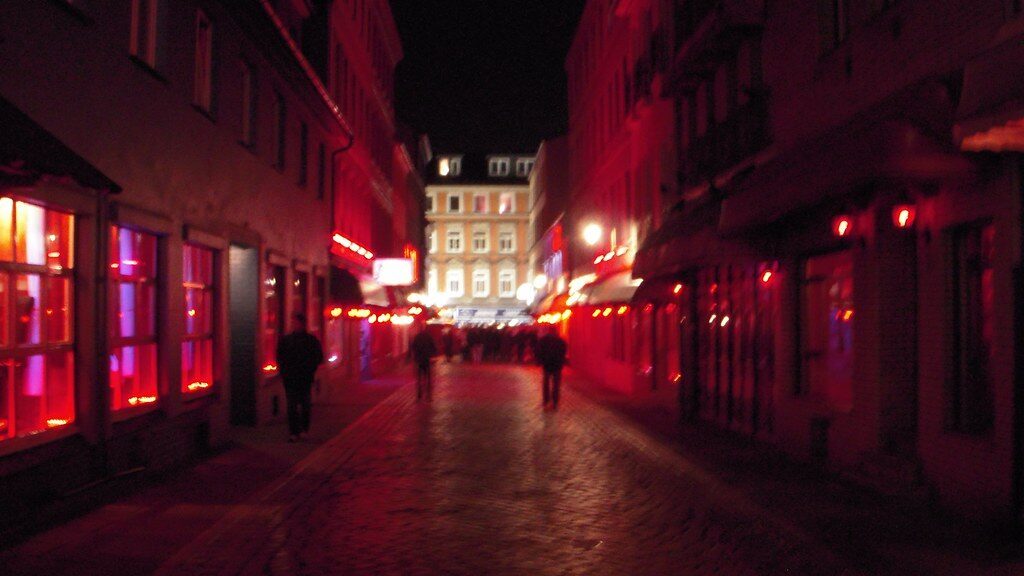
- Atmosphere: The facades are typically brightly colored but dimly lit, often featuring the characteristic red neon glow. There is a unique, almost surreal silence here, in stark contrast to the noisy bustle of the Reeperbahn, which lies just a few meters away.
- Respect and rules: Unwritten laws apply within Herbertstraße. Taking photographs or filming is strictly prohibited (and will be immediately addressed by security personnel) in order to unconditionally safeguard the anonymity of both clients and sex workers.
Change, Crisis, and the Present Day
Like the entire red-light district in St. Pauli, Herbertstraße has undergone massive changes over the last two decades:
- Digitalization and Competition: The internet, online portals, and the emergence of brothel establishments (*Laufhäuser*) have placed significant pressure on the traditional street-based sex trade.
- The Pandemic Years: The COVID-19 pandemic and subsequent lockdowns brought work on Herbertstraße to a complete, albeit temporary, standstill, creating existential crises for many operators and self-employed sex workers.
- Shifts in Security and Structure: The nature of crime and pimping structures has evolved; today, state oversight—carried out by the police and specialized units—focuses heavily on protecting individuals from exploitation, human trafficking, and forced prostitution.
Despite various waves of modernization in the *Kiez* (the local red-light district), Herbertstraße remains a monolithic relic of a bygone era—a place that exists at the intersection of fascination, the transgression of taboos, and the harsh reality of the world’s oldest profession.
unavailable
unavailable
none
freely negotiable




By Public Transport:
As Herbertstraße is a narrow pedestrian zone with restricted access, public transport is the best way to get into the immediate vicinity:
- S-Bahn (closest option):
- The “Reeperbahn” S-Bahn station (lines S1 and S3) is just a few minutes’ walk away. From there, head via Nobistor/Spielbudenplatz toward Davidstraße.
- U-Bahn (subway):
- “St. Pauli” U-Bahn station (line U3): Located at the eastern end of Spielbudenplatz. From here, you can take a leisurely stroll across the square directly toward Davidstraße; one of the entrances to Herbertstraße is located at the end of this street.
- Bus:
- Bus lines serving the Reeperbahn or Landungsbrücken (such as line 111 or various night buses) will bring you directly into the district.
By Car:
If arriving by car, take the A7 motorway (exits Hamburg-Bahrenfeld or Othmarschen), or approach from the east via the A24 and the city center, heading toward the harbor/St. Pauli area.
- Important note: You cannot drive into or park directly on Herbertstraße (it is a pedestrian-only zone with gates).
- Parking options nearby:
- Reeperbahn parking garages: The parking garage located directly beneath Spielbudenplatz is just a short walk (about 2 to 3 minutes) from the entrances to Herbertstraße.
- Nomis Quartier underground garage (Simon-von-Utrecht-Straße) or parking areas at Heiligengeistfeld.

