


Project Description
TYROLEAN STATE MUSEUM


Key Facts at a Glance
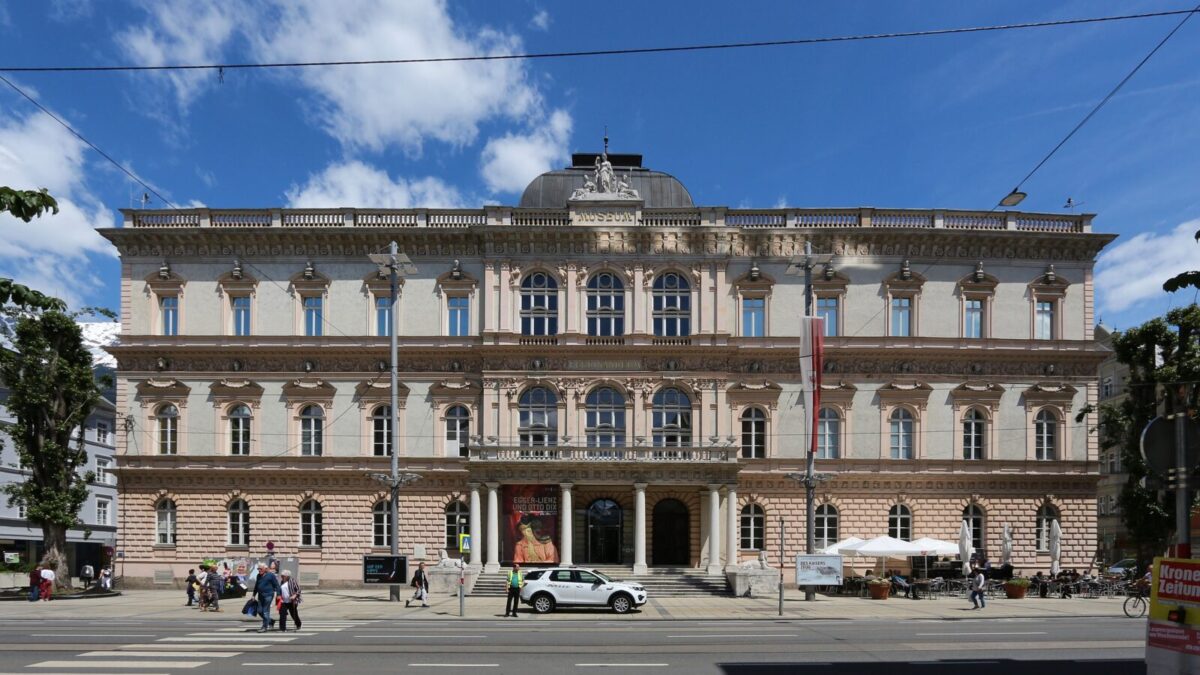
The Tyrolean State Museum Ferdinandeum in Innsbruck is the most significant cultural and scientific institution dedicated to the history, art, and nature of Tyrol. Founded in 1823 as a civic museum association under the patronage of Archduke Ferdinand, it now houses seven extensive collections covering a wide spectrum—from prehistory and early history to European masterpieces (including one of Austria’s most important collections of Dutch art), as well as contemporary art and historical musical instruments. The main building on Innsbruck’s Museumstraße serves as the core of the Tyrolean State Museums network, which also includes the Museum of Tyrolean Folk Art, the Court Church (Hofkirche), the Armoury (Zeughaus), and the TIROL PANORAMA with the Kaiserjäger Museum. Important current notice: The main Ferdinandeum building is currently undergoing extensive renovation and expansion and is expected to remain closed until 2028. However, parts of the collection can still be viewed through special exhibitions and at partner institutions under the initiative “Ferdinandeum on the Move” (“Ferdinandeum unterwegs”).
History and Architecture
The institution’s roots trace back to the early 19th century, when dedicated citizens and scholars—with significant support from Archduke Johann—established an association in 1823 to preserve Tyrolean cultural artifacts, natural history specimens, and historical documents, and to subject them to scientific study. The museum was named Ferdinandeum in honor of the then-Crown Prince, who later became Emperor Ferdinand I.
Between 1842 and 1846, the Innsbruck municipal architect Anton Mutschlechner constructed the original museum building on what is now Museumstraße. The building was ceremoniously opened in 1845. Due to the rapid growth of its collections, the structure was expanded between 1883 and 1888—following plans by Natale Tommasi—with the addition of a distinctive portico and a neoclassical façade adorned with busts of notable Tyrolean figures. After sustaining severe damage during the Second World War, the building was reconstructed by 1949 and subsequently modernized in 1998 to mark its 175th anniversary. A large-scale, four-year renovation and redevelopment project began in July 2024; while the protected historic façade is being restored, a modern extension is being constructed at the rear, providing additional exhibition space and a larger event hall.
The Seven Main Collections of the Ferdinandeum
In terms of content, the Tyrolean State Museum covers a span of approximately 30,000 years and is divided into seven specialized departments:
- Prehistoric, Early Historic, and Provincial Roman Collections: This department documents the settlement of the Alpine region—from the Stone Age, through the Bronze and Iron Ages (including significant finds from the Fritzens-Sanzeno culture), to the Roman era and the Early Middle Ages. A particular highlight is the extensive collection of ancient coins.
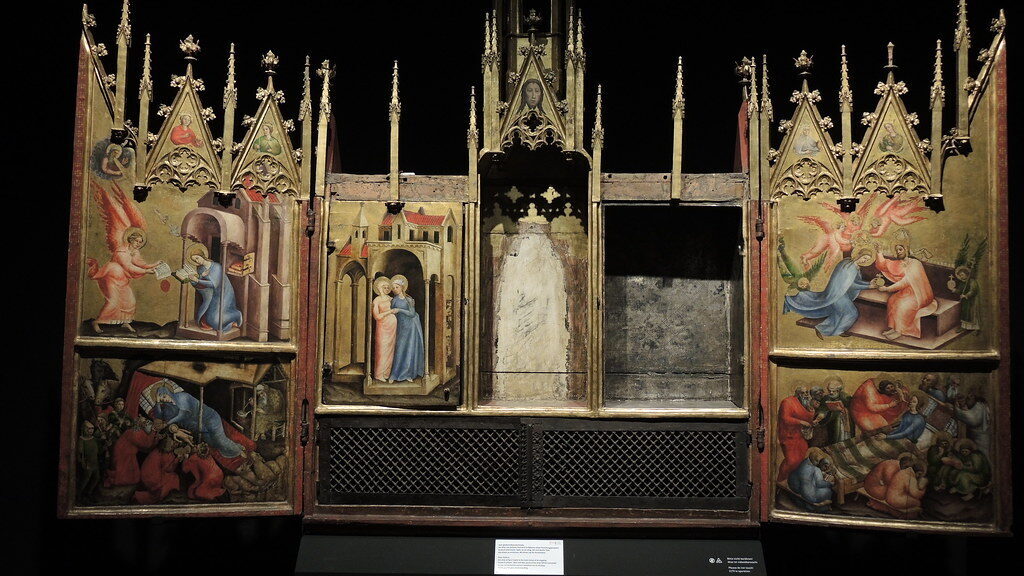
- Collections of Earlier Art History: The focus here is on European painting, sculpture, and decorative arts, ranging from the Romanesque and Gothic periods (featuring works by artists such as Michael Pacher and Lucas Cranach the Elder) and the Baroque era (e.g., Giambattista Tiepolo) through to the 19th century (including works by Angelika Kauffmann, Joseph Anton Koch, and Franz Defregger). The collection of 17th-century Dutch art is world-renowned, featuring works by Rembrandt van Rijn, Pieter Brueghel the Younger, Jan van Goyen, and Gerrit Dou.
- Modern Gallery: This section presents art from the 20th and 21st centuries. In addition to major Tyrolean masters such as Albin Egger-Lienz and Max Weiler, it includes works by Gustav Klimt, Egon Schiele, and Oskar Kokoschka, as well as pieces by contemporary artists.
- Graphic Arts Collection: This collection comprises tens of thousands of drawings, watercolors, and prints (dating from the 15th century onwards), as well as both historical and contemporary photographs.
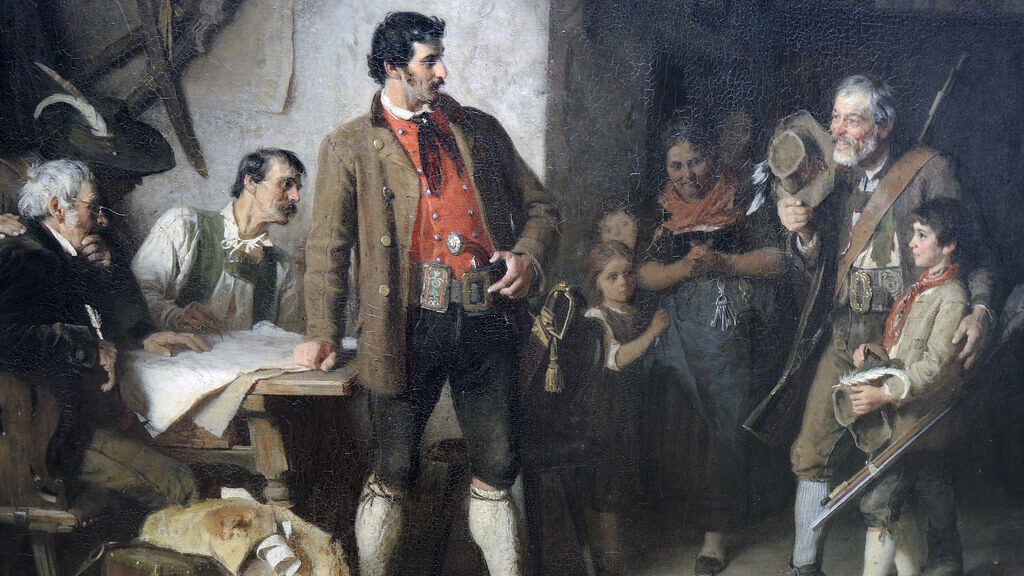
- Historical Collections: These collections shed light on the history of the Tyrol region from the Middle Ages to the present day. They include objects related to silver mining in Schwaz, the Tyrolean struggle for freedom led by Andreas Hofer, the history of cartography (featuring the work of Peter Anich and Blasius Hueber), and everyday cultural life. A large portion of these exhibits is displayed at the Museum in the Zeughaus (Armory).
- Music Collections: The Ferdinandeum houses one of the most significant collections of historical musical instruments in the Alpine region, including original violins by the renowned Absam-based luthier Jakob Stainer, as well as valuable keyboard and wind instruments.
- Library: This specialized academic library holds the world’s most extensive collection of materials relating to the Tyrol (Tirolensien). Among its most precious treasures is the famous 15th-century manuscript of works by the poet and composer Oswald von Wolkenstein. (During the current renovation, the library is housed in a temporary location at the Tyrolean Museum of Folk Art.)
Integration into the Tyrolean State Museums
Since 2007, the Ferdinandeum—together with other long-established museums in Innsbruck—has formed the *Tiroler Landesmuseen-Betriebsgesellschaft m.b.H.* (Tyrolean State Museums Operating Company), supported by the State of Tyrol and the *Tiroler Landesmuseum Ferdinandeum* association. The network comprises five main locations:
- Ferdinandeum (Museumstraße 15 – art, archaeology, and music; currently closed for renovation until 2028)
- Tyrolean Folk Art Museum (Universitätsstraße 2 – historical traditional costumes, wood-paneled rooms, craftsmanship, and nativity scene art)
- Imperial Court Church (Universitätsstraße 2 – the monumental cenotaph of Emperor Maximilian I, featuring 28 larger-than-life bronze figures known as the “Black Men” [Schwarze Mander])
- Museum in the Arsenal (Zeughausgasse 1 – the cultural and regional history of Tyrol, housed in the former armory of Emperor Maximilian I)
- DAS TIROL PANORAMA with the Kaiserjäger Museum (Bergisel 1–2 – home to a 1,000 m² giant panoramic painting of the 1809 Battle of Bergisel, as well as exhibits on the military and regional history of the Bergisel site)
Significance for Research and the Public
Beyond its exhibition activities, the Tyrolean State Museum serves as a central hub for research and education. Tens of thousands of objects—spanning art, nature, and history—are already accessible digitally through the Tyrolean State Museums’ online collection. During the period in which the main building remains closed—until 2028—the Ferdinandeum will continue to maintain a presence through its “Ferdinandeum on the Move” (“Ferdinandeum unterwegs”) exhibition format, hosted in museums throughout Tyrol (such as in Telfs or Imst), as well as through collaborations at its other, open locations in Innsbruck.
+43 512 594 89
The main building of the Tyrolean State Museum Ferdinandeum in Innsbruck is expected to remain closed until 2028 due to extensive renovation and refurbishment work. The other sites of the Tyrolean State Museums in Innsbruck remain open as usual.
The main building of the Tyrolean State Museum Ferdinandeum in Innsbruck is expected to remain closed until 2028 due to extensive renovation and refurbishment work. The other sites of the Tyrolean State Museums in Innsbruck remain open as usual.




By public transport:
From the main train station (*Hauptbahnhof*), you can reach the area around *Museumstraße* on foot in about 10 to 15 minutes, or alternatively by taking one of the city’s tram or bus lines heading toward the city center.
By car:
If arriving by car, you can reach the area around *Museumstraße* via the Inntal Autobahn (A12) or the Brenner Autobahn (A13) by taking the Innsbruck Mitte or Innsbruck Ost exits, then following the signs for the city center (*Zentrum*/*Innenstadt*). Please note that *Museumstraße* and the surrounding city center are subject to short-term parking zones and specific access regulations; for longer stays, using an underground parking garage is recommended.

