


Project Description
HOFBURG INNSBRUCK


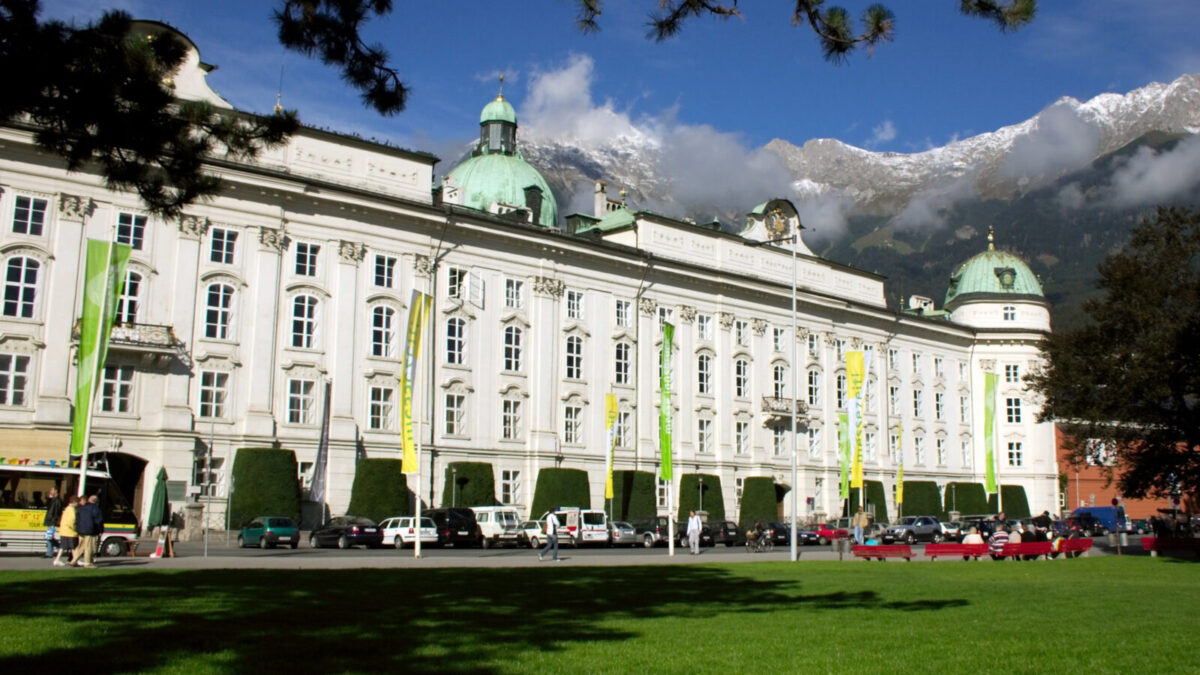
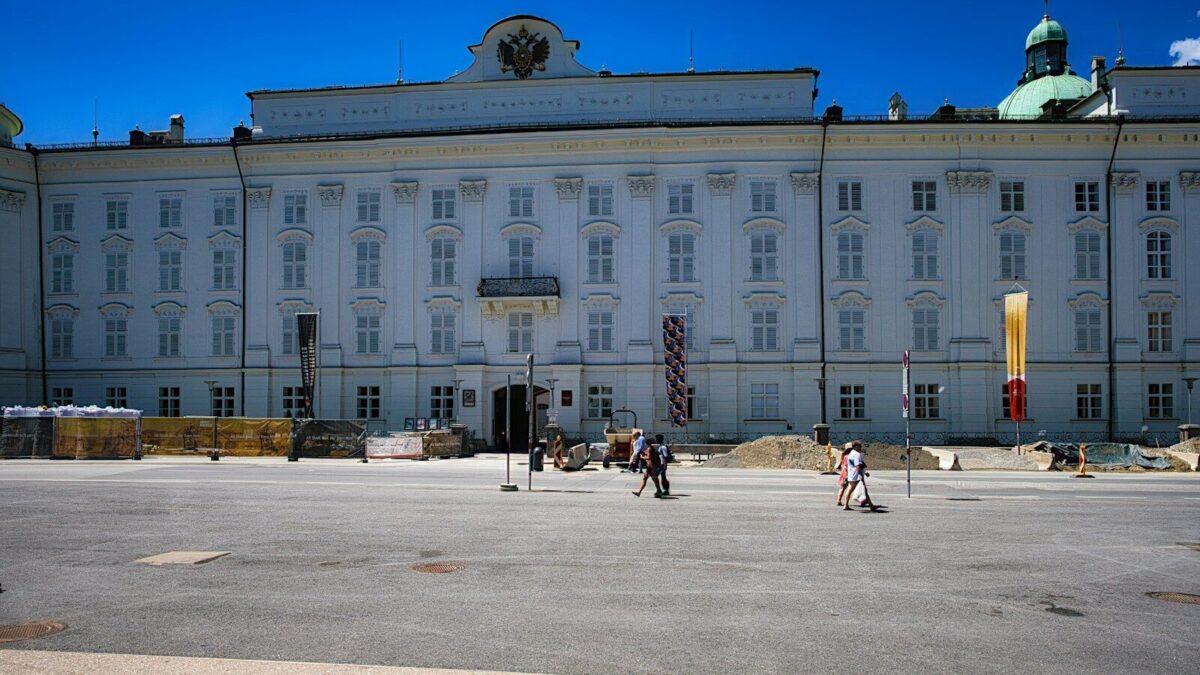
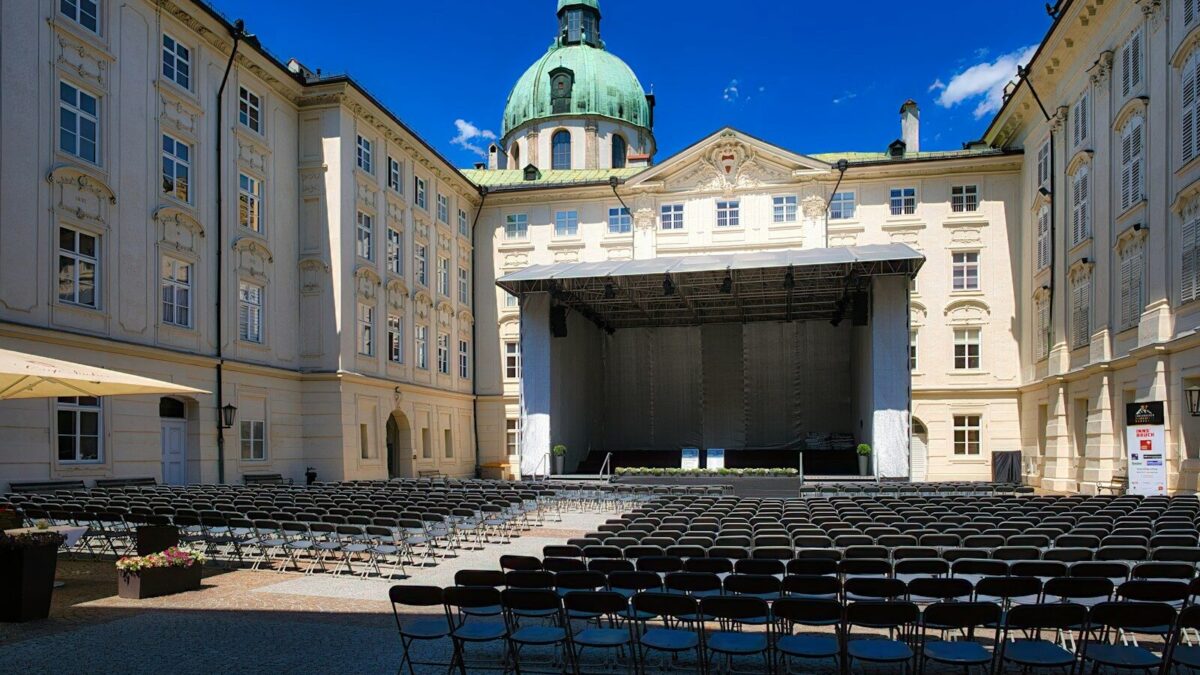
Key Facts at a Glance
Along with the Hofburg in Vienna and Schönbrunn Palace, the Hofburg in Innsbruck ranks among the three most significant historic imperial residences in Austria. Originally established as a medieval fortress, it was expanded to its current dimensions around 1500 under Emperor Maximilian I. In the 18th century, Empress Maria Theresa had it lavishly redesigned in the Rococo style, and in the 19th century, additional rooms were created for Emperor Franz Joseph and Empress Elisabeth (“Sisi”). Today, the complex—comprising approximately 400 rooms in the heart of Innsbruck’s Old Town—serves as a major museum and a venue for formal, high-profile events.
Historical Development: From Medieval Fortress to Imperial Residence
The architectural history of the Hofburg dates back to the 13th century, when a medieval fortress was built on this site. In the 15th century, Archduke Sigismund used the complex as his residence and commissioned the modernization of parts of the structure.
However, it was under Emperor Maximilian I that the building took on its definitive character as a late-Gothic princely and imperial residence. By around 1500, the Hofburg had reached its present-day footprint, following developments such as the expansion of the north wing (the “rear fortress”) for Maximilian’s wife, Bianca Maria Sforza, and the construction of the “Coat of Arms Tower” (Wappenturm), which features paintings by the court artist Jörg Kölderer.
Following the era of Maximilian, the complex was occupied by governors starting in 1665, during which time many of the state rooms remained unused. This changed significantly under Empress Maria Theresa: between 1750 and 1770, she oversaw an extensive renovation of the Hofburg in the late-Rococo style. A historic turning point occurred in 1765, when her husband, Emperor Francis I Stephen of Lorraine, passed away in Innsbruck during the wedding celebrations for their son, Leopold II. Maria Theresa commissioned Niccolò Pacassi to convert the room in which he died into a memorial chapel.
Further alterations followed in the 19th century, incorporating styles such as the Second Rococo and Neo-Rococo. Emperor Franz Joseph resided regularly at the Hofburg, while separate apartments were prepared for Empress Elisabeth (“Sisi”), though she rarely used them herself. Following the end of the monarchy in 1918, the complex became the property of the Republic of Austria and is currently managed by the *Burghauptmannschaft* (the federal agency responsible for the administration of imperial palaces).
Architecture and Key Rooms
The Hofburg combines late-Gothic structural foundations with magnificent Baroque and late-imperial interior design:
- Great Hall (Riesensaal): The largest ceremonial hall in the Hofburg spans two floors. Its name—”Hall of Giants”—derives not only from its imposing dimensions but also from historical depictions of giants (or Hercules). Today, it is primarily renowned for its approximately 500-square-meter ceiling fresco by Franz Anton Maulbertsch, as well as for the portraits of Maria Theresa, her husband, and their 16 children.
- Memorial Chapel & Hofburg Chapel: Designed by Niccolò Pacassi, the memorial chapel located in the south wing commemorates Emperor Francis I Stephen of Lorraine.
- Imperial Apartments & Elisabeth Apartment: A sequence of salons, living areas, studies, and reception rooms dating from the 18th and 19th centuries—including rooms designed in the Second Rococo style for Empress Elisabeth, featuring private chambers for dressing, personal grooming, and writing.
- Guard Hall & Andreas Hofer Hall: Historic reception and commemorative rooms that recall, among other things, the Habsburgs’ military and administrative history, as well as the events of the Tyrolean Rebellion of 1809 (Andreas Hofer resided here during the late summer and autumn of 1809).
- Exhibitions & Court Garden (Hofgarten): In addition to the imperial living quarters and state rooms, the building houses various exhibitions (such as a permanent exhibition on Maximilian I, alongside rotating special exhibitions). Diagonally opposite lies the Court Garden (Hofgarten), which has historically been part of the Imperial Palace (Hofburg).
+43 512 / 58 71 86
| Monday | Tuesday | Wednesday | Thursday | Friday | Saturday | Sunday |
|---|---|---|---|---|---|---|
| 9 am – 5 pm | 9 am – 5 pm | 9 am – 5 pm | 9 am – 5 pm | 9 am – 5 pm | 9 am – 5 pm | 9 am – 5 pm |
Admission prices for the Hofburg Innsbruck depend on whether you choose a single area or a combination ticket:
Single tickets & Combined tickets (Hofburg Innsbruck)
| Area / Ticket | Regular (Adult) | Reduced* |
|---|---|---|
| Imperial Apartments | €10.50 | €8.00 |
| Exhibition “Maximilian1” | €8.50 | €6.00 |
| Special exhibition (“Sisi as a media star”) | €8.50 | €6.00 |
| Combined ticket: imperial apartments + an exhibition | €16.00 | €11.00 |
| Combined ticket: Maximilian1 + special exhibition | €14.00 | €10.00 |
| Total ticket (all three areas) | €21.00 | €16.00 |
*Reduced rates generally apply to students with a valid ID, senior citizens with a senior pass, and individuals with disabilities.
Free Admission, Special Arrangements & Discounts
- Children & Youths: Admission is generally free for children and youths under the age of 19.
- Family Sunday: On Sundays, families (consisting of at least one child under 19 and a maximum of two accompanying adults) receive free admission.
- Annual Pass: An annual pass is available for regular visitors for €40.00.
- City & Partner Offers: The Hofburg is included in the Innsbruck Card. Additionally, discounted rates are available through partner offers such as ÖBB Plus (e.g., €14.40 instead of €16.00 for a combined ticket). A 50% discount is also available upon presentation of an admission ticket from the Tyrolean State Museums (and vice versa).
- Hofkirche (Court Church) – Separate Admission: The adjacent Hofkirche is part of the Tyrolean State Museums. Regular admission is €9.00 (reduced rate: €7.00; free for those under 19). A combined ticket for the State Museums is available for €14.00 (or €11.00 at the reduced rate).




The Hofburg Innsbruck is located at Rennweg 1 in the center of Innsbruck, near the Old Town, and is easily accessible by both car and public transport.
By Public Transport:
- From the Train Station: From Innsbruck Central Station (Hauptbahnhof), you can reach the Hofburg on foot in about 15 to 20 minutes by walking through the city center, or conveniently via the Innsbruck public transport (IVB) bus and tram lines heading toward the city center/Old Town or Congress/Rennweg.
- On Foot Through the Old Town: As the Hofburg is situated directly adjacent to the Old Town and the area surrounding the Golden Roof (Goldenes Dachl), it is perfectly suited to be included in a walking tour of the city.
By Car:
- Access via Motorways: You can reach Innsbruck via the Inntal Motorway (A12) or the Brenner Motorway (A13); follow the signs toward the city center (Zentrum), Old Town (Altstadt), Congress, or Rennweg.
- Parking Nearby: There is virtually no public parking directly in front of the entrance. Instead, it is recommended to use a central underground parking garage, such as the Innsbruck Altstadtgarage at Innrain 4 (open 24 hours), from which you can reach the Hofburg in just a few minutes on foot.
- Short-Stay Parking Zones & Traffic Regulations: The city center of Innsbruck features paid short-stay parking zones and occasional traffic restrictions; therefore, using a parking garage is generally a more stress-free option for a longer museum visit.

