


Project Description
GOLDENES DACHL


Key Facts at a Glance
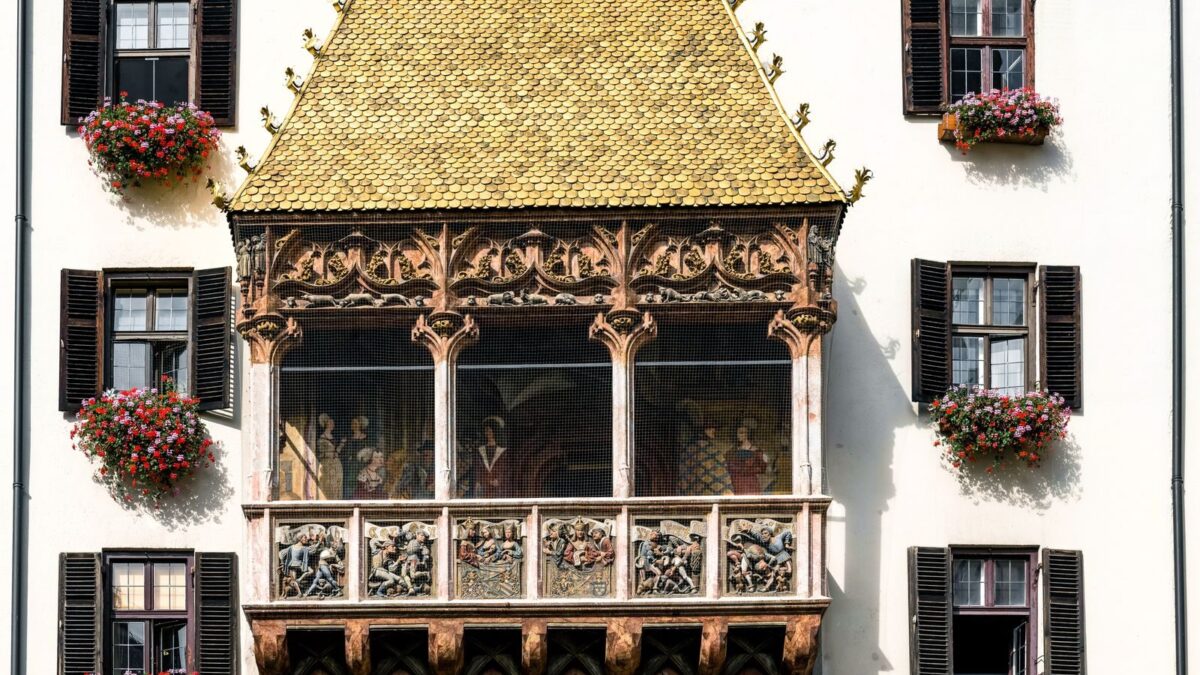
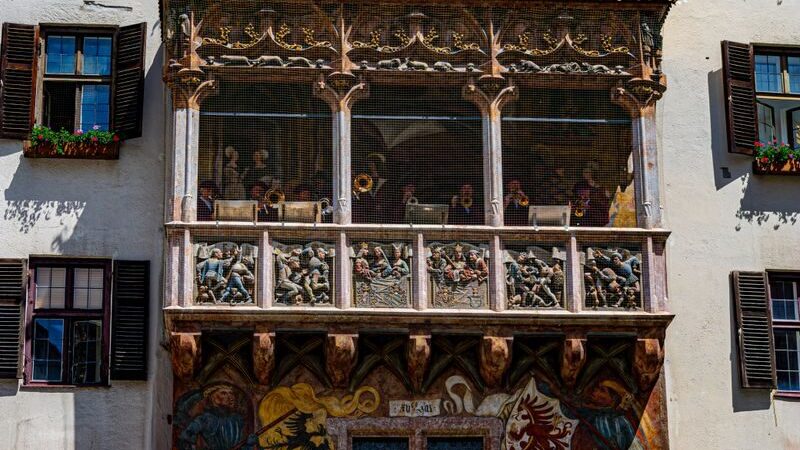
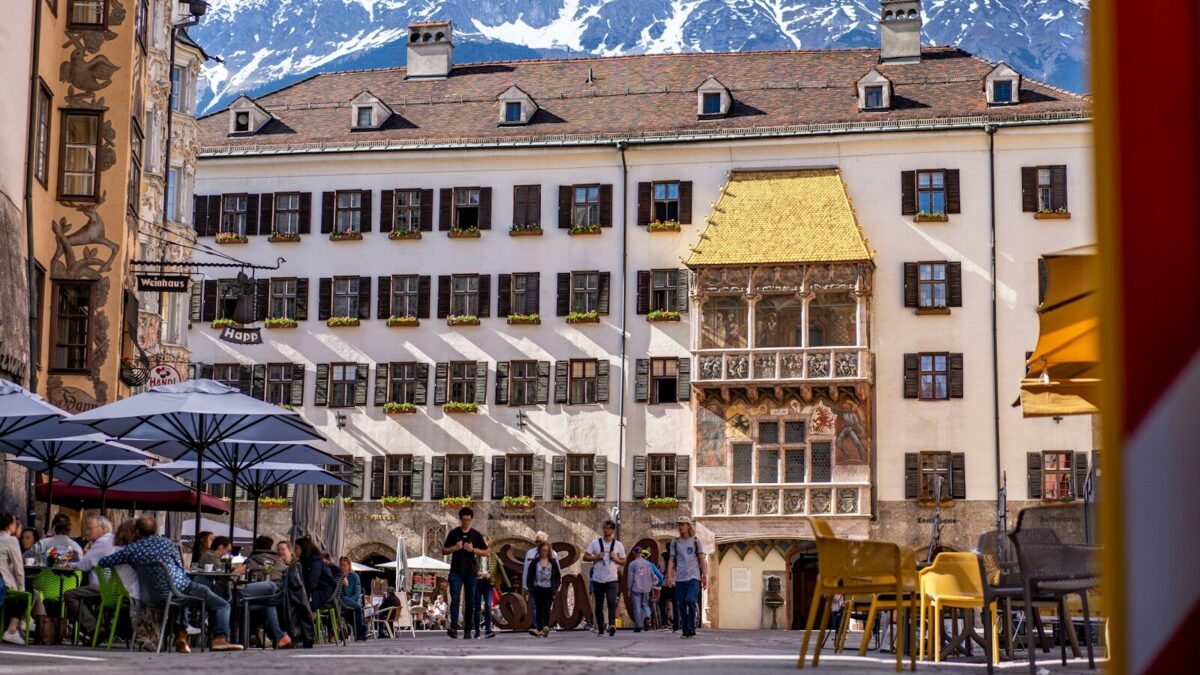
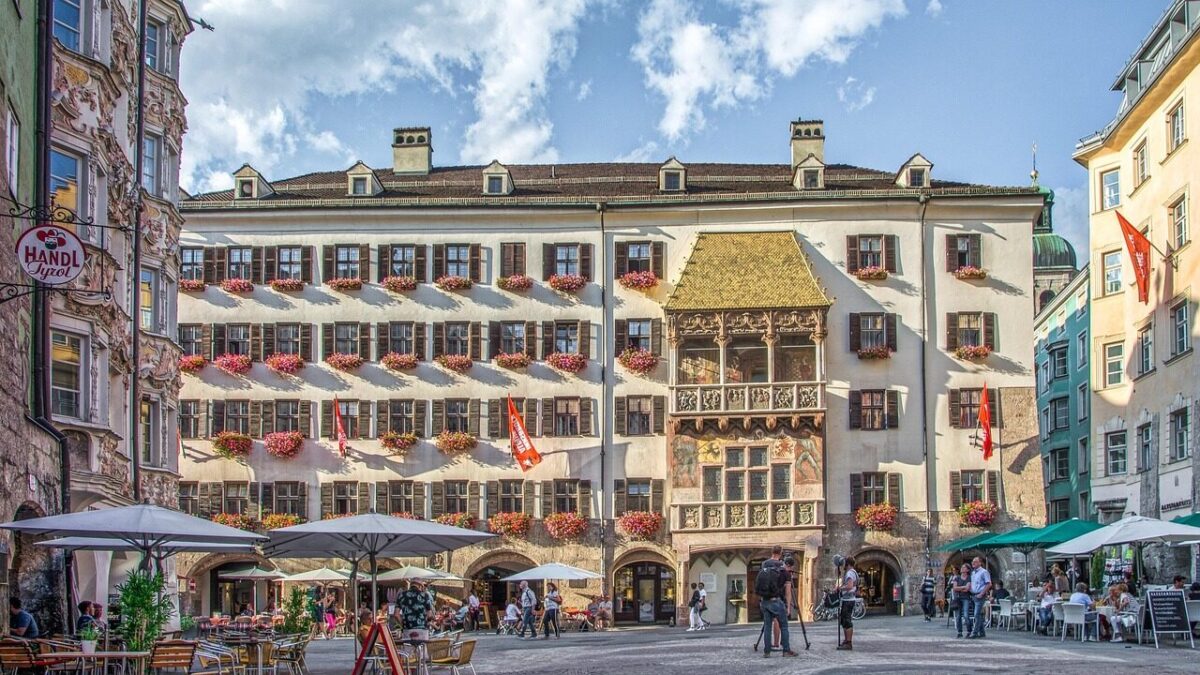
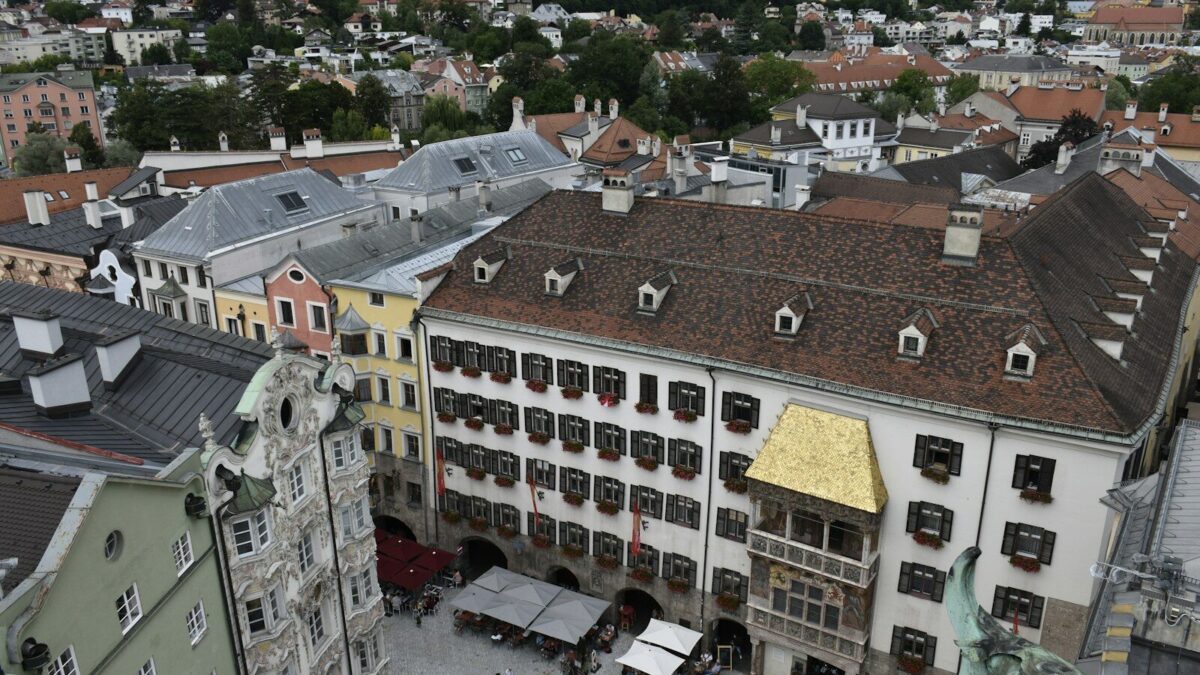
The Golden Roof (*Goldenes Dachl*) in the heart of Innsbruck’s Old Town is the world-famous landmark of the Tyrolean capital. This late-Gothic, ornate oriel balcony was added to the former princely residence—known as the “Neuhof”—between 1497 and 1500, commissioned by King (and later Emperor) Maximilian I. It is covered in 2,657 fire-gilded copper shingles. Beyond its magnificent architecture, featuring intricate reliefs and frescoes, the building now houses a modern museum that offers insights into the life of the “last knight” and the transition from the Middle Ages to the modern era.
History and Origins
The building’s origins date back to 1420, when Duke Frederick IV (“of the Empty Pockets”) moved the seat of the Tyrolean government from Merano to Innsbruck. He commissioned the construction of the “Neuhof” residence, formed by combining two existing townhouses.
Around the turn of the 16th century, the Habsburg ruler Maximilian I tasked the court architect Niklas (Nikolaus) Türing the Elder with constructing an imposing, three-story oriel balcony on the southern façade of the Neuhof. This balcony served as a grand viewing box for Maximilian and his court, allowing them to observe the lively goings-on—such as knightly tournaments, festivals, and judicial proceedings—in the town square below, while simultaneously showcasing his imperial power and wealth.
Following the death of Maximilian I, the building gradually lost some of its luster; over the centuries, it served various purposes, including as a financial office and, from 1775 onwards, as a barracks. It was not until the end of the 19th century, with the rise of tourism in Tyrol, that the Golden Roof (*Goldenes Dachl*)—an architectural jewel and the official landmark of Innsbruck—returned to the center of public attention.
### Architecture, Reliefs, and Secrets
The Golden Roof combines late Gothic architecture with early Renaissance elements and is notable for its complex, multi-layered iconographic program:
- The Gilded Shingles: The steep, approximately 3.7-meter-high shed roof of the 16-meter-wide oriel is covered with exactly 2,657 fire-gilded copper shingles. A frieze of animals—featuring both native wildlife and mythical creatures—runs along the eaves, reflecting Maximilian’s passion for hunting.
- The Parapet Reliefs: The intricate sandstone reliefs on the parapets are the work of Niklas Türing the Elder. At the center are depictions of Maximilian I: in one instance, shown in profile between his two wives—Mary of Burgundy (his late first love) and Bianca Maria Sforza (his second wife, whose dowry helped fund the structure)—and in another, shown frontally between his chancellor and a court jester. These scenes are framed by dynamic figures of *Moriskentänzer* (performers of an acrobatic dance popular at court at the time) as well as the coats of arms of the Habsburg territories. (Note: The reliefs currently on the oriel itself are weather-resistant replicas; six of the valuable original reliefs are on display inside the museum.)
- Frescoes and Vault Figures: The wall paintings inside the loggia are attributed to the court painter Jörg Kölderer and depict courtly scenes as well as standard-bearers.
Hidden within the ribbed vaulting of the ground floor are small stone figures, some of which are humorous or even bawdy in nature.
- The Enigmatic Inscription: Behind the reliefs on the first floor runs a mysterious band of text—a mixture of Latin, Greek, and Hebrew characters, along with symbols resembling hieroglyphs—that remained undecipherable for centuries. Recent research (conducted between 2006 and 2020) finally identified it as the biblical motto “Ego sum lux mundi” (“I am the light of the world”).
The Golden Roof Museum
Today, the interior of the Neuhof building houses the Golden Roof Museum (opened in 1996 as the Museum Maximilianeum and redesigned in 2019 to be fully accessible). Spanning several levels, the exhibition combines historical artifacts—including original reliefs, official documents, and suits of armor—with multimedia displays centered on Emperor Maximilian I, his marriage policies, and the everyday culture of that era. A particular highlight for visitors is the direct access to the magnificent oriel itself, offering the very same view—across Herzog-Friedrich-Straße and up toward the Nordkette mountain range—that the Emperor once enjoyed. Furthermore, since 2003, the building has served as the seat of the Permanent Secretariat of the Alpine Convention and also houses the Innsbruck registry office.
+43 512 53 60 14 41
The Golden Roof (*Goldenes Dachl*) itself is located in the heart of the pedestrian zone in Innsbruck’s Old Town and can be viewed from the outside at any time of day or night.
Museum Opening Hours:
May – Sept.:
| Monday | Tuesday | Wednesday | Thursday | Friday | Saturday | Sunday |
|---|---|---|---|---|---|---|
| 10 am – 5 pm | 10 am – 5 pm | 10 am – 5 pm | 10 am – 5 pm | 10 am – 5 pm | 10 am – 5 pm | 10 am – 5 pm |
Oct. – Apr.:
| Monday | Tuesday | Wednesday | Thursday | Friday | Saturday | Sunday |
|---|---|---|---|---|---|---|
| closed | 10 am – 5 pm | 10 am – 5 pm | 10 am – 5 pm | 10 am – 5 pm | 10 am – 5 pm | 10 am – 5 pm |
Viewing the Golden Roof (Goldenes Dachl) from the outside in Innsbruck’s Old Town is free of charge. The following admission prices apply to the Golden Roof Museum:
- Standard admission: €6.00
- Reduced rate (seniors, students, JUFF/Ö1 members): €3.00
- Family ticket: €12.50 (with a JUFF card: €7.00)
- Groups (10 or more people): €3.00 per person
- Free admission: Children under 6, school classes, visitors with disabilities, and holders of an Innsbruck Card, a leisure ticket (Freizeitticket), an IVB annual pass, a culture pass (Kulturpass), or an ICOM card. (Holders of a “KlimaTicket” are also entitled to a free annual pass for both venues, available at the City Museum.)
Combined tickets:
- Golden Roof + City Museum: €7.20 (families: €14.50)
- Golden Roof + City Museum + City Tower: €10.50 (families: €21.00)




As the Golden Roof (*Goldenes Dachl*) is located in the heart of the car-free pedestrian zone in Innsbruck’s Old Town (Herzog-Friedrich-Straße 15), it cannot be accessed directly by car. We recommend arriving via a nearby parking garage or by using public transport.
By Public Transport:
A very convenient stop for reaching the Old Town is located at Marktplatz (*Innrain 4*), just a few steps from the banks of the Inn River and the Old Town itself.
- Short distances: From Marktplatz, it is only a few minutes’ walk to *Herzog-Friedrich-Straße* and the Golden Roof.
- Excellent accessibility: Both bus and tram lines serve the city center regularly.
By Car:
If you are arriving by car, the *Innsbruck Altstadtgarage* (Old Town parking garage) at *Innrain 4* is an ideal choice. From there, it is just a short walk—crossing the Inn River or passing through the charming alleys of the Old Town—to reach the Golden Roof.
- Location & Hours: The garage is centrally located on the edge of the Old Town and is open 24 hours a day.
- On foot: After parking, you can reach *Herzog-Friedrich-Straße* in just a few minutes on foot.
- City center traffic: The Old Town features pedestrian zones and short-term parking restrictions; therefore, driving directly into the immediate vicinity is generally not permitted.

