


Project Description
NONNBERG ABBEY



At a Glance
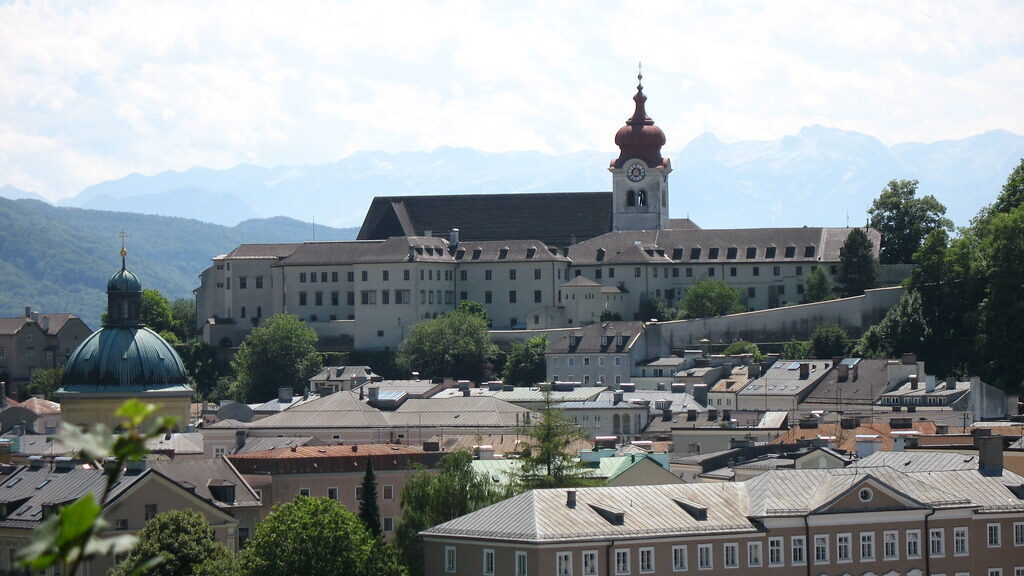
Nonnberg Abbey in Salzburg—officially the Benedictine Convent of St. Erentrudis—is the oldest continuously operating women’s monastery in the world. Situated on a rocky outcrop on the eastern slope of the Festungsberg, the striking Gothic structure, with its distinctive red onion dome, has defined the Salzburg skyline for over 1,300 years. The abbey combines significant art treasures from the Romanesque and Gothic periods with a centuries-old tradition of active monastic life.
History and Founding
The history of the convent is closely linked to the origins of the city of Salzburg. Saint Rupert, Bishop of Worms and founder of the city of Salzburg, established the convent around the year 711. He appointed his niece (or kinswoman), Saint Erentrudis, as the first abbess. Since that time, Benedictine nuns have lived and worked here without interruption, following the Rule of Saint Benedict.
During the Middle Ages, the abbey developed into an influential and wealthy institution. It served primarily as a place of refuge and education for the daughters of the high nobility. A devastating fire in 1423 destroyed large parts of the original Romanesque complex, leading to the construction of the current Late Gothic building.
Architecture and Highlights
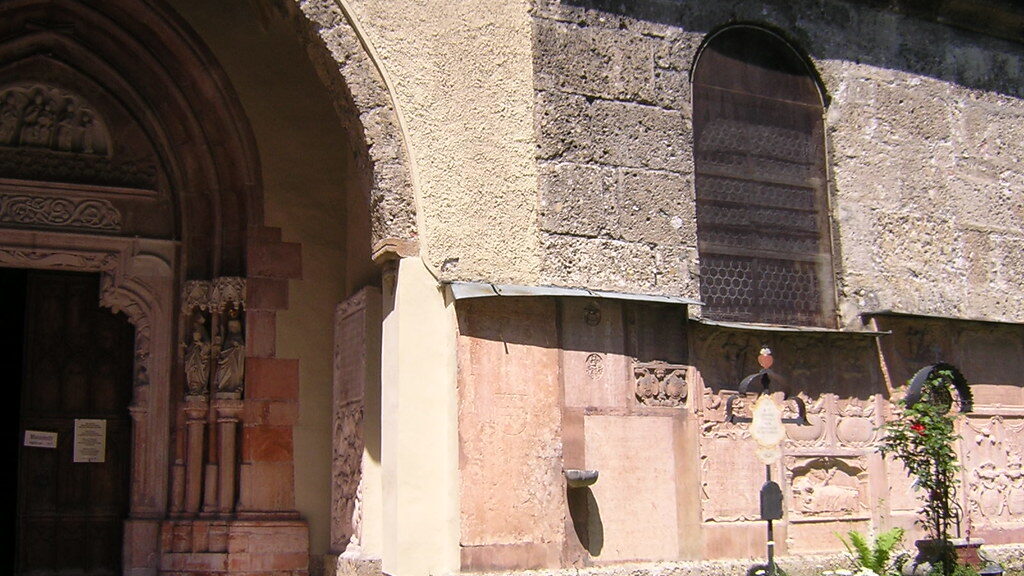
- The Abbey Church of the Assumption of Mary (Stiftskirche Maria Himmelfahrt): This three-aisled structure—Late Gothic in its core and built between 1464 and 1509—is notable for its understated elegance. The magnificent Late Gothic net-ribbed vault and the intricate portal provide striking highlights.
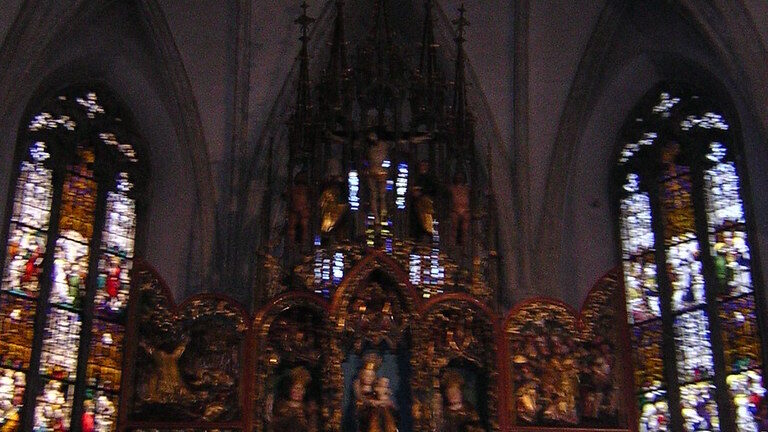
- The Kefermarkt / Filzmoos Altarpiece: Dating from 1515, this high altar is a masterpiece of Late Gothic woodcarving; it originally came from the church in Scheffau.
- The Crypt: Located beneath the choir is the multi-aisled crypt, housing the 1624 tomb monument of Saint Erentrudis; a candle burns in her honor there to this day.
- The Romanesque Frescoes in the “Paradise”: The area known as the “Paradise” is situated beneath the gallery of the nuns’ choir. The wall paintings preserved there—dating from the mid-12th century—depict figures of saints and portrait busts; they rank among the most valuable Romanesque art treasures in the Alpine region (though they are rarely accessible to the public due to the cloistered nature of the convent).
The Convent Today and “The Sound of Music”
Today, around two dozen Benedictine nuns live at Nonnberg Abbey. In addition to their daily prayers, the sisters run a guesthouse, an organic farm, a candle workshop, and an archive. A special tradition is the Gregorian chant, which the sisters perform every morning during choir prayers.
The abbey gained worldwide fame through the story of the novice Maria Augusta Kutschera. She arrived at the convent in the 1920s and was sent by the Abbess to serve as a governess for the family of Baron Georg Ludwig von Trapp. The abbey gates and grounds also served as a filming location for the movie adaptation of *The Sound of Music*, making the abbey a magnet for international visitors to this day.
none
| Monday | Tuesday | Wednesday | Thursday | Friday | Saturday | Sunday |
|---|---|---|---|---|---|---|
| 6 am – 6 pm | 6 am – 6 pm | 6 am – 6 pm | 6 am – 6 pm | 6 am – 6 pm | 6 am – 6 pm | 6 am – 6 pm |
Admission to the publicly accessible areas of Nonnberg Abbey is free of charge.
- Free Access: The Abbey Church (Church of the Assumption), the Erentrudis Crypt, and the historic convent cemetery can be visited without a ticket.
- Donations: As this is an active religious community, the Benedictine nuns welcome voluntary donations—made at the entrance or via the offering boxes—to help maintain the building.




By Car
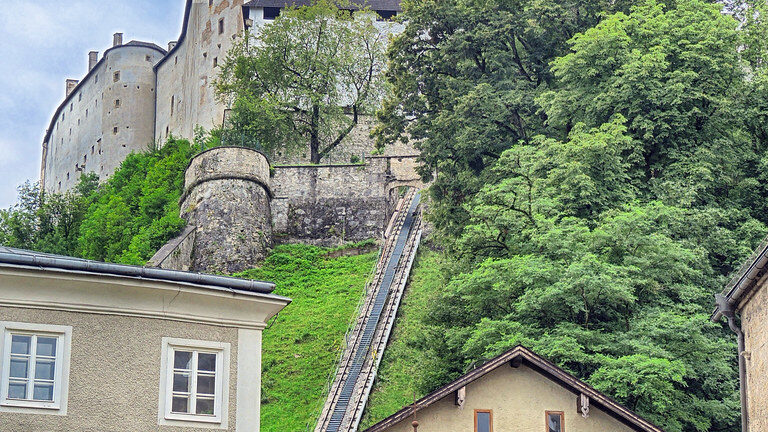
Nonnberg Abbey is situated in an elevated position on the eastern slope of the Festungsberg, below Hohensalzburg Fortress. Since the abbey grounds are located directly within a pedestrian zone and cannot be reached by vehicle, arriving on foot or by bus is the most convenient option. As the immediate vicinity of the Abbey is closed to regular car traffic, parking is available in the nearby Nonntal district or at the Old Town ring road:
Parking at the Hypo Nonntal underground garage:
- Location: Hypo Nonntal underground garage (Erzabt-Klotz-Straße).
- Walk: From there, it is an 8–10 minute walk through the historic Nonntal district and up Nonnberggasse to the Abbey.
Parking at the Altstadtgarage (Mönchsberg):
- Access: Via the Sigmundstor / Neutor Tunnel into the CONTIPARK Altstadtgarage underground garage.
- Exit: Toscaninihof exit.
- Walk: From Toscaninihof, walk through the Kapitelplatz area and eastwards along the foot of the Festungsberg (Fortress Hill) to the Nonnbergstiege steps (approx. 10–12 minute walk).
By public transport
Bus connections bring you very close to the paths leading up to the Abbey:
- From Salzburg Central Station (Hauptbahnhof):
- Bus lines: Take bus line 5 or 25 towards Süd/Nonntal.
- Alight at: Nonntal (Courthouse/Justizgebäude) or Mozartsteg stop.
- Walk from Nonntal stop: From the stop, walk via Nonntaler Hauptstraße and Nonnberggasse—or via the historic Nonnbergstiege steps—up to the monastery (approx. 5–8 minute walk uphill).
- Walking route from Kaigasse / Kajetanerplatz: Alternatively, you can easily walk up to the abbey from Kajetanerplatz via Schanzlgarten or Schanzlgaragengasse.

