


Project Description
MOZART RESIDENCE


At a Glance
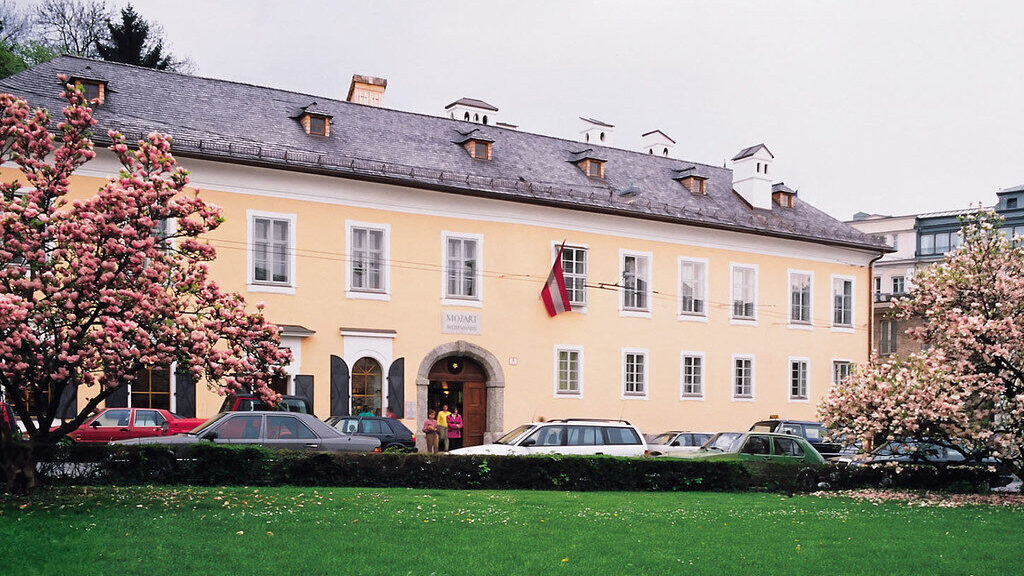
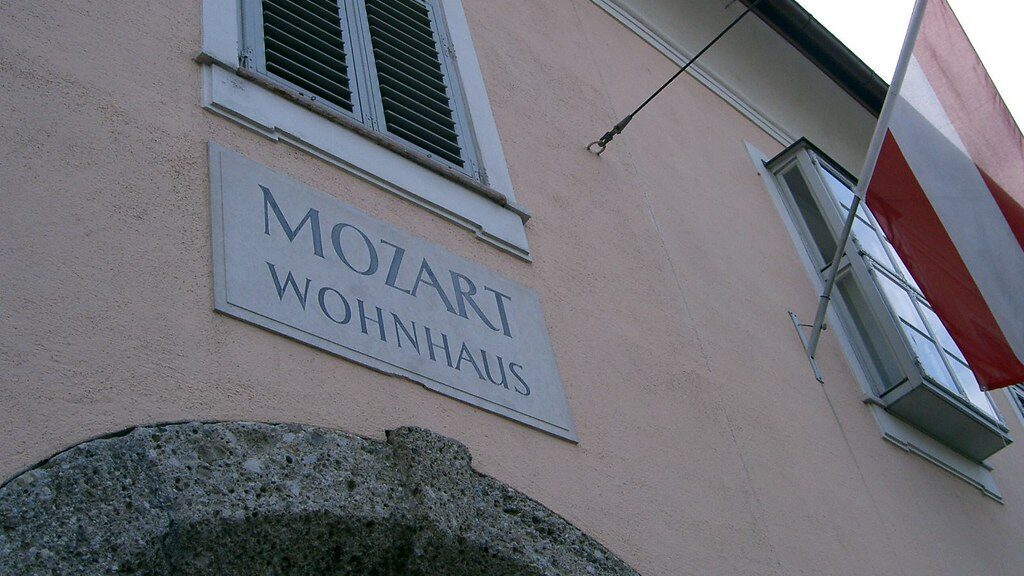
The Mozart Residence at Makartplatz 8 in Salzburg—historically known as the “Dance Master’s House” (*Tanzmeisterhaus*)—is one of the most significant memorial sites in the city of Mozart. It served as the family’s second home. The Mozart family moved into the house in 1773 after their famous birthplace on Getreidegasse had become too cramped. Wolfgang Amadeus Mozart lived here between the ages of 17 and 25 (1773–1781) before moving permanently to Vienna. Following wartime destruction and a faithful reconstruction, the building now houses a modern museum run by the International Mozarteum Foundation, featuring historical instruments, documents, and the famous “Magic Flute House” in the courtyard.
Detailed History and Significance of the Mozart Residence
From Dance Master’s House to Artist’s Residence
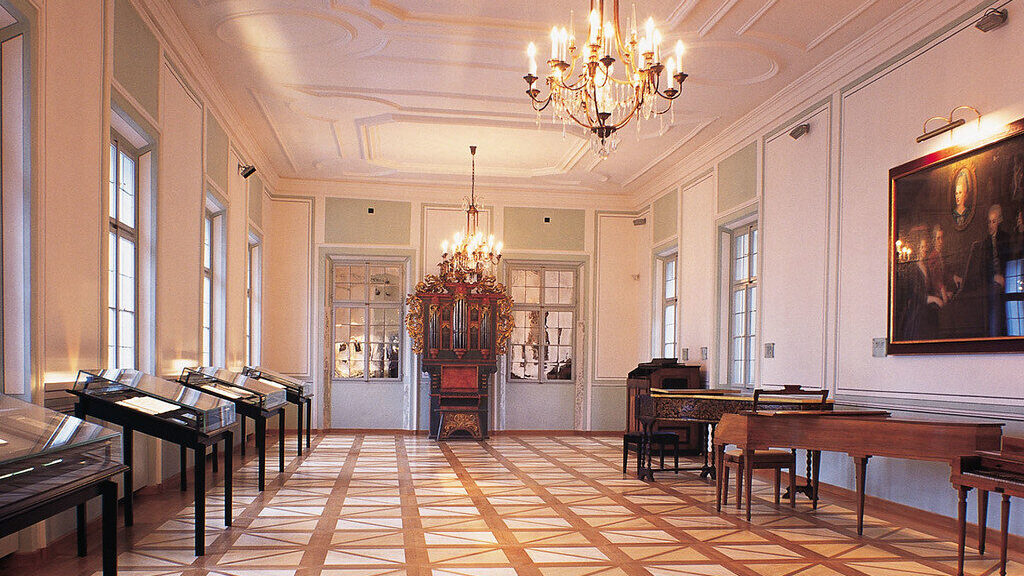
The building was first mentioned in historical records in 1617. It owes its common historical name, “Dance Master’s House,” to the fact that, in 1711, the court dance master Johann Lorenz Spöckner was granted permission by decree to hold dance lessons for the nobility there. The spacious “Dance Master’s Hall” was available for this purpose.
In 1773, Leopold Mozart rented the spacious apartment on the first floor. Until then, the family had lived in the better-known Hagenauer House (Mozart’s birthplace) on Getreidegasse. The new home on what was then Hannibalplatz (now Makartplatz) offered significantly more space for the father, Leopold; the mother, Anna Maria; the sister, Nannerl; and the maturing Wolfgang Amadeus. Wolfgang Amadeus Mozart’s Work During These Years
The years spent in the house on Makartplatz (1773–1781) mark a highly creative period in Wolfgang Amadeus Mozart’s life. Within these rooms, he composed numerous works—including masses, serenades, symphonies, and piano and violin concertos—created for the Salzburg public and the court. This house also served as the starting point for the many concert tours across Europe that defined this era of his life.
- In 1778, his mother, Anna Maria, passed away in Paris while traveling with him.
- His sister Nannerl married and moved out in 1784.
- His father, Leopold, initially remained in the house alone before passing away there in 1787.
Destruction and Reconstruction in the 20th Century
The building’s history in the 20th century was marked by dramatic changes. In 1944, during the Second World War, approximately two-thirds of the house was destroyed in a bombing raid. However, the undamaged section survived, and the historic Dance Master’s Hall was restored in 1956–1957, leading to the establishment of an initial memorial site.
Later, the International Mozarteum Foundation repurchased the building, had the destroyed section reconstructed based on original plans, and opened a comprehensive museum in 1996.
The Museum Today and the “Magic Flute House”
Today, visitors to the Mozart Residence can look forward to insights into the life of the artist family:
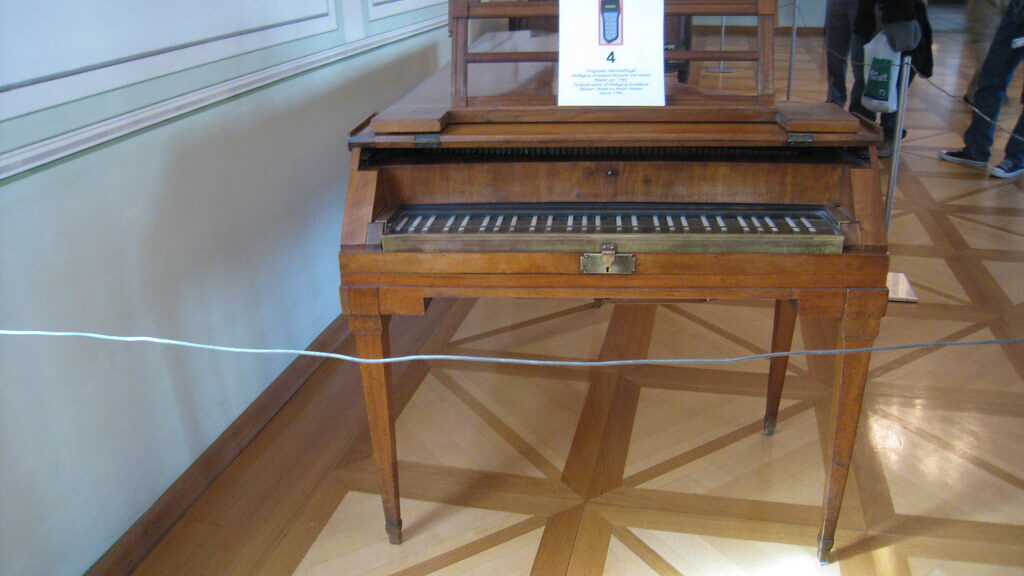
- The Permanent Exhibition: This focuses on the Mozart family’s daily life, the years Wolfgang Amadeus spent there, and a valuable collection of historical musical instruments (including original fortepianos and violins) and original documents. Rotating special exhibitions enrich the cultural program.
- The “Magic Flute House”: A special gem located in the residence’s courtyard is the small wooden garden house. According to tradition, Mozart composed parts of his famous opera The Magic Flute here during his time in Vienna. After various relocations over the centuries (including a stint at the Mozarteum), the little house was restored and found its permanent, atmospheric home in the residence’s courtyard.
+43 662 87 42 27 40
Jan. – May & Sep. – Dec.
| Monday | Tuesday | Wednesday | Thursday | Friday | Saturday | Sunday |
|---|---|---|---|---|---|---|
| 9 am – 5:30 pm | 9 am – 5:30 pm | 9 am – 5:30 pm | 9 am – 5:30 pm | 9 am – 5:30 pm | 9 am – 5:30 pm | 9 am – 5:30 pm |
Jul. – Aug.
| Monday | Tuesday | Wednesday | Thursday | Friday | Saturday | Sunday |
|---|---|---|---|---|---|---|
| 8:30 am – 7 pm | 8:30 am – 7 pm | 8:30 am – 7 pm | 8:30 am – 7 pm | 8:30 am – 7 pm | 8:30 am – 7 pm | 8:30 am – 7 pm |
The following regular admission prices apply to the Mozart Residence in Salzburg (prices in parentheses are for the combination ticket, which also includes admission to Mozart’s Birthplace):
- Regular admission: €18.00 (Combination ticket: €25.00)
- Reduced admission (for students, seniors, and groups of 10 or more): €15.00 (Combination ticket: €22.00)
- Youths: €7.00 (Combination ticket: €10.00)
- Children (ages 6 to 14): €6.00 (Combination ticket: €8.00)
- Family ticket (2 adults with children): €32.00 (Combination ticket: €50.00)
- School classes (as a group, ages 6–18): €4.50 per person (Combination ticket: €6.00)
- Children under 6 years: Free admission
- People with disabilities: Free admission for the individual and one registered accompanying person
- Salzburg Card: Free admission




By Car
Important to know: Salzburg’s city center (especially the Old Town and adjacent areas) is subject to strict traffic and short-term parking regulations. Direct vehicle access to Makartplatz is restricted for general through-traffic in some areas or reserved for pedestrians.
Parking nearby: Since there is virtually no free on-street parking available at the location itself, using nearby parking garages and underground car parks is recommended. The closest options are:
- Linzergasse-Garage or Mirabell-Garagen (just a few minutes’ walk from Makartplatz).
- Hauptbahnhof-Garage (Central Station Garage)—if you prefer to leave your car there and continue into the city center on foot or by bus.
Navigation: It is best to enter the address Makartplatz 8, 5020 Salzburg into your navigation system; however, once you arrive, follow the signs for the parking guidance system to locate the nearest available underground garage.
By Public Transport
As the building is located directly on the bustling Makartplatz, numerous Salzburg AG bus lines stop in the immediate vicinity:
- Stop: Makartplatz (served by several major lines, such as trolleybus lines 1, 2, 3, 5, and 6, as well as various regional buses).
- Walking distance: It is just a short walk from the stop to the museum entrance.
- From Salzburg Central Station: It takes only about 3 to 4 minutes by bus (e.g., line 1, 2, or 6 towards the city center) to reach Makartplatz from the central station. Alternatively, you can walk from the central station via Rainerstraße in about 10 to 15 minutes.

