


Project Description
INTERNATIONAL MARITIME MUSEUM


Key Facts at a Glance
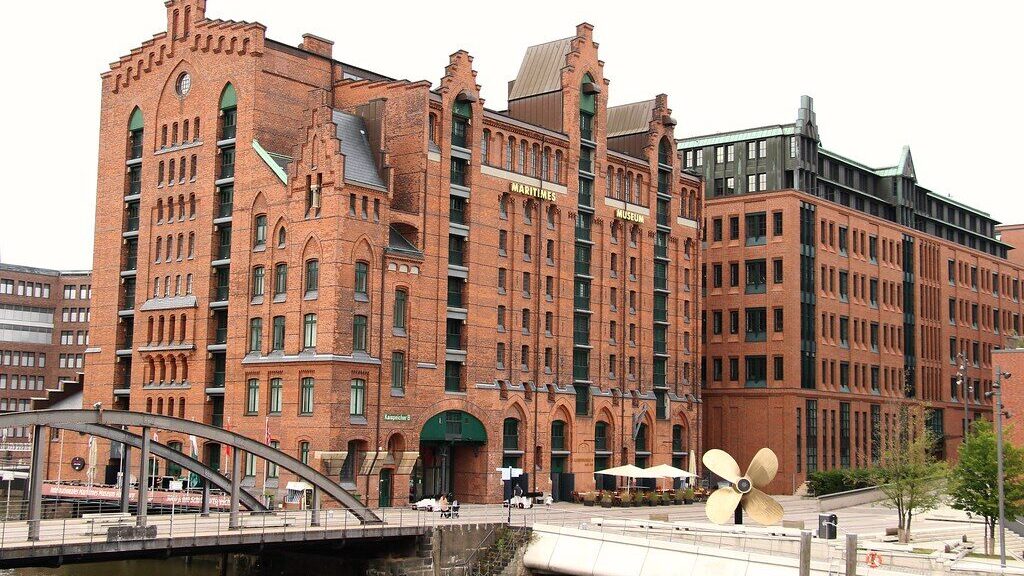
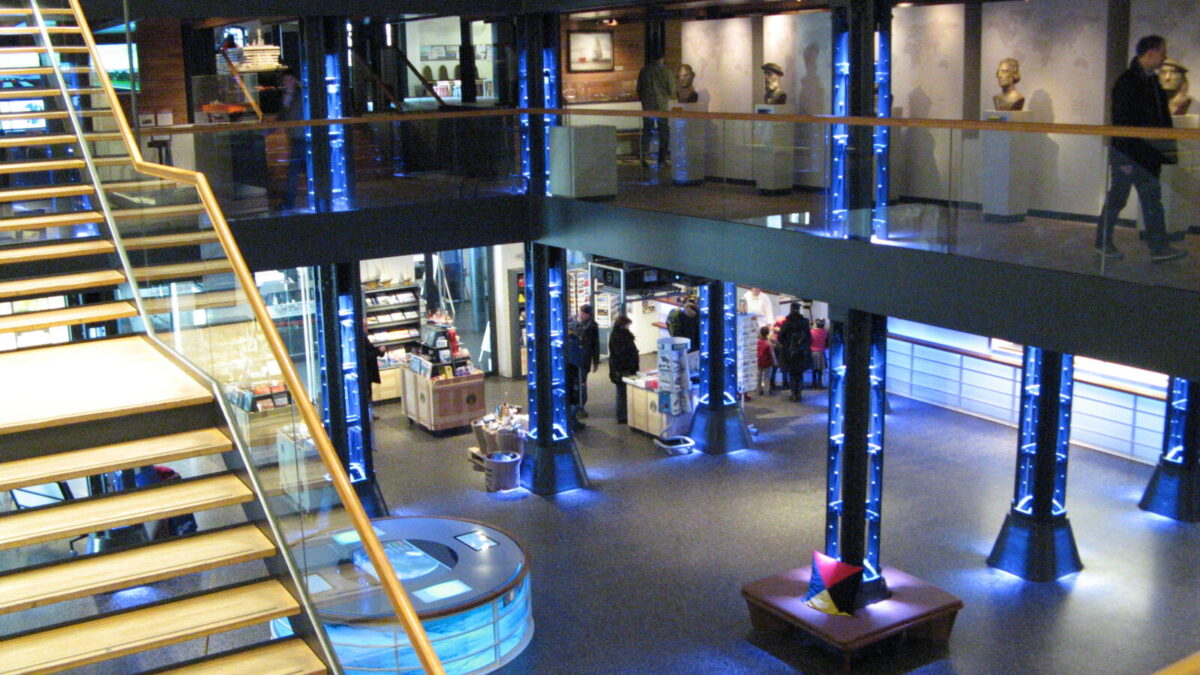
The International Maritime Museum Hamburg (IMMH), located in the historic Speicherstadt (warehouse district), houses the world’s largest private collection dedicated to maritime history. Across nine distinct “decks,” the museum presents a fascinating journey through 3,000 years of seafaring history—from the origins of navigation, the evolution of shipbuilding, and naval history to modern research expeditions and commercial shipping.
Origins and Location
In July 2008, the museum found a permanent home in the Kaispeicher B on Koreastraße—one of the oldest and most striking warehouse buildings in Hamburg’s Speicherstadt. It was founded by Peter Tamm, a Hamburg-based journalist and author of maritime literature, whose private collection—amassed over several decades—forms the core of the exhibits. To make this vast collection accessible to the public, it was transferred into a non-profit foundation. Its location in the Speicherstadt underscores the Hanseatic city’s profound connection to global trade and the maritime world.
Structure and Permanent Exhibition: The Nine Decks
The exhibition spans nine floors, which are thematically designated as “decks.” Each deck focuses on a specific aspect of maritime history:
- Deck 1: Exploration & Navigation
This deck centers on humanity’s ventures into unknown oceans. Visitors will find historical navigation instruments, nautical charts, globes, and replicas of ancient and early modern vessels that document the technological progress made during the Age of Discovery. - Deck 2: The Path to Modern Shipping
This deck highlights the evolution from wooden ships to iron giants, as well as the transition from sail-powered to steam-powered vessels during the 19th and early 20th centuries. - Deck 3: The Evolution of Naval History
A comprehensive look at the history of navies worldwide. On display are ship models, uniforms, medals, and equipment from various eras of naval warfare. - Deck 4: The German Navy
The focus here is specifically on the development of German navies from the 19th century to the present day, presented within their respective political contexts. - Deck 5: Merchant Shipping & Passenger Travel
This deck is dedicated to civilian maritime activity. It explores global freight transport as well as the golden age of the great passenger liners and ocean giants that once crossed the Atlantic. - Deck 6: Shipbuilding and Ship Models
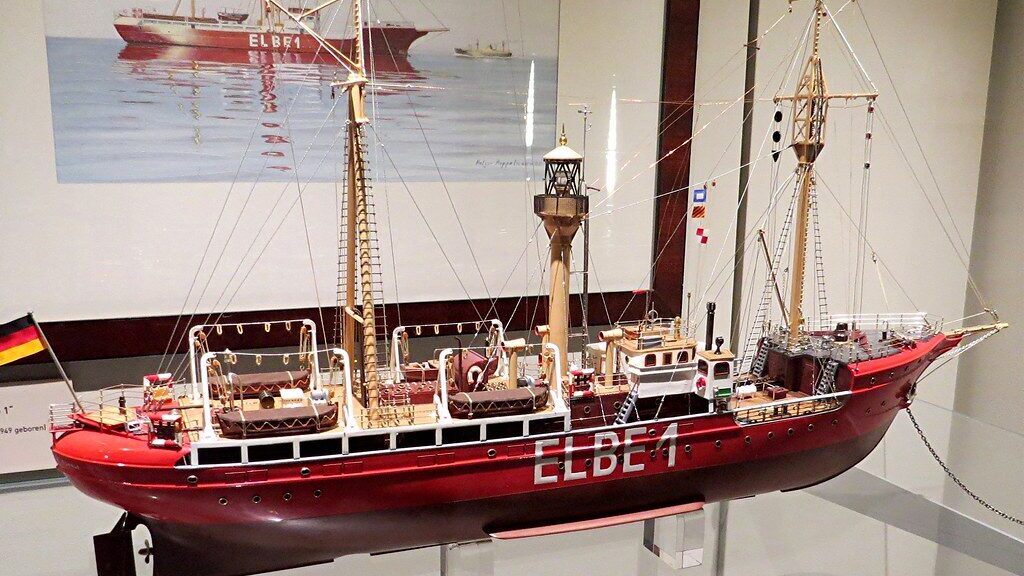
Everything here revolves around the craftsmanship and technical art of shipbuilding. A particular highlight is the countless number of precise, detailed models—including the famous model of the Queen Mary 2, constructed from approximately one million Lego bricks. - Deck 7: Ports, Shipyards, and Marine Research
This section connects maritime infrastructure on land (port facilities and shipyard operations) with the scientific exploration of the oceans (deep-sea research, marine biology, and meteorology). - Deck 8: Maritime Art and Painting Collection
One of the most extensive collections of maritime paintings, graphic works, and sculptures—featuring both Moroccan and European pieces—that capture the sea and seafaring from an artistic perspective. - Deck 9: Special Exhibitions and Museum Dining
The uppermost level provides space for rotating special exhibitions on current or in-depth maritime topics, as well as dining options with views overlooking the water.
Exhibits and Highlights
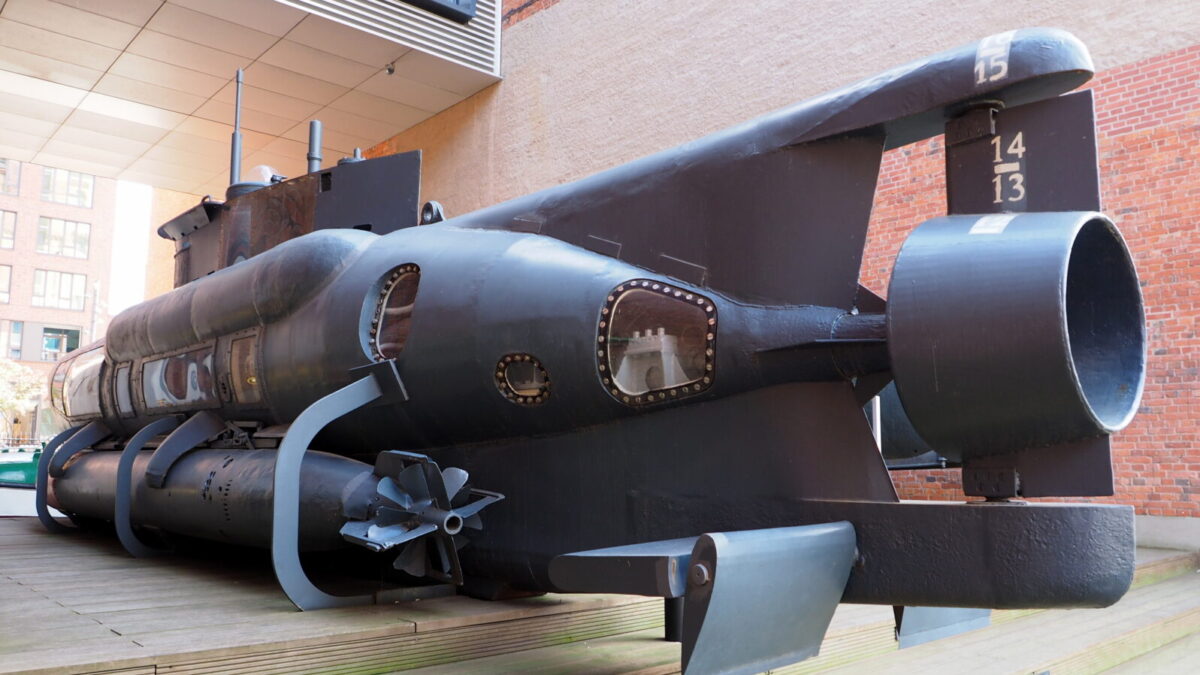
The collection comprises an estimated one million-plus photographs, tens of thousands of ship models (of which approximately 3,500 to 4,000 are on permanent display), hundreds of portraits of ships and captains, uniforms, nautical charts, and historical navigational instruments. Among the particularly valuable and popular exhibits are:
- Bone models: Historical ship models, crafted in great detail from cattle bone by prisoners of war (including those held during the Coalition Wars).
- The large Lego model: A highly detailed replica of the Queen Mary 2 built from Lego bricks, which draws many admiring glances in the foyer and throughout the exhibition areas.
- The maritime painting collection: Works by prominent marine artists that depict historical naval battles or the romantic allure of sailing.
+49 40 300 92 30 – 0
| Monday | Tuesday | Wednesday | Thursday | Friday | Saturday | Sunday |
|---|---|---|---|---|---|---|
| 10 am – 6 pm | 10 am – 6 pm | 10 am – 6 pm | 10 am – 6 pm | 10 am – 6 pm | 10 am – 6 pm | 10 am – 6 pm |
- Adults (18 and older): €18.00
- Reduced rate: €13.00 (applies to, among others, school pupils, university students, pensioners, individuals with severe disabilities, the unemployed, and youths aged 16 to 17)
- Children under 6 years: Free admission
- Small family: €21.00 (1 adult + up to 4 children aged 6 to 17)
- Family: €38.00 (2 adults + up to 4 children aged 6 to 17)
- Groups (10 or more people): €14.00 per person
- Störtebeker Ticket (evening ticket, valid from 4:30 PM): €9.00
- With Hamburg CARD: €14.00 for adults
Note: Children and youths under the age of 16 may only visit the museum when accompanied by an adult guardian. Special offerings—such as those for school classes, guided tours, or simulator rides—may be subject to different or additional charges.




The International Maritime Museum Hamburg, located at Koreastraße 1 (Kaispeicher B), is easily accessible by both car and public transport.
By public transport:
-
- Underground (U-Bahn): The U4 underground line stops at Überseequartier, from where the museum is just a short walk away. Alternatively, the Meßberg underground station (line U1) is also within easy walking distance.
- Bus: Bus lines 6 (stop: Am Sandtorkai) and 111 (stop: Osakaallee) will also bring you to the immediate vicinity of the museum.
By car:
-
- Getting here: The museum is situated in the heart of the historic Speicherstadt district within HafenCity. The area is easily reached via the B4 or B75 federal highways, as well as other major access roads.
- Parking: As on-site parking at the historic Kaispeicher B building is very limited, we recommend using nearby public parking garages and underground car parks in HafenCity (such as those in the Überseequartier area or at Sandtorkai).

