


Project Description
HUNGERBURGBAHN


Key Facts at a Glance
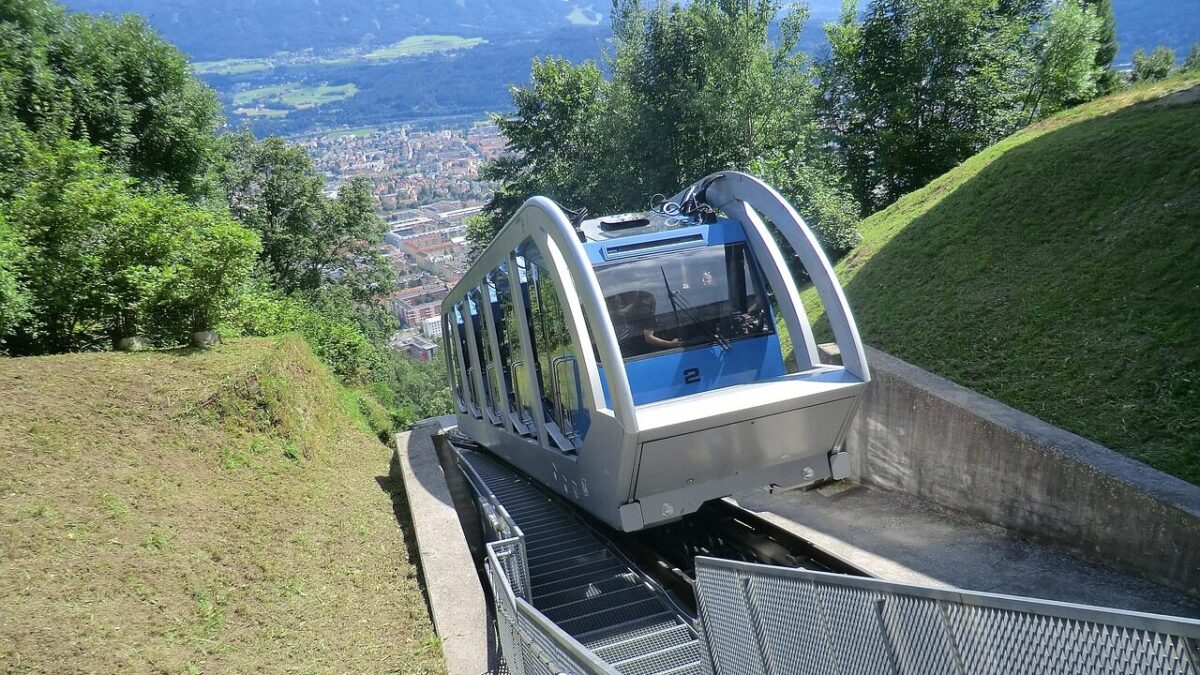
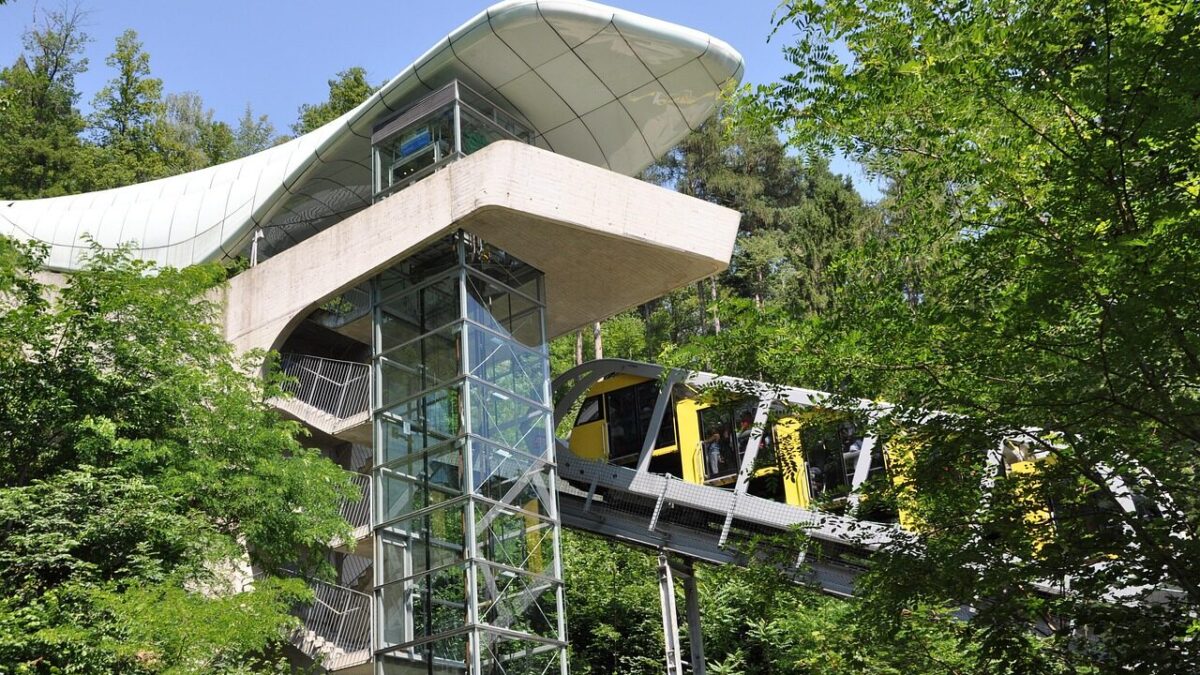
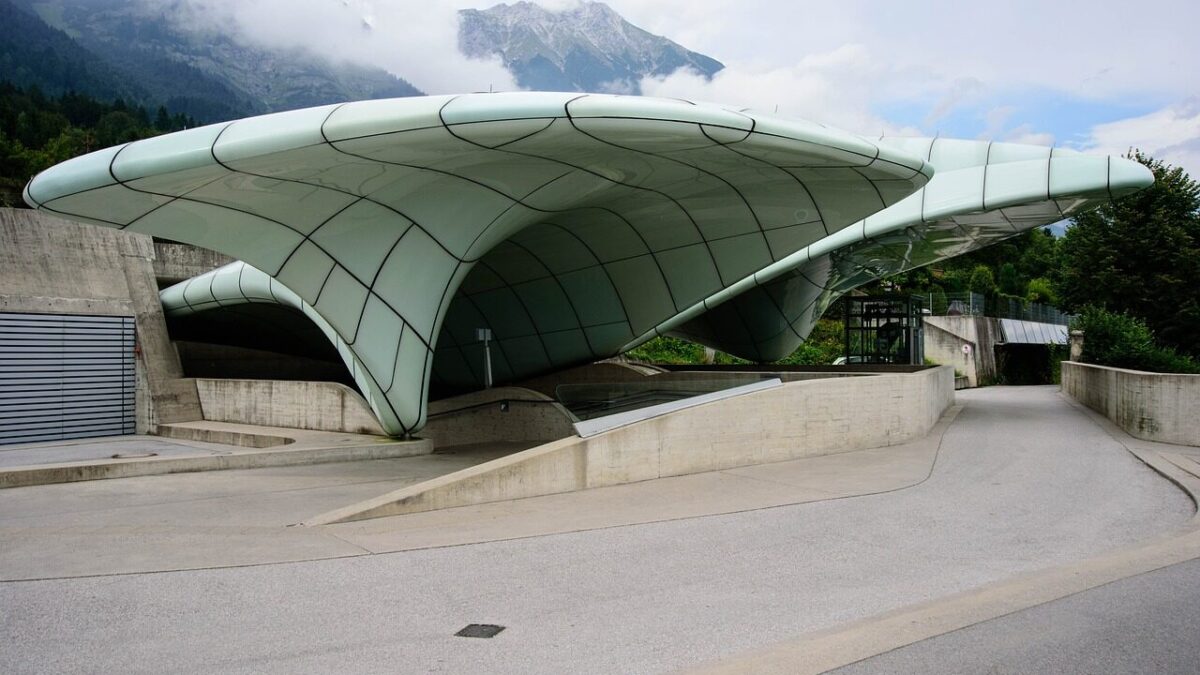
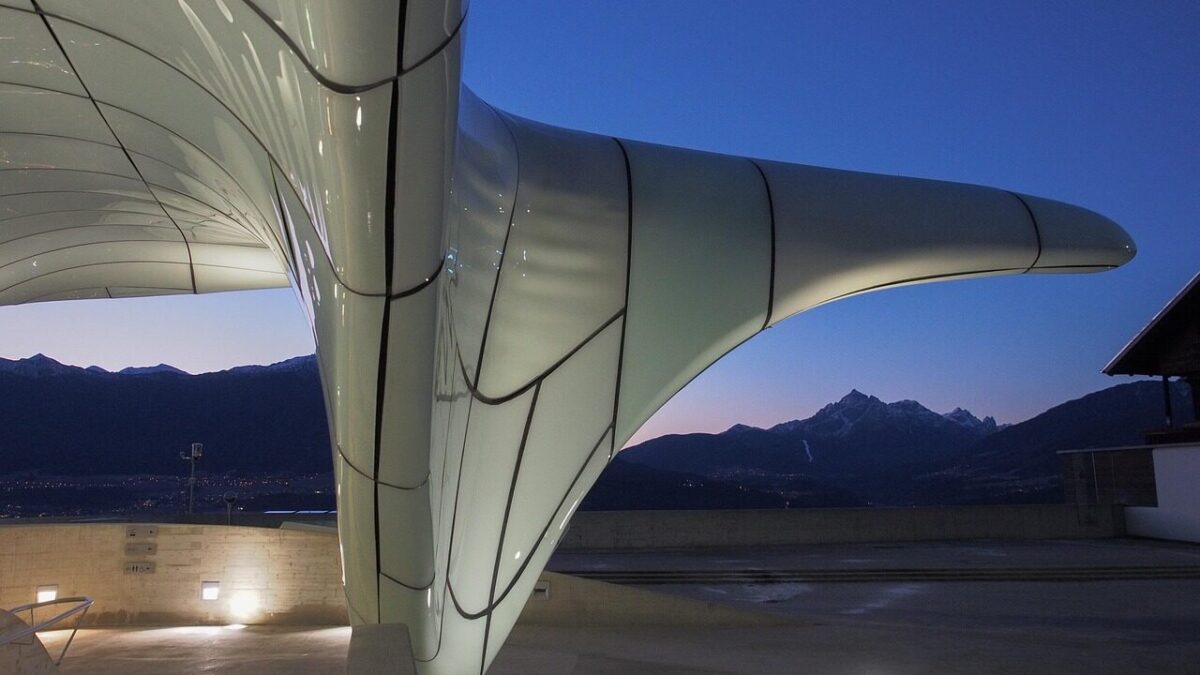
The Hungerburg Funicular in Innsbruck is a modern hybrid funicular railway that connects the historic center of Innsbruck with the Hungerburg district—situated at an altitude of 860 meters—in just about eight minutes. As the lowest of the three sections of the Innsbruck Nordkette Cable Cars, it serves as a gateway from the urban environment up into the high-alpine terrain of the Karwendel mountains. Opened in 2007, the funicular gained worldwide recognition primarily for its four futuristic station buildings and the bridge across the Inn River, all designed by star architect Zaha Hadid; their organically curved glass roofs are reminiscent of natural snow and ice formations.
Route and Stations
Spanning a total length of approximately 1.8 kilometers, the funicular overcomes an elevation gain of about 290 to 300 meters (from 560 m to 860 m above sea level) and stops at four stations:
| Station | Altitude | Features & Surroundings |
|---|---|---|
| Congress (Valley Station) | approx. 560 m | Underground departure point located right by the Congress Innsbruck, near the Old Town and the Imperial Palace (Hofburg). |
| Löwenhaus | approx. 570 m | Stop located immediately after the tunnel exit on the northern bank of the Inn River. |
| Alpenzoo | approx. 750 m | Direct access to Europe’s highest-altitude themed zoo (includes a panoramic elevator). |
| Hungerburg (Mountain Station) | approx. 860 m | Viewing plateau overlooking Innsbruck; transfer point to the Seegrube cable car, which leads into the high alpine region. |
- Underground Departure and Crossing the River Inn: The journey begins at the underground Congress valley station, initially passing through two tunnel sections (the 372-meter-long city tunnel and the 445-meter-long Weiherburg Tunnel). Between these, the funicular emerges into the open air and crosses the River Inn via a striking, 34-meter-high suspension bridge supported by two pylons, before stopping at the Löwenhaus station.
- Steep Ascent via the Alpine Zoo: After the Weiherburg Tunnel, the track climbs steeply along wooded slopes via a viaduct approximately 470 meters in length. At the intermediate Alpenzoo station, an inclined elevator provides direct access to the entrance of the renowned zoo.
- Arrival at Hungerburg: The terminal station, Hungerburg, is situated on a sunny plateau above the city. From the viewing terrace, there is an expansive panorama overlooking Innsbruck and the Inn Valley; In addition, this is where you can transfer directly to the large-cabin cable car heading toward Seegrube (1,905 m) and Hafelekar (2,334 m).
Architecture by Zaha Hadid
With the reconstruction of the funicular in 2007, Innsbruck made an international statement regarding contemporary architecture in an alpine setting:
- Inspiration from nature and glaciology: The British-Iraqi architect Zaha Hadid drew inspiration from glaciers, snowdrifts, and ice formations when designing the four stations (Congress, Löwenhaus, Alpenzoo, and Hungerburg).
- Construction of glass and concrete: Each station consists of a solid, sculpturally shaped concrete base, above which a seemingly weightless, double-curved roof made of translucent glass appears to float. Because each station was individually adapted to its specific topography and the interplay of light in its surroundings, no two structures are alike; yet, a fluid design language visually connects all four stops.
Technology: The hybrid funicular
From a technical perspective, too, the Hungerburg Funicular is unique among urban cable-based transport systems:
- A combination of tunnel, bridge, and mountain railway: Since the route traverses both flat, inner-city sections and extremely steep mountain passages—with a maximum gradient of up to 46 percent—a specially developed inclination-compensation system is employed.
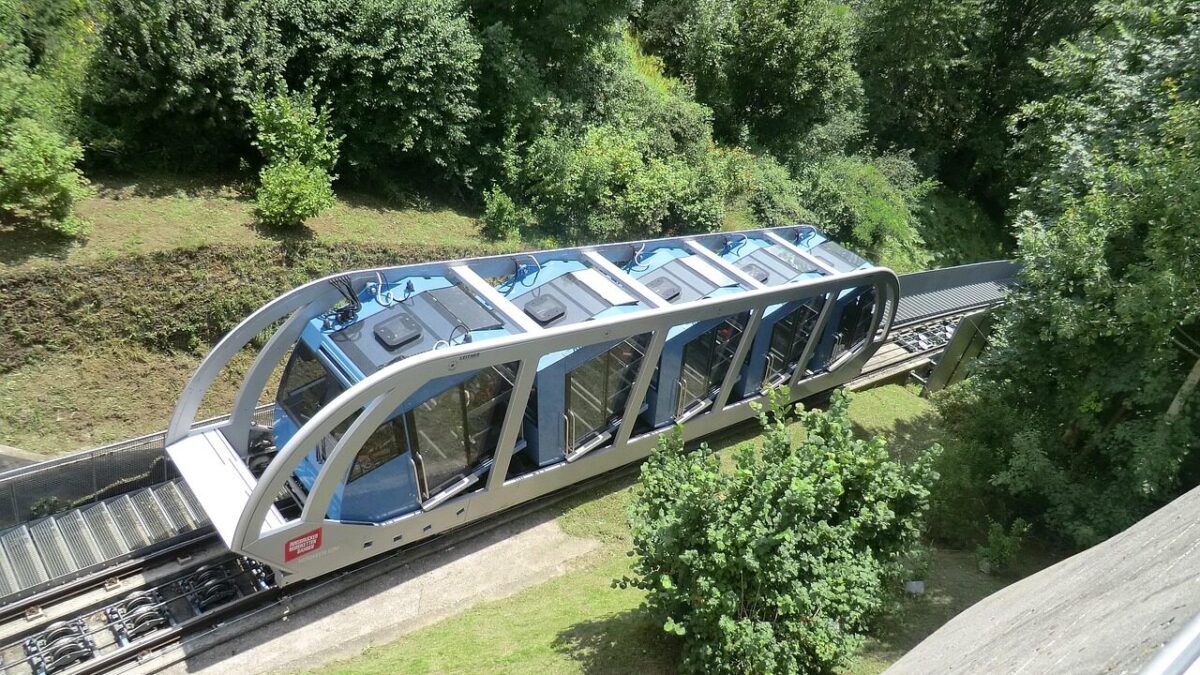
- Level cabins: Each of the two modern train sets consists of five interconnected, glazed individual cabins that use a hydraulic-mechanical system to adjust to the gradient of the track while in motion. As a result, the floors remain level for passengers throughout the entire journey, and the large panoramic windows offer an unobstructed view of the city and the surrounding mountains.
History: From 1906 to the Reopening in 2007
- The Historic Funicular (1906–2005): The original Hungerburg Funicular was built back in 1906, based on plans by the South Tyrolean engineer Josef Riehl and opened on September 12 of the same year. At that time, the line began in the Saggen district, near the Mühlauer Brücke (Mühlau Bridge), and for nearly a century, it served as a popular means of transport for both local travel and excursions.
- Reconstruction and extension to the city center: After nearly 100 years of operation, the historic funicular ceased service at the end of 2005. Between 2005 and 2007, a completely new and significantly more efficient route was constructed, extending—for the first time—directly to the edge of Innsbruck’s Old Town (at the Congress station). The new Hungerburg Funicular was ceremoniously put into operation on December 1, 2007.
Significance for urban transport and excursionists
Today, the Hungerburg Funicular serves a dual purpose: for residents of the Hungerburg district, it functions as a fast, eco-friendly mode of public transport, operating on a regular schedule (every 15 minutes from 7:15 a.m. on weekdays, and from 8:00 a.m. on weekends, until 7:15 p.m.). For both visitors and locals, it is an architectural landmark in its own right, as well as the most convenient way to reach the Alpenzoo (Alpine Zoo) and the numerous hiking and mountain biking trails around Hungerburg—which lead further up into the high-alpine terrain of the Nordkette mountain range.
+43 512 2393344
| Monday | Tuesday | Wednesday | Thursday | Friday | Saturday | Sunday |
|---|---|---|---|---|---|---|
| 7:15 am – 7:15 pm | 7:15 am – 7:15 pm | 7:15 am – 7:15 pm | 7:15 am – 7:15 pm | 7:15 am – 7:15 pm | 8 am – 7:15 pm | 8 am – 7:15 pm |
Trains run on a regular 15-minute schedule (more frequently during periods of high passenger volume). If you plan to transfer to the connecting cable cars, please note that the Seegrube cable car operates only until 5:30 PM, and the Hafelekar cable car until 4:45 PM.
- Round trip (ascent & descent): Adults 15.30 EUR, seniors (66+) / students (19–27) 14.10 EUR, youths (16–18) 12.30 EUR, children (6–15) 9.20 EUR.
- Single trip (ascent or descent): Adults 9.20 EUR, seniors/students 8.50 EUR, youths 7.40 EUR, children 5.50 EUR.
- Alpenzoo combo ticket (includes round trip + zoo admission): Adults 26.00 EUR, seniors/students 23.00 EUR, youths 21.00 EUR, children 16.00 EUR.
- Children under 6 & public transport tickets: Children under 6 travel for free when accompanied by a full-paying parent. As the Hungerburg funicular is classified as public transport, travel is also included with the Innsbruck Card and the KlimaTicket Tirol / Österreich (a complimentary ticket must be collected at the ticket counter).




By Public Transport:
From Innsbruck Central Station & the City Center: From Innsbruck Central Station, take a bus or tram to the Museumsstraße stop (from there, it is about a 5-minute walk to the Congress station) or travel directly to the Congress / Hofburg stop (only about a 3-minute walk away).
Key IVB Bus and Tram Lines: Line J connects the south of the city, via the city center, directly to the Nordkette. Additionally, lines 1, 2, A, C, K, and M all provide access to the immediate vicinity of the Congress or Museumsstraße stations.
On Foot from the Old Town: From the Golden Roof (Goldenes Dachl) in Innsbruck’s Old Town, the valley station of the Hungerburg Funicular (Hungerburgbahn) can be reached on foot in about 5 to 10 minutes.
By Car:
Directly at the Congress Access Point (Congress Garage): The Congress Garage is located right next to Congress Innsbruck (accessible via Rennweg / Herrengasse) and is open 24 hours a day. From here, you have direct access to the valley station of the Hungerburg Funicular.
Discounted Parking in the City Center: Guests of the Nordkette Cable Cars can receive a discounted daily rate at the InnenSTADT Garage (Kaiserjägerstraße 1, approximately a 5–10 minute walk away). To qualify, have your parking ticket validated at the ticket counter of the Old Town station (available daily from 08:00 to 18:00). The discounted rate is 4.00 EUR (valid for the period between 08:00 and 18:00; this offer does not apply to holders of the Innsbruck Card or Bmove).
Driving up via the Höhenstraße to Hungerburg: Those wishing to drive directly to the valley station of the Seegrube cable car in Hungerburg can reach it via the winding Höhenstraße, which features a significant incline. Please note that parking options there are limited (including the lot at the Seegrube cable car, which has about 70 spaces, as well as public areas such as the parking site at Höhenstraße 100) and tend to fill up quickly on pleasant days.
Motorway access: Via the A12 Inntal motorway (using the Innsbruck West, Mitte, or Ost exits), you can reach the city area—heading toward Congress or Hungerburg—in just a few minutes.

