


Project Description
GREEN BUNKER ST. PAULI


Key Points at a Glance
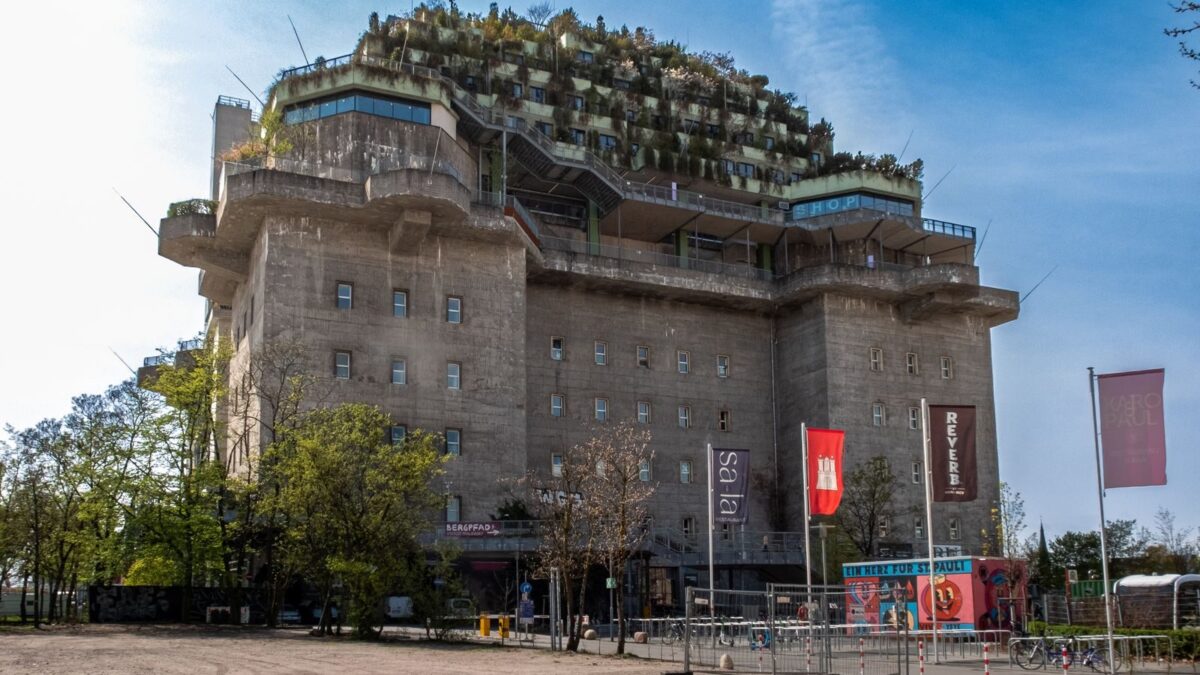
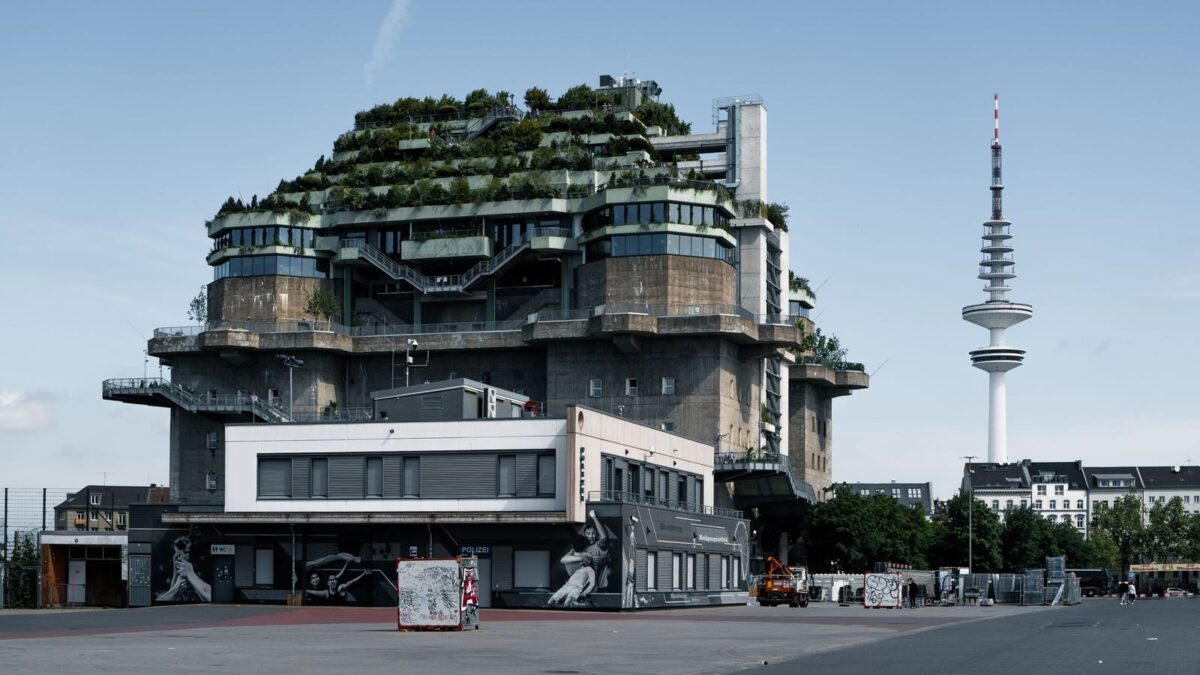
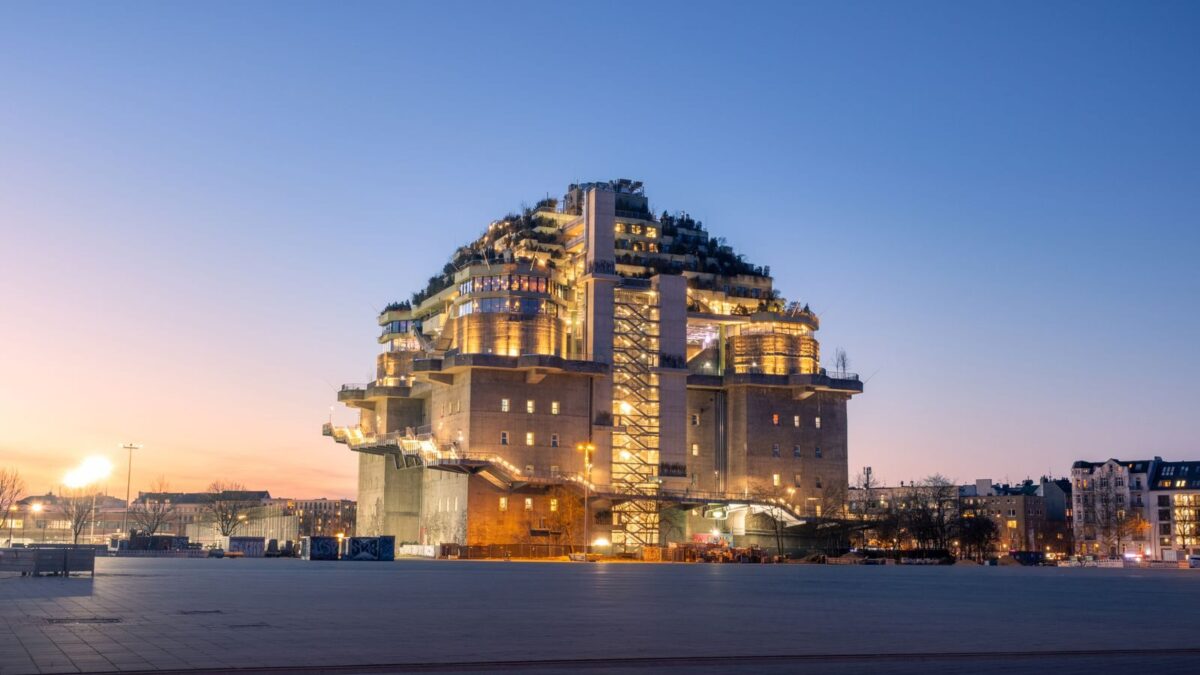
The “Green Bunker” in St. Pauli (officially known as the *St. Pauli Bunker*—historically referred to as *Flak Tower IV* on Feldstraße) ranks among the most spectacular urban development and climate adaptation projects in Europe. The former World War II bunker, originally 38 meters tall, was expanded by five additional pyramid-shaped stories, reaching a total height of 58 meters. Featuring over 20,000 trees, shrubs, and perennial plants, this heritage-listed monument now houses an accessible public rooftop garden, an external “mountain path,” a hotel, an event venue, and a site for commemoration and information. In this way, the structure uniquely combines a culture of remembrance with modern-day use and ecological urban nature.
Historical Background: From Wartime Colossus to Cultural Hub
The bunker on Feldstraße was constructed in 1942 over the course of approximately 300 days, utilizing the labor of more than a thousand forced laborers. With a footprint of roughly 75 by 75 meters, an original height of 38 meters, and reinforced concrete walls up to 3.5 meters thick, it was one of the largest above-ground bunkers in Germany. During the air raids on Hamburg, it provided shelter for tens of thousands of people, while anti-aircraft guns were stationed on its roof.
After the Second World War, attempts to demolish the structure with explosives failed due to the immense mass of the concrete and the density of the surrounding residential area. Instead, over the decades, the massive block evolved into a well-known creative and media hub, home to clubs (such as *Uebel & Gefährlich*), music studios, and various agencies. The building has been under heritage protection since 2009.
Architecture and the Concept of Vertical Expansion
The idea for the greenery originated largely from a local citizens’ initiative (known as “Hilldegarden”) before the privately funded construction project—with a price tag of approximately 60 million euros—was implemented starting in 2019 and opened in 2024.
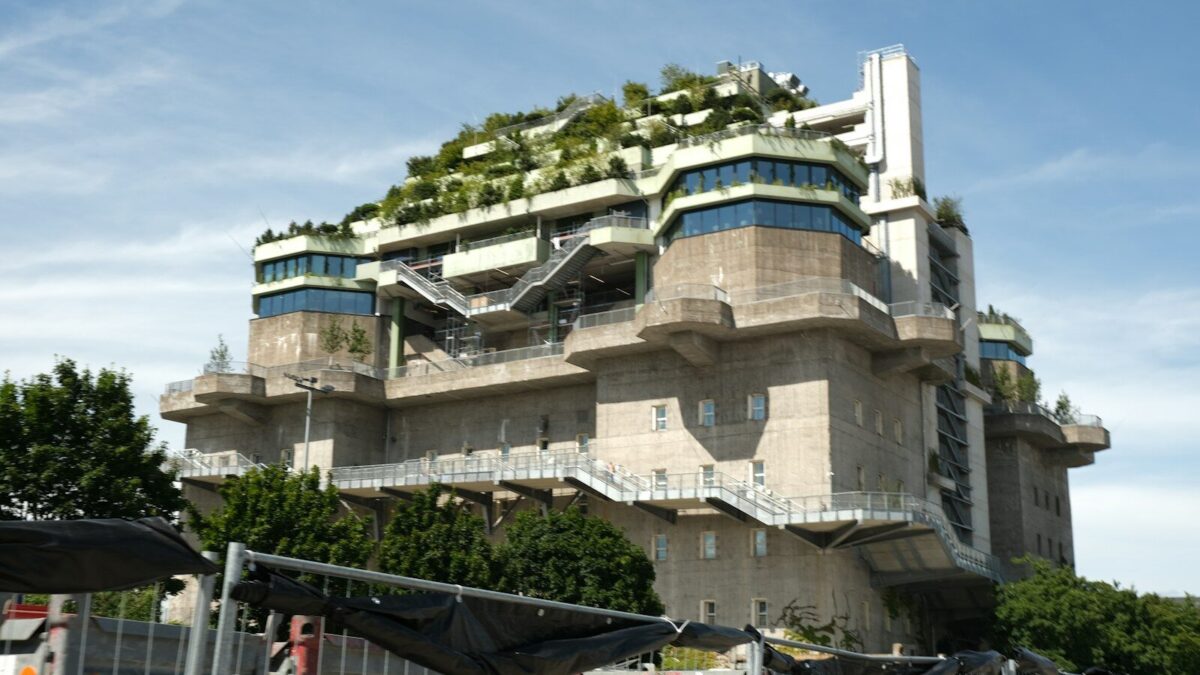
- Pyramid-Shaped Expansion: To avoid damaging the existing, heritage-protected structure within, the bunker was not hollowed out; instead, it was expanded upward with five stepped stories. This increased the building’s height by 20 meters, bringing it to a total of 58 meters.
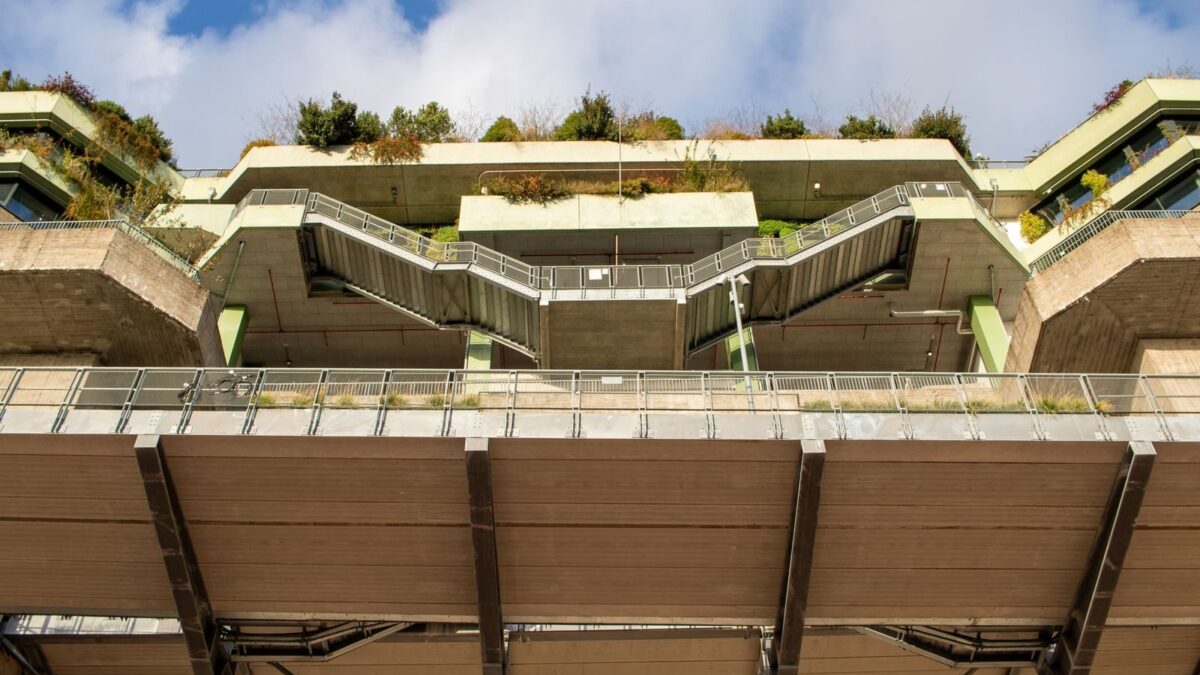
- The “Mountain Path”: A distinct architectural highlight is the approximately 560-meter-long, landscaped “mountain path.” It winds along the exterior facade, leading from street level all the way to the roof. Visitors can “climb” the bunker free of charge, with each meter revealing new vistas of the Heiligengeistfeld, the harbor, and Hamburg’s city center.
Ecology and Urban Climate Research
In an era of increasing heatwaves and heavy rainfall events, the “Green Bunker” serves as an internationally recognized “living lab” for urban climate adaptation:
- Biodiverse Planting: Across a total of approximately 10,000 square meters of roof and facade space, there are about 4,700 woody plants—including pines, maples, serviceberries, and fruit trees—along with roughly 16,000 to 20,000 perennials and climbing plants.
The plants originate primarily from Northern European and alpine regions, enabling them to withstand the extreme conditions at a height of nearly 60 meters—including strong winds, frost, and intense solar radiation.
- Intelligent Water Management: A specialized retention green roof stores rainwater within a drainage layer and cisterns. This water is then used to automatically irrigate the vegetation via sub-surface and drip irrigation systems, while also helping to relieve pressure on the municipal sewer system during heavy rainfall.
- Scientific Monitoring: The Technical University of Berlin is monitoring the project over several years using sensors. Measurements include evaporative cooling, the cooling effect on the local microclimate, and the development of biodiversity—such as the arrival of insects and birds.
Diverse Uses: Culture, Gastronomy, and Commemoration
In addition to a rooftop garden that is open to the public free of charge (accessible via a mountain-like path or an elevator), the “Green Bunker” now houses a wide variety of public and commercial facilities:
- Information and Memorial Site: For the first time, the bunker features a dedicated exhibition that critically examines its construction history, the Nazi dictatorship, and the fate of forced laborers.
- Georg Elser Hall: A new multi-purpose event hall provides space for concerts, cultural events, and school sports activities for the local neighborhood.
- Hospitality and Dining: The upper floors are home to the lifestyle hotel Reverb by Hard Rock, which offers approximately 134 guest rooms. The offering is complemented by restaurants (such as La Sala or Karo&Paul, located in one of the flak towers), cafés, and a kiosk on the roof.
- Community culture: The association Hilldegarden e. V. carries out urban gardening, as well as neighborhood and educational projects, on the site and also provides accommodations for artists and scholarship recipients.
Thanks to this combination, the Green Bunker St. Pauli is now considered one of Hamburg’s most defining new landmarks—and a symbol of how historical monuments associated with violence can be transformed into open, sustainable spaces for people to come together.
not available
Roof garden and mountain path:
| Monday | Tuesday | Wednesday | Thursday | Friday | Saturday | Sunday |
|---|---|---|---|---|---|---|
| 9 am – 8 pm | 9 am – 8 pm | 9 am – 8 pm | 9 am – 8 pm | 9 am – 8 pm | 9 am – 8 pm | 9 am – 8 pm |
Access to the mountain path and the rooftop garden of the St. Pauli Green Bunker is completely free of charge.
- No ticket required: Generally, you do not need an advance ticket; you can simply enter the path after passing through the security/access checkpoints.
- Exceptions (paid services): Naturally, costs only apply to commercial offerings, such as:
- Dining and refreshments (cafés and restaurants located within the building and on the roof)
- The hotel (Reverb by Hard Rock)
- Special guided tours of the neighborhood or the building’s architecture, provided by external operators.




The Green Bunker (Feldstraße 66, 20359 Hamburg) is located in the middle of the Heiligengeistfeld in St. Pauli and enjoys excellent transport links.
By public transport:
- U-Bahn (subway):
- U3 (yellow line): The Feldstraße station is located right in front of the bunker (only about a 1–3 minute walk). From there, the building is easy to find.
- U2 (Red Line): The Messehallen stop is also nearby (approx. a 500-meter walk).
- Bus: Bus lines 3 and 17, as well as various express buses, also stop directly at the Feldstraße (Heiligengeistfeld) stop.
By Car:
Since the bunker is located right by the lively Heiligengeistfeld (near the Millerntor Stadium and the Karolinenviertel district)—and because parking spaces directly at the building are extremely limited and often closed off during major events (such as the Hamburger DOM)—we recommend using nearby parking garages:
-
- Rindermarkthalle Parking Garage: Located in the immediate vicinity (accessible via Neuer Kamp or Budapester Straße, for example).
- Messe Parking Garage: Approx. 900 spaces, open 24/7 (Lagerstraße).
- Address for navigation systems: Feldstraße 66, 20359 Hamburg

