


Project Description
JUNGFERNSTIEG


Key Facts at a Glance
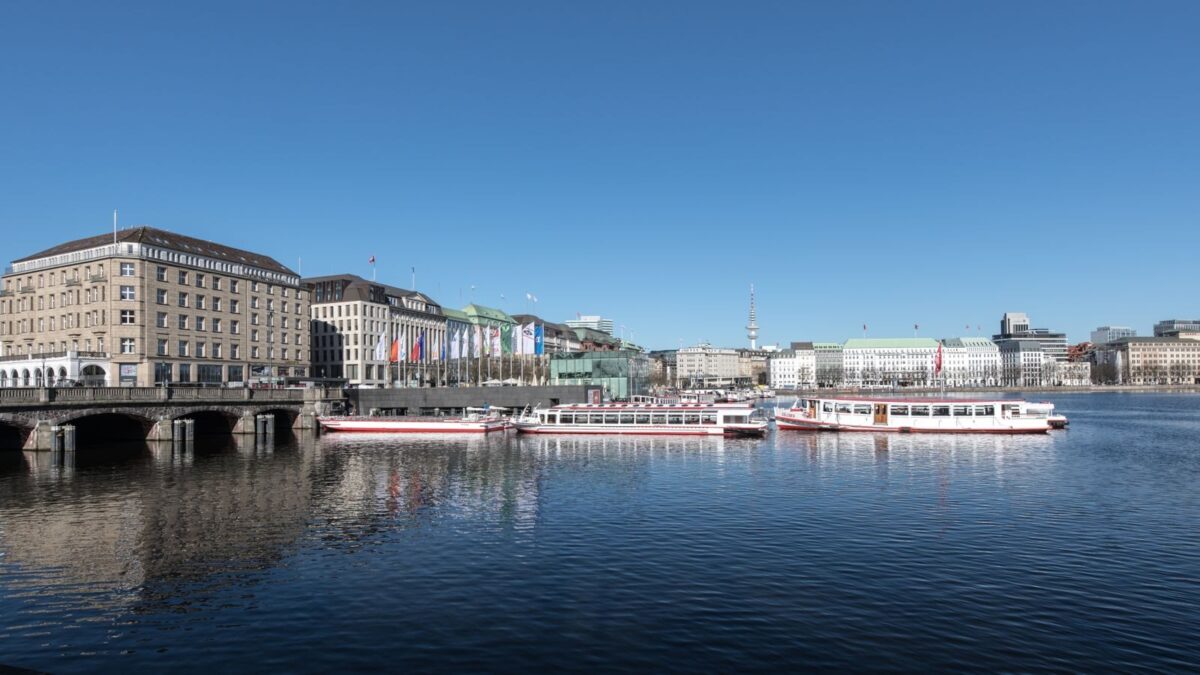
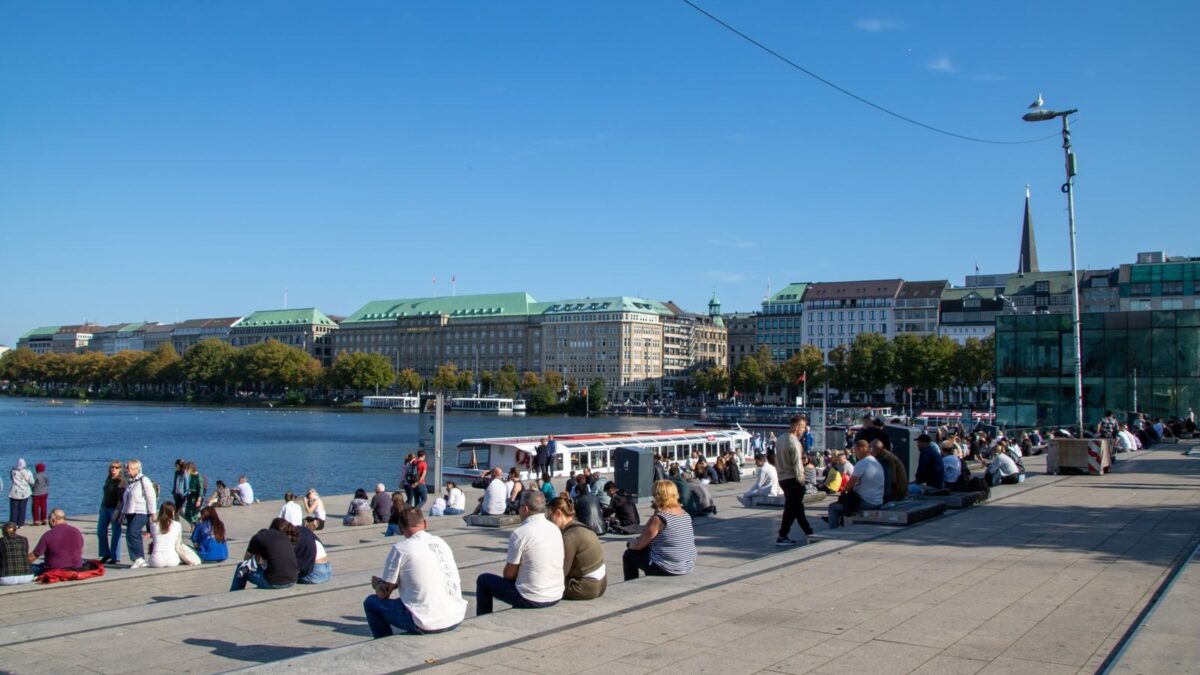
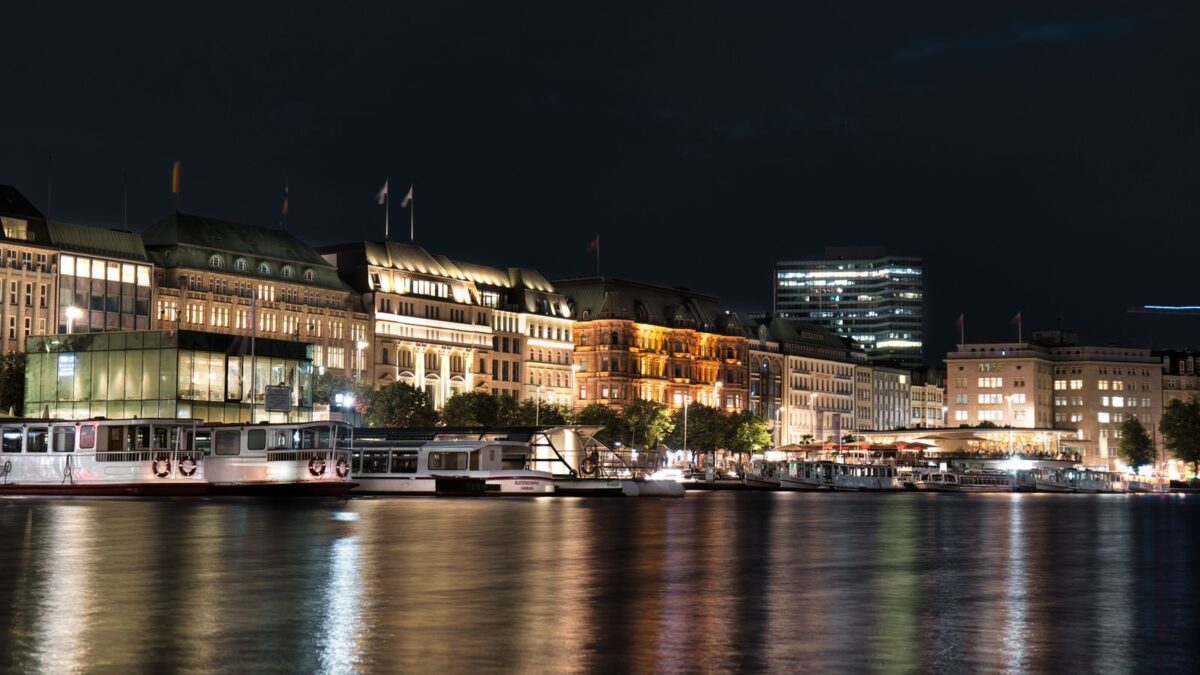
The Jungfernstieg in Hamburg is one of Germany’s most famous and historic grand boulevards and promenades. Situated directly on the southwestern bank of the Inner Alster Lake (Binnenalster), it bridges the gap between tradition and modern urban life. Originally constructed in 1235 as a simple dam—serving both a grain mill and defensive purposes—it evolved over the centuries into the Hanseatic city’s most elegant promenade. It was here that affluent families once brought their marriageable daughters for an outing—a custom that gave the street its name (literally “Maidens’ Ascent”). Today, the Jungfernstieg serves as a vibrant hub, a major transport junction, and a central starting point for exploring Hamburg’s city center.
Historical Development: From Dam to Promenade
The history of the Jungfernstieg began in the Middle Ages with the damming of the Alster River via the so-called “Reesendamm.” By the 17th century, the dam had transformed into a sheltered avenue, defined by the regular promenading of the city’s upper-class citizens.
- Pioneering Milestone: In 1838, the Jungfernstieg gained nationwide fame when it was inaugurated as the first asphalt-paved street in Germany.
- The Great Fire (1842): Following this devastating catastrophe, the surrounding area was completely rebuilt, resulting in the construction of magnificent commercial and office buildings.
- A Cultural Meeting Point: Renowned figures, such as the poet Heinrich Heine, appreciated the lively atmosphere and the scenic views across the water.
Furthermore, it was here in October 1841 that the *Deutschlandlied*—written by Hoffmann von Fallersleben—was performed in public for the first time.
Architecture, Shopping, and Dining
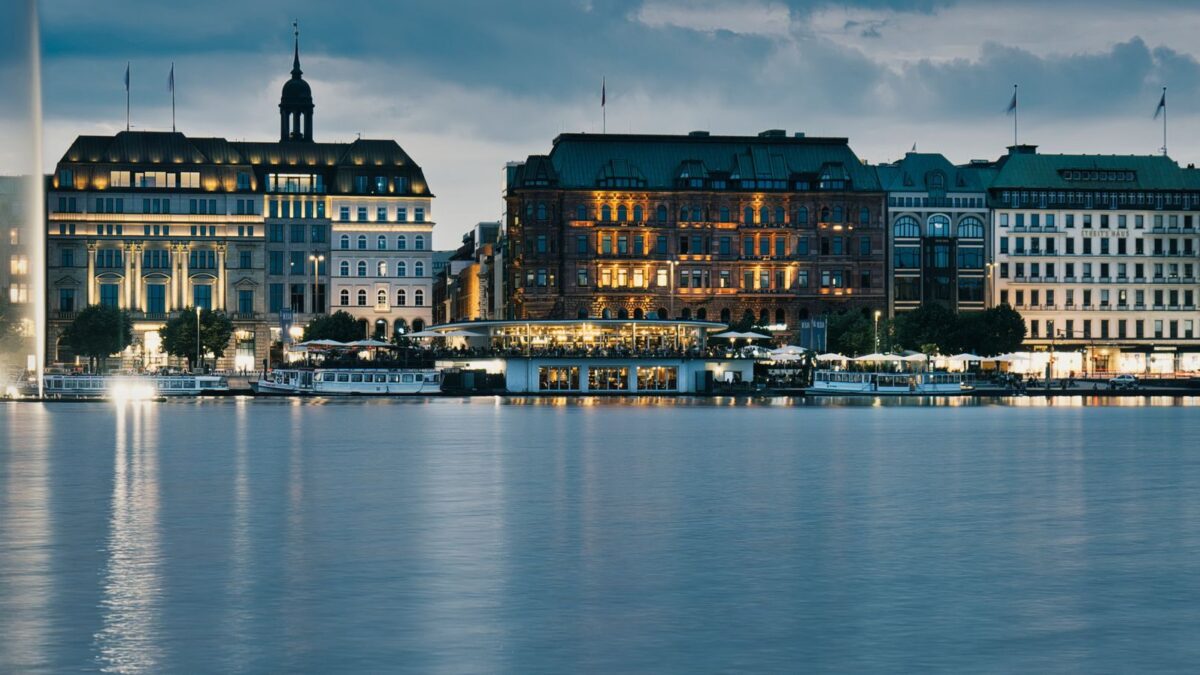
The architecture along the Jungfernstieg is characterized by a blend of historic Hanseatic heritage and modern-day use.
- Landmark Establishments: The long-established *Alsterhaus* department store and the historic *Alsterpavillon*—a culinary hub situated right by the water—have defined the character of the promenade for generations.
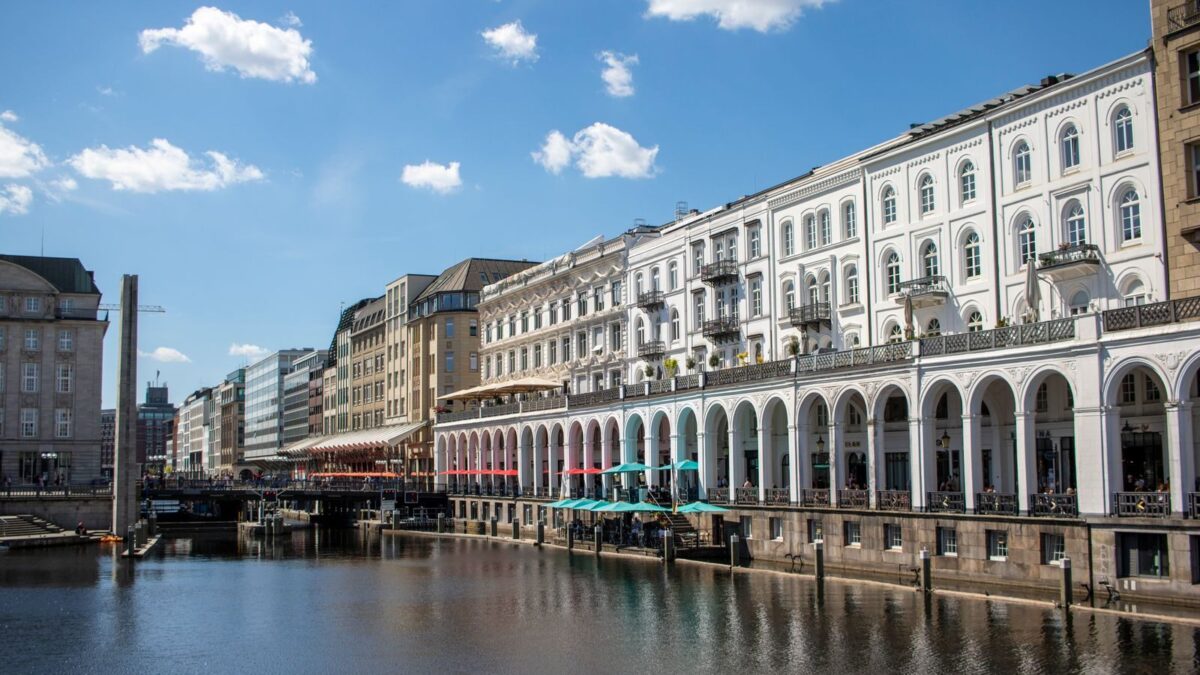
- Shopping Destinations: Nearby arcades, such as the *Hamburger Hof* and the adjacent *Europa-Passage*, make this area a highly popular shopping destination.
Modern Redevelopment and Traffic Planning
To meet the evolving demands of a modern metropolis, the Jungfernstieg underwent extensive redevelopment in the 2000s. The sidewalks were significantly widened and paved with light-colored stone, providing more space for large-scale events such as the annual *Alstervergnügen* festival. More recently, the traffic management strategy has been substantially revised to reduce private vehicle traffic in favor of pedestrians, cyclists, and public transport.
Transport Hub and Maritime Services
The Jungfernstieg serves as one of the most important transit hubs in Hamburg’s public transport network. The station of the same name connects several U-Bahn (subway) and S-Bahn (suburban train) lines—including the U1, U2, and U4—directly beneath the water’s surface.
Additionally, traditional boat piers are located right by the steps leading down to the Binnenalster (Inner Alster Lake). From here, Alster excursion boats depart for tours across the Inner and Outer Alster lakes, as well as into the surrounding historic canals and waterways—making this boulevard a tourist attraction of international stature.
unavailable
Most store are open from 10 am to 8 pm.
free




By Public Transport:
- U-Bahn (subway) and S-Bahn (urban rail): The Jungfernstieg station—served by both U-Bahn and S-Bahn lines—is one of the city’s most important central hubs. It is served by U-Bahn lines U1, U2, and U4, as well as several S-Bahn lines, placing you right in the heart of the action.
- Bus and Ferry: Numerous bus lines stop directly at Jungfernstieg or in the immediate vicinity. Additionally, the Alster ferries (operated by HADAG) dock here.
By Car:
- As Jungfernstieg is a traffic-calmed area designed primarily for pedestrians and cyclists, it is best to approach via the surrounding main thoroughfares (such as Ballindamm or the Wallring).
- There are several large parking garages and underground parking facilities located directly beneath the area and in the immediate vicinity (e.g., under the Europa-Passage or at the Alsterhaus), from which you can reach the promenade in just a few minutes’ walk.

