


Project Description
MUSEUMSHAFEN OEVELGÖNNE


Key Facts at a Glance
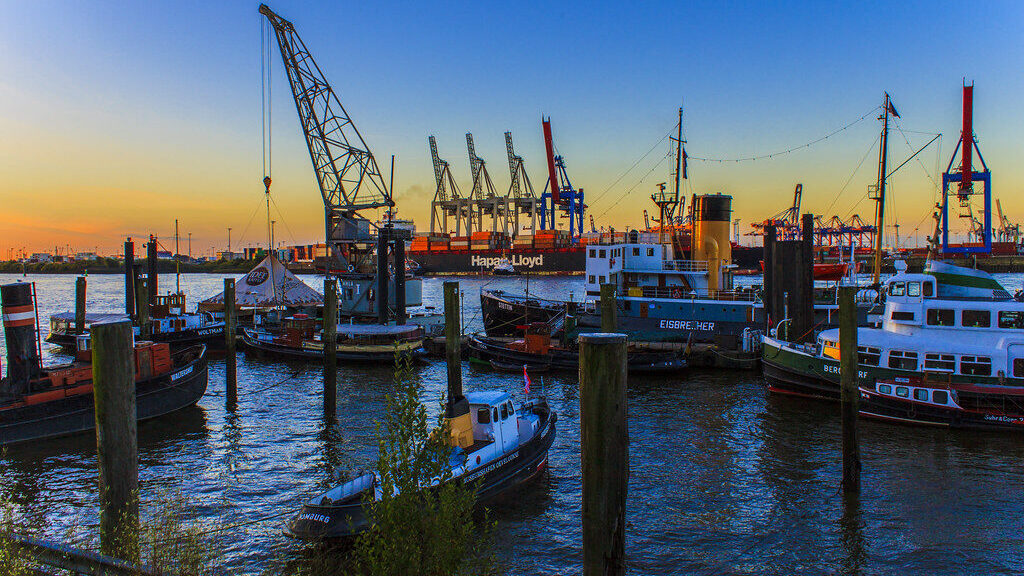
The Övelgönne Museum Harbor in Hamburg-Altona is a vibrant open-air maritime museum and a historic home for classic vessels. Situated directly on the banks of the Elbe, it preserves and showcases floating monuments of commercial maritime history—ranging from vintage tugboats and steamships to traditional sailing barges (*Ewer*) and other historic sailing craft. Managed by volunteers, the project bridges the Hanseatic city’s rich seafaring heritage with the active life of the modern harbor, inviting visitors to experience maritime traditions in their authentic, original state.
History and Origins
The concept for a museum harbor in Hamburg emerged in the 1970s, driven by a desire to save historic vessels from the scrapyard and instead maintain them in seaworthy condition within the everyday harbor environment.
- Founding: The association Museumshafen Övelgönne e.V. was established in 1974 to provide a permanent mooring for these historic ships.
- The Neumühlen Location: The historic pier at Övelgönne proved to be the perfect site—a location deeply rooted in the history of Hamburg’s tugboat and pilot services. The historic quay walls and the charming, rustic surroundings provide an ideal setting for these venerable classic vessels.
Floating Legends: A Diverse Fleet
The harbor is not home to static museum exhibits, but rather to fully functional, lovingly restored classic vessels from maritime history. The fleet comprises various types of vessels that once formed the backbone of the harbor:
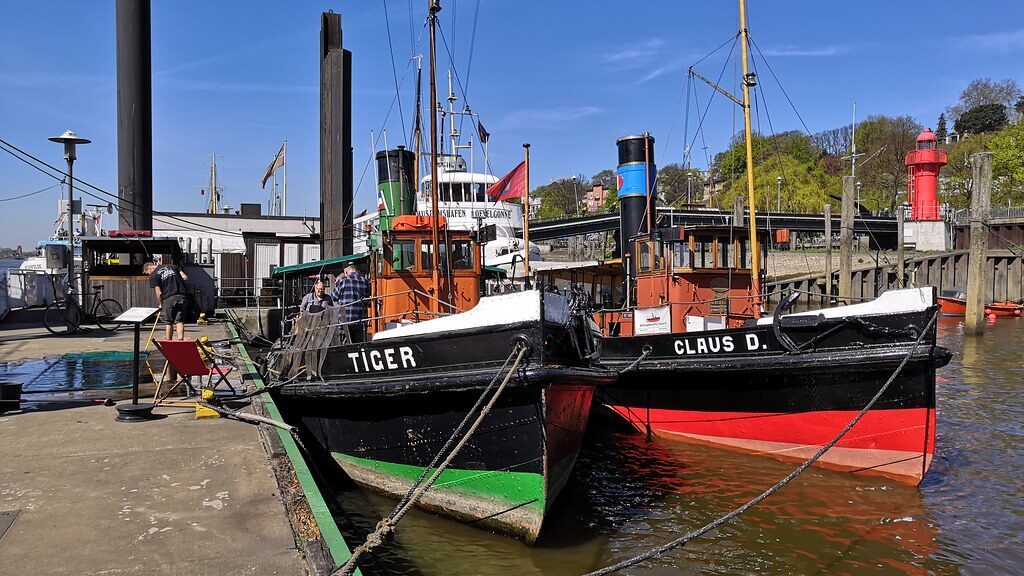
- Steamships and tugboats: Powerful pioneers of the towing industry that once maneuvered large vessels. A famous example is the steam tug CLAUS D..
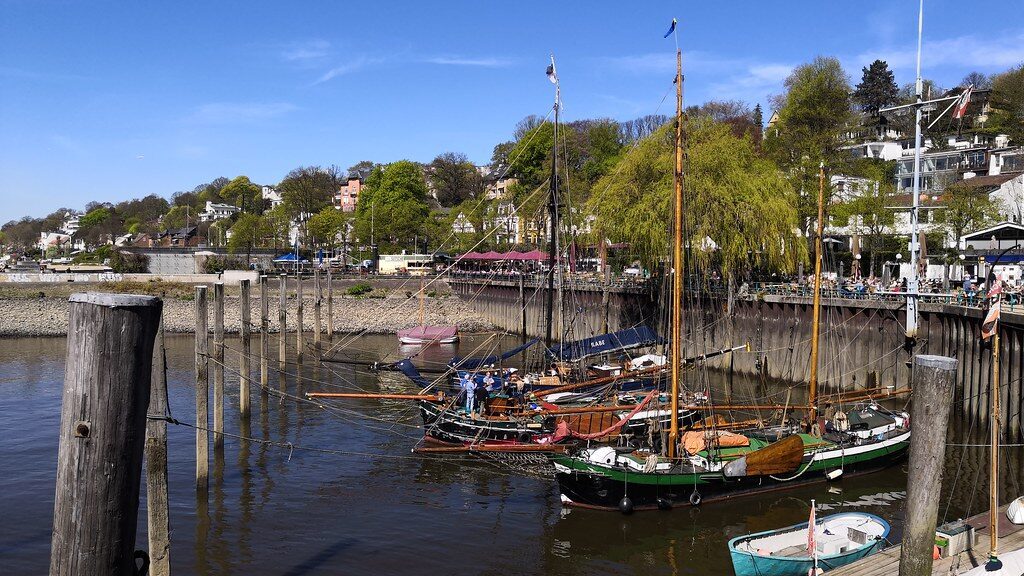
- Sailing ships and traditional barges (*Ewer*): Historic cargo-carrying sailing vessels—such as *Ewer* (flat-bottomed barges) or cutters—that once transported goods along rivers and coastal waters.
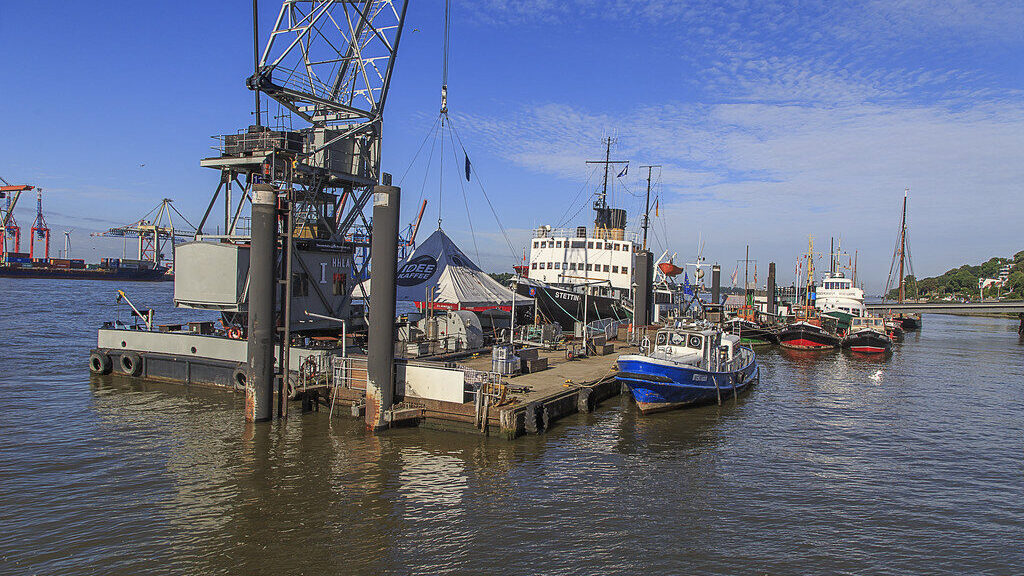
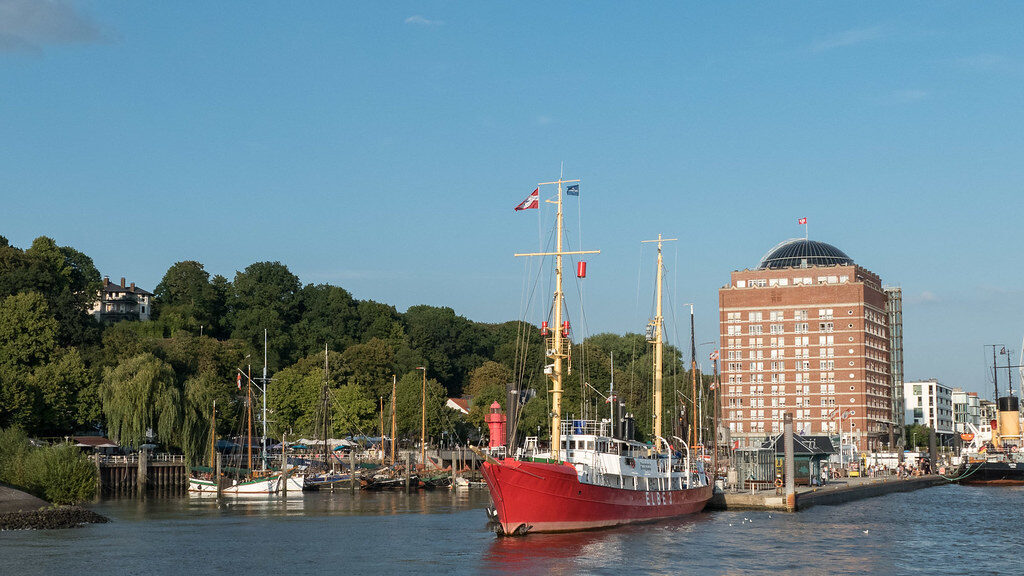
- Lightships and workboats: Floating stations and service vessels that helped ensure the safety of maritime routes.
- Many of these ships are maintained and cared for by volunteer crews in their spare time; they are also taken out for traditional excursions or regattas on the Elbe River.
Atmosphere and the On-Site Experience
A visit to the museum harbor can be perfectly combined with a stroll along the Elbe beach and the adjacent historic buildings.
- Up close: Unlike in enclosed museums, at the Övelgönne museum harbor, you can usually view the ships from the piers at very close range.
You can see cast-iron rivets, weathered wooden planks, and a polished brass ship’s telegraph.
- Events: On special occasions—such as the Hamburg Port Anniversary or traditional maritime gatherings—the harbor truly comes to life as the vintage vessels hoist their flags and set sail for excursions.
- The Surroundings: Directly adjacent to the museum harbor lies the historic residential area of Övelgönne, and just a few steps away, the famous Strandperle café invites visitors to take a break while enjoying a direct view of passing container ships.
Significance for Maritime Heritage
The Övelgönne Museum Harbor is known far beyond the borders of Hamburg. It makes an invaluable contribution to the preservation of maritime cultural heritage, demonstrating in an impressive way how the history of technology can be kept alive—not by letting it languish in a museum, but by allowing it to do exactly what it was built for: sailing on the water.
+49 40 41 91 27 61
As an open-air museum on the Elbe, the Museumshafen Oevelgönne e.V. is accessible 24 hours a day, 365 days a year—meaning you can take a stroll along the quays and piers at any time.
Different hours apply for interior visits and special activities:
- Outdoor area & piers: Accessible 24 hours a day (free of charge).
- Lightship “ELBE 3” & historic vessels: Tours and “Open Ship” events generally take place at specific times (often on Wednesdays and Saturdays, depending on the availability of the volunteer crew).
- Public guided tours: Offered seasonally (from April to September, usually on the first Saturday of each month).
Visiting and strolling along the quays and piers of the Museumshafen Oevelgönne e.V. is completely free of charge, as it is an open-access, outdoor area located on the banks of the Elbe.
However, costs may apply for certain activities:
- Viewing historic vessels (“Open Ship”): When ships open their hatches to visitors or offer guided tours on board (for example, on the lightship ELBE 3), a small donation or a nominal fee is often requested to help with the preservation of the vessels.
- Boat trips: Those wishing to join regular excursions as passengers on the traditional sailing ships or steamships are asked to pay a fare (tickets can generally be purchased through the association or directly at the vessels).




By Public Transport:
- By Ferry: The most scenic and convenient way to arrive is by taking ferry line 62 from the Landungsbrücken (piers) or the Fischmarkt (fish market) directly to the Övelgönne pier. From there, you are practically right on the docks of the Museum Harbor.
- By Bus: Bus line 112 travels directly to the Neumühlen / Övelgönne stop. From this stop, a short walk—or a set of stairs—leads you directly down to the harbor and the Elbe river beach.
- By S-Bahn (Suburban Train): Take the train to the Königstraße station (lines S1, S2, S3) or Altona station. From Königstraße, it is about a 10–15 minute walk downhill toward the banks of the Elbe.
By Car:
Direct vehicular access to the quayside (Neumühlen / Strandweg) is highly restricted and largely reserved for local residents.
- Getting Here: The area is best accessed via Große Elbstraße or Elbchaussee.
- Parking: Parking spaces near the waterfront are extremely scarce and fill up quickly on sunny days or weekends. It is therefore recommended to park further uphill in the surrounding residential areas of Altona/Ottensen (please note: parking permits or paid tickets are often required) or in one of the parking garages along Große Elbstraße, and then complete the remainder of your journey on foot, by bus, or by ferry.

