


Project Description
ST. PAULI PIERS


Key Facts at a Glance
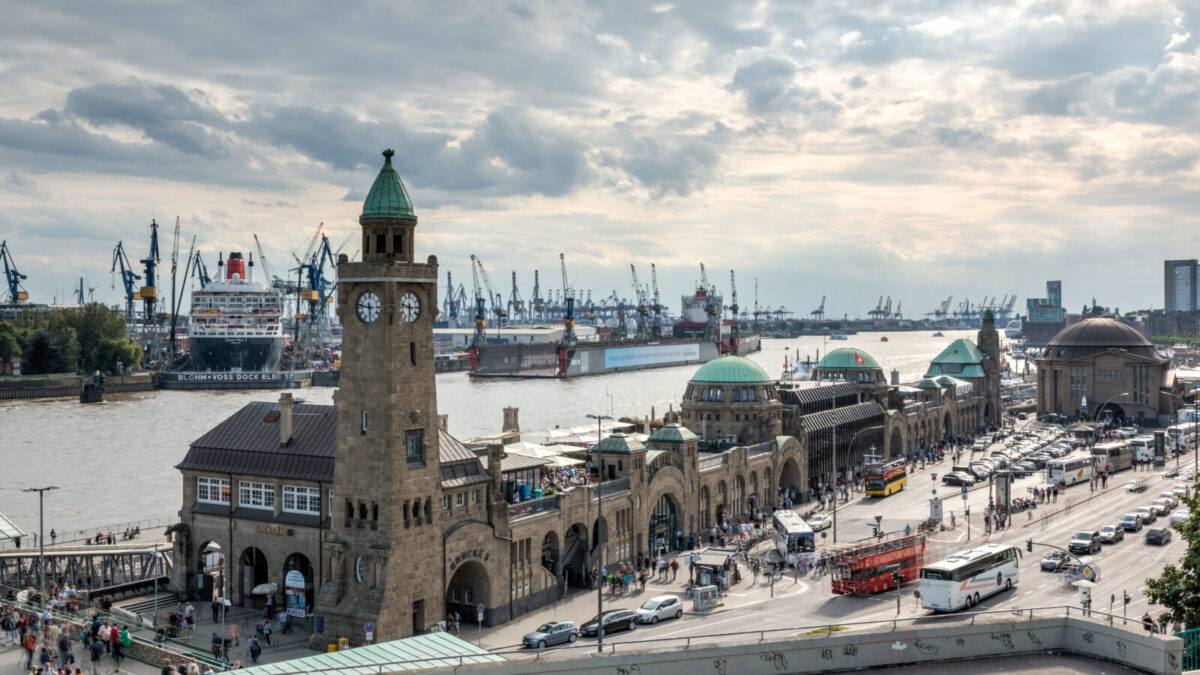
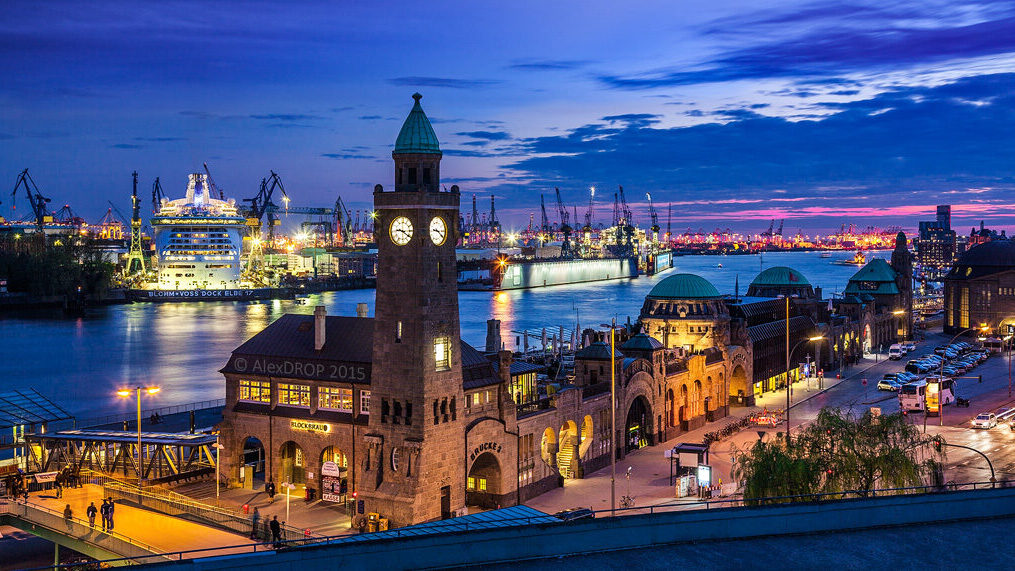
The St. Pauli Piers are the pulsating maritime heart of Hamburg and one of the most famous attractions in the Hanseatic city. As a floating jetty, they extend around 700 meters along the Norderelbe between the harbor and the historic warehouses. Where steamships and emigrants once processed, today busy ferry traffic, nostalgic barges, world-famous museum ships and maritime flair meet – an indispensable starting point for every visit to Hamburg.
Historical origin: From a dock for coal steamers to a landmark
The history of the Landungsbrücken dates back to the late 19th century.
- The beginning (1907-1909): The original pontoons were built at the beginning of the 20th century to handle the growing passenger and freight traffic of passenger ships. Large parts of the complex were destroyed in the Second World War, whereupon the landing stages were rebuilt in their current, characteristic form between 1953 and 1955.
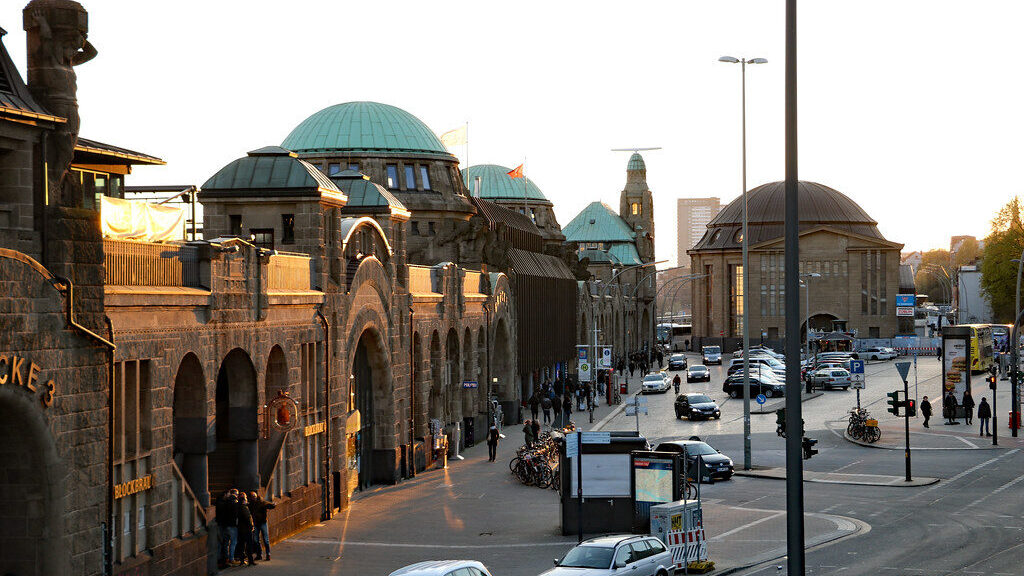
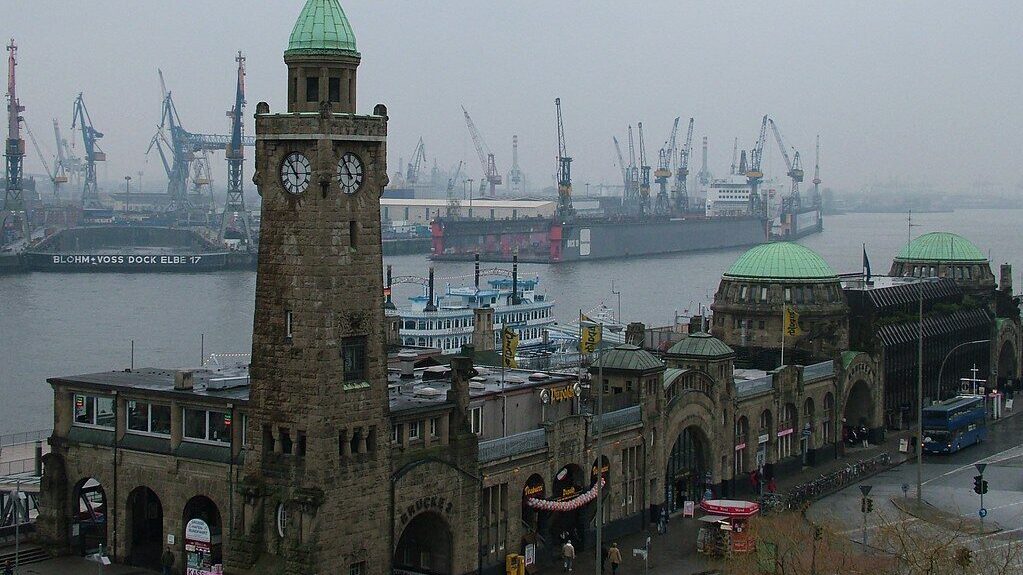
- The striking terminal building: The heart of the building is the long building designed in the late Wilhelminian style and brick Gothic style with its characteristic towers, passageways and the large water level meter.
Architecture and the floating pontoons
The technical peculiarity of the jetties is their construction: the jetties are not fixed piers, but rather floating pontoons that are connected to the fixed bank by massive bridges.
- Tidal range: Since Hamburg is a tidal port with ebb and flow (the water level here fluctuates by up to 3.50 meters on average), the pontoons, including the passengers and buildings on them, rise and fall continuously with the water level of the Elbe.
- The bridge numbering: The system is divided into bridge sections (from bridge 1 to 10). Each bridge has its own purpose – from the large HADAG line ferries to the tourist harbor tour ships to historic traditional steamers.
The highlights at the St. Pauli Piers
There are a wealth of attractions and points of contact on and around the St. Pauli Piers:
- The water level clock: The striking tower with the large clock not only shows the current time, but also the exact water level (high and low water) in the Elbe for sailors and interested parties.
- Harbor cruises & Barges: The classic large paddle steamers, modern excursion ships and the smaller, maneuverable wooden barges that sail through the historic fleet of the Speicherstadt or the huge container terminals start directly from the pontoons.
- The HADAG ferries (line 62): An absolute insider tip for cheap harbor tours is the regular ferry 62, which runs from the landing stages via Övelgönne to Finkenwerder – can be used with a normal HVV ticket!
- Museum ships: Directly in front of the bridges there are floating legends such as the cargo sailor Rickmer Rickmers and the Russian submarine B-435 (U-434), which can be visited.
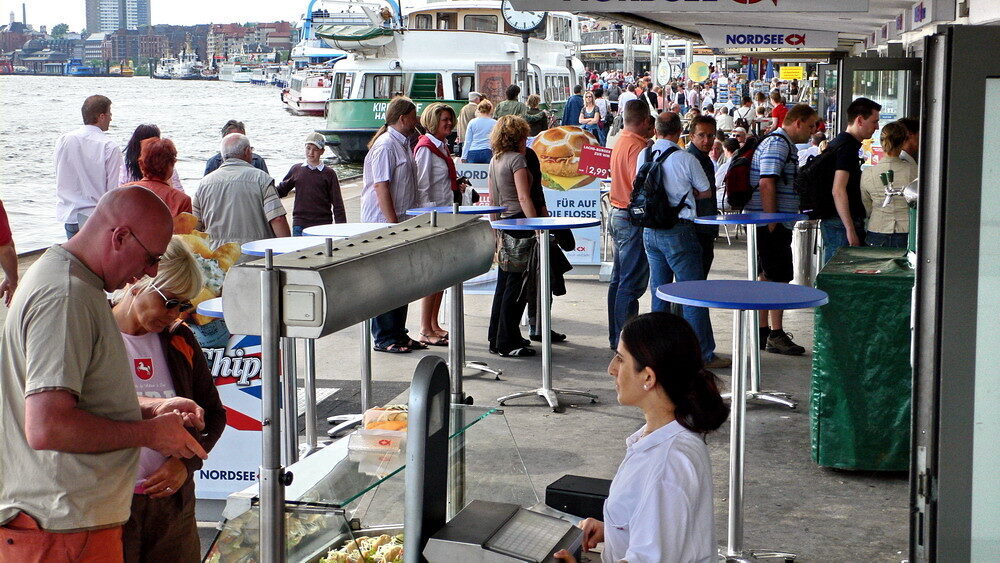
- Culinary classic: No visit to the St. Pauli Piers is complete without a traditional fish sandwich (preferably Bismarck herring or crabs) from the kiosks directly on the promenade.
Transportation hub and connection
As already described with the neighboring attractions (Alter Elbtunnel and Kiez), the St. Pauli Piers are one of the most important transport hubs in the city. The subway (U3), S-Bahn (S1, S3), various bus lines and ferry connections all converge seamlessly here, making the area extremely accessible.
Whether for the view of passing ocean giants, the start of a cruise on the Elbe or simply for strolling with a stiff breeze of wind in your face – the St. Pauli Piers embody the freedom and global connection of the port of Hamburg like no other place.
unavailable
The St. Pauli Piers itself is a public waterfront promenade and, as a floating jetty, is freely accessible around the clock (24/7). So you can walk there at any time of the day or night and enjoy the view of the harbor.
However, the opening times of the various facilities on and on the jetties vary:
- Gastronomy & Kiosks (fish sandwiches, snacks): Mostly open from the morning (approx. 10:00 a.m.) until the evening (often longer in summer).
- Harbor cruises & Launches: The first ships usually leave around 10:00 a.m.; Depending on the season, the last tours usually start in the late afternoon or early evening (around 6:00 p.m./7:00 p.m. in summer, earlier in winter).
- Museum ships (e.g. Rickmer Rickmers): Usually open daily from around 10:00 a.m. to 6:00 p.m.
- Public transport (HVV pier & stations): The S-Bahn and subway trains as well as the regular HADAG ferries run at the usual, frequent intervals from early in the morning until late at night (or continuously on weekends).
Since the St. Pauli Piers are a public waterfront promenade and an open landing area, strolling around and enjoying the view of the harbor is completely free of charge.
Admission fees only apply if you choose to take advantage of specific services or attractions on-site:
- Harbor tours & launches:
- Prices vary depending on the provider and the duration (approx. 1 hour).
- Typical range: approx. €20.00 to €30.00 for adults (often with discounts for children).
- HADAG ferries (e.g., line 62 toward Finkenwerder / Elbstrand):
- If you opt for the regular commuter ferries rather than a traditional tourist harbor tour, you won’t pay a cent extra, provided you have a standard HVV ticket (or the €49 “Deutschlandticket”).
- Museum ships (e.g., the historic sailing ship Rickmer Rickmers):
- Admission to board generally costs around €6.00 to €8.00 for adults.




By Public Transport:
Using public transport is the easiest and most stress-free way to reach the St. Pauli Piers, as the stations are located right in front of or within the complex itself.
- U-Bahn (Subway):
- Line U3: The “Landungsbrücken” station is located right in the heart of the complex. As soon as you step off the train, you are practically at the gateway to the Elbe River.
- S-Bahn (Commuter Train):
- Lines S1 and S3: The S-Bahn also stops at the “Landungsbrücken” station, providing a direct connection to the main train station (Hauptbahnhof), Altona, or the airport.
- Ferries (HADAG):
- If you are arriving from the direction of Övelgönne, Steinwerder, or Finkenwerder, you can take the regular scheduled ferries (e.g., ferry line 62), which dock directly at the pontoons.
- Bus:
- Various bus lines serve the “Landungsbrücken” stop.
By Car:
If traveling by car, the route is typically via the A7 motorway (taking the Hamburg-Bahrenfeld or Othmarschen exit) and continuing along Große Elbstraße / St. Pauli Landungsbrücken; alternatively, if arriving from the east, you can travel through the city center toward the harbor.
- Important Note: Parking is not available directly on the pontoons or immediately along the promenade.
In addition, the area around the Landungsbrücken (piers) experiences heavy foot traffic and frequently hosts events.
- Parking options nearby:
- Underground and multi-story car parks: There are various parking options in the immediate vicinity, for example around Helgoländer Allee or the street Vorsetzen.
- Elbphilharmonie car park: For those who don’t mind a short, pleasant walk along the quayside, the modern underground car park at the Elbphilharmonie (HafenCity) usually offers convenient parking space.
- Heiligengeistfeld: The large parking areas located there are also just a short walk away—down the hill.

