


Project Description
TREPPENVIERTEL BLANKENESE



Key Facts at a Glance
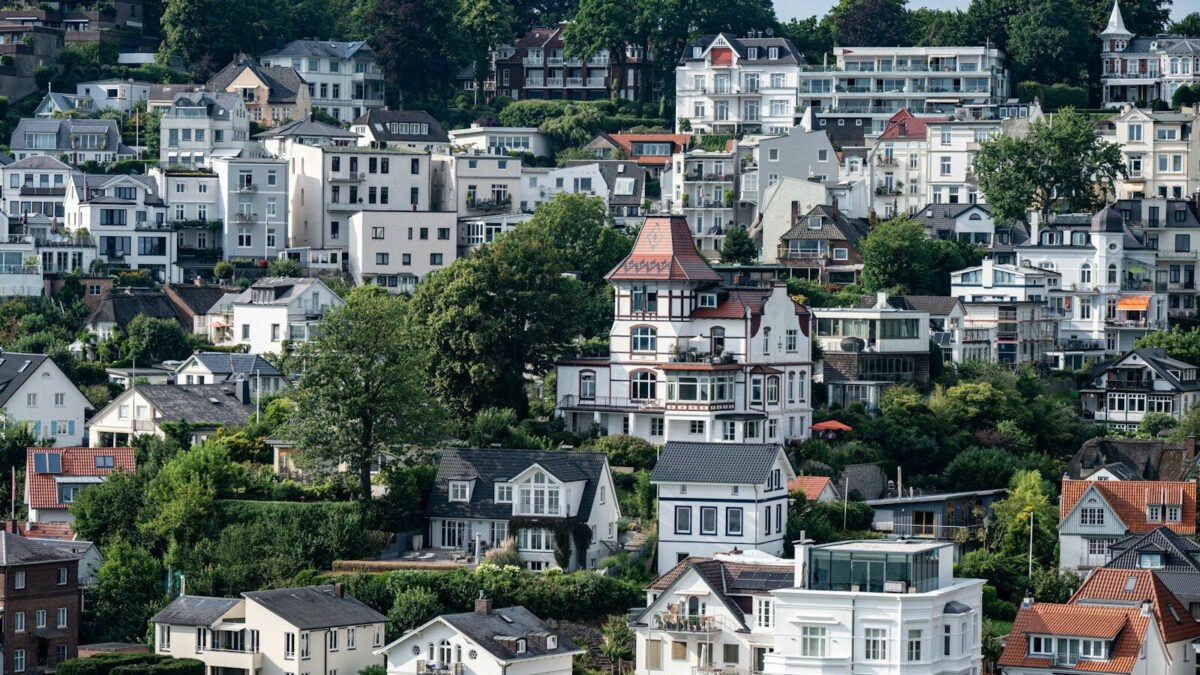
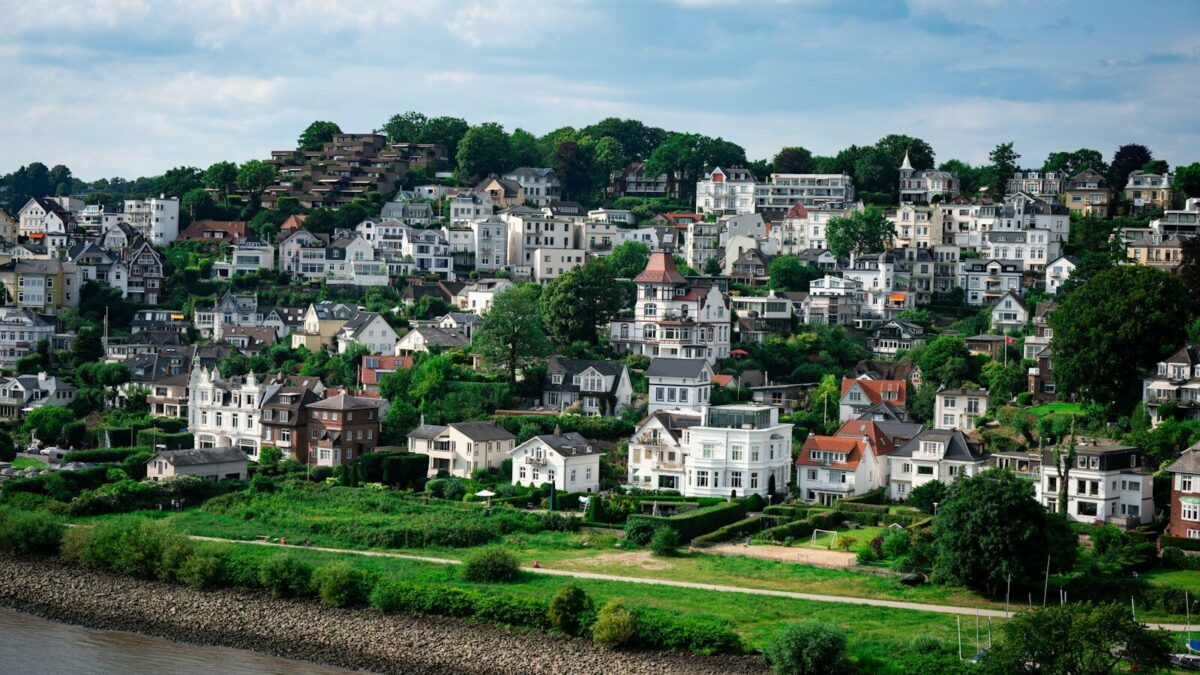
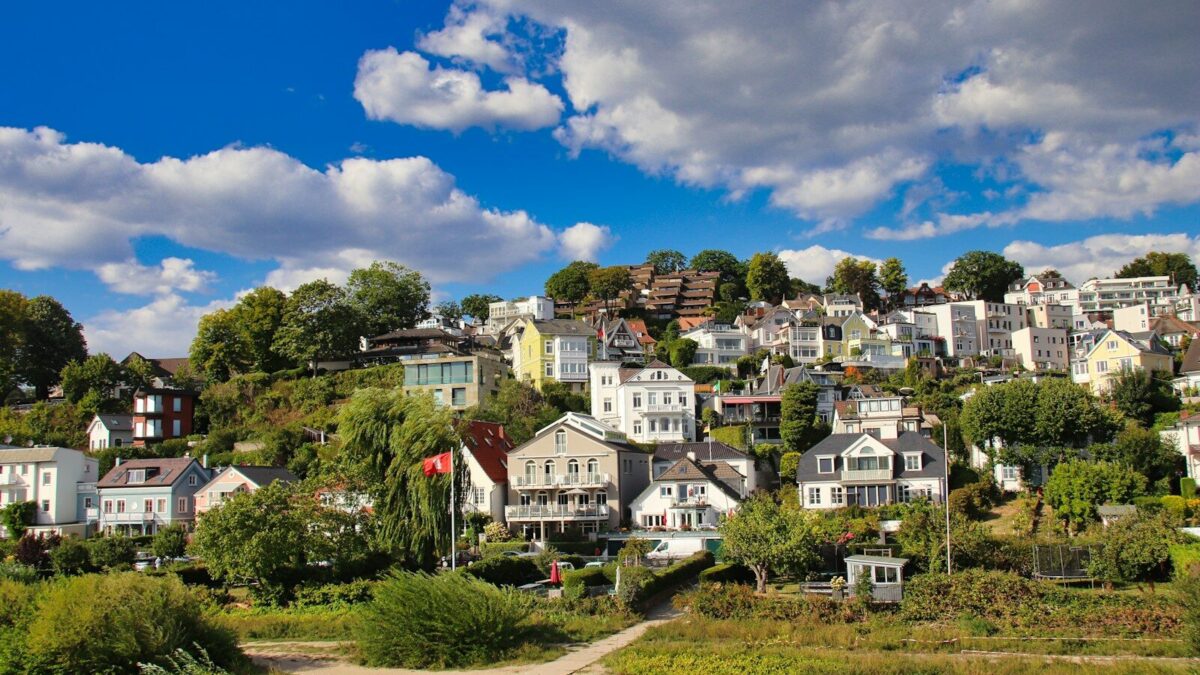
The “Treppenviertel” (Staircase Quarter) in Hamburg-Blankenese is considered one of the most picturesque and distinctive residential areas in the Hanseatic city. Once a modest fishing village on the Lower Elbe, the district has evolved into an exclusive, architecturally unique neighborhood that climbs a steep slope directly from the banks of the Elbe. Characterized by winding alleyways, thousands of steps, historic captains’ houses, and spacious villas overlooking the river, it blends maritime heritage with Hanseatic flair. Its car-free layout creates an almost village-like, unhurried atmosphere in the heart of the metropolis.
History and Origins: From Fishing Village to Upscale Suburb
The history of the Blankenese Staircase Quarter stretches far back. First documented in the 14th century as a fishing settlement, the area was defined for centuries by small cottages, seafarers, river pilots, and fishermen.
- The Tradition of River Pilots: Because the Lower Elbe approaching Hamburg is a complex and demanding shipping channel, Blankenese served for generations as the home of the Elbe pilots. Many of the picturesque alleyways seen today were laid out by these mariners, who needed to keep a constant watch on activity on the river.
- Transformation in the 19th Century: With the onset of industrialization and the discovery of the area’s scenic beauty by wealthy Hamburg merchants, the character of the neighborhood began to change.
The simple fishermen’s cottages gradually gave way to grand summer residences and imposing villas, creating the architectural diversity that still defines the neighborhood today.
Architecture and Topography: A Labyrinth of Steps and Alleyways
The most defining feature of the neighborhood is its location on a steep slope—the *Geesthang*—overlooking the Elbe River.
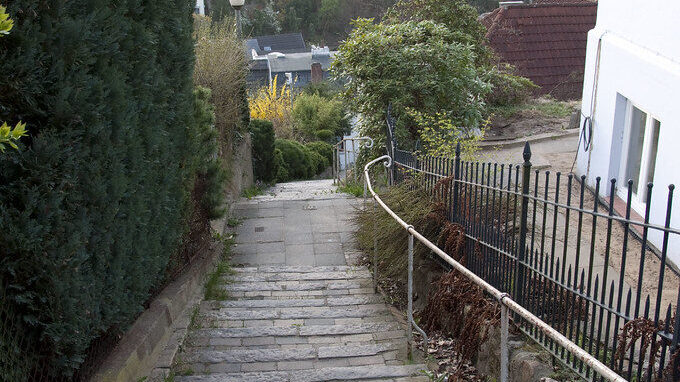
- The Network of Paths: Since the narrow lanes and footpaths are inaccessible to cars, the neighborhood is a true pedestrian paradise. It is estimated that well over 4,800 individual steps wind through the area, connecting its intricate network of alleyways.
- The Built Environment: The architecture is remarkably diverse and charming. Alongside tiny, whitewashed half-timbered houses dating back to the 18th and 19th centuries, one finds stately villas from the *Gründerzeit* (late 19th-century) era, modern glass structures, and hidden gardens. Every turn and every flight of stairs reveals a new perspective of the surrounding natural landscape.
The Heart of the Neighborhood: From the Solsberg Summit to the Elbe Riverbank
A walk through the *Treppenviertel* (the “staircase neighborhood”) takes you through various zones, each with its own unique appeal:
- The Solsberg Summit: Rising to a height of approximately 72 meters, the Solsberg forms the upper edge of the neighborhood. From this vantage point, there is a fantastic view across the sea of houses and out toward the Elbe River. This is also home to the historic Blankenese Church, which serves as the spiritual center of the neighborhood.
- The way down: Heading south via the Blankenese landing pier or the Fischerkluft path, you wind your way past lush, overgrown gardens, small viewing platforms, and vintage street lamps.
- Elbe beach and the beach path: Once at the bottom, the view opens up to the wide beach along the Elbe River. Here, you will find a succession of traditional restaurants, cafés, and the pier for the HADAG ferries. The beach promenade is perfect for long, leisurely walks, offering a close-up view of the container ships passing by.
Life in the “Staircase Quarter” today
Today, Blankenese is one of the most sought-after and expensive residential areas in Hamburg. However, life in the “Staircase Quarter” (Treppenviertel) does demand a certain level of effort from its residents: since many houses and apartments can only be reached on foot via the stairs, daily life presents logistical challenges—even waste collection services or tradespeople must devise special transport solutions or navigate the area on foot.
At the same time, the neighborhood rewards its residents and visitors with profound tranquility, far removed from the noise of traffic, a close-knit community, and an incomparable holiday-like atmosphere right on the banks of the Elbe.
unavailable
none
free of charge




By Public Transport:
- Public transport is the most convenient way to visit the “Treppenviertel” (Staircase District):
- S-Bahn (Suburban Train): Take the S1 or S11 line to the Blankenese station. From there, you can enjoy a leisurely 10–15 minute walk through the town center (Blankeneser Bahnhofstraße), heading downhill toward the Elbe River, or simply hop on a bus.
- Buses (Local Transport): Specialized neighborhood buses—affectionately known as “Bergziegen” (mountain goats)—operate directly from Blankenese station (most notably bus line 488). These small electric buses navigate the district’s narrow, winding lanes, making it easy to travel up or down, as standard-sized buses cannot access this area. Alternatively, bus line 37 also travels to the vicinity.
- Ferry (HADAG): For a particularly picturesque arrival, take the HADAG ferry (line 62) from the Landungsbrücken piers or Finkenwerder directly to the Blankenese ferry terminal on the banks of the Elbe. From there, you can begin your ascent through the Treppenviertel, starting right by the river.
By Car:
The Treppenviertel in Blankenese is entirely car-free; therefore, you cannot drive into the district or park within it. The streets are extremely steep, narrow, and closed to general vehicular traffic.
- Getting there: You can reach Blankenese from Hamburg city center or via the Elbchaussee / Osdorfer Landstraße.
- Parking: Parking spaces directly on the edge of the neighborhood or down by the Strandweg (beach path) are very limited and usually fill up quickly on weekends or in good weather. It is therefore advisable to park your car near the Blankenese train station—where there are occasional Park & Ride options or parking spaces in the town center—and continue your journey on foot or by bus. There are also parking areas down by the Elbe beach (Strandweg), but from there, the only way forward is a steep climb upward.

