


Project Description
KAPUZINERBERG


Key Facts at a Glance
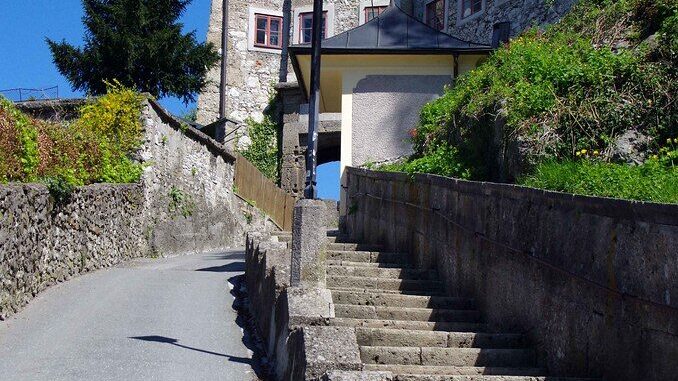
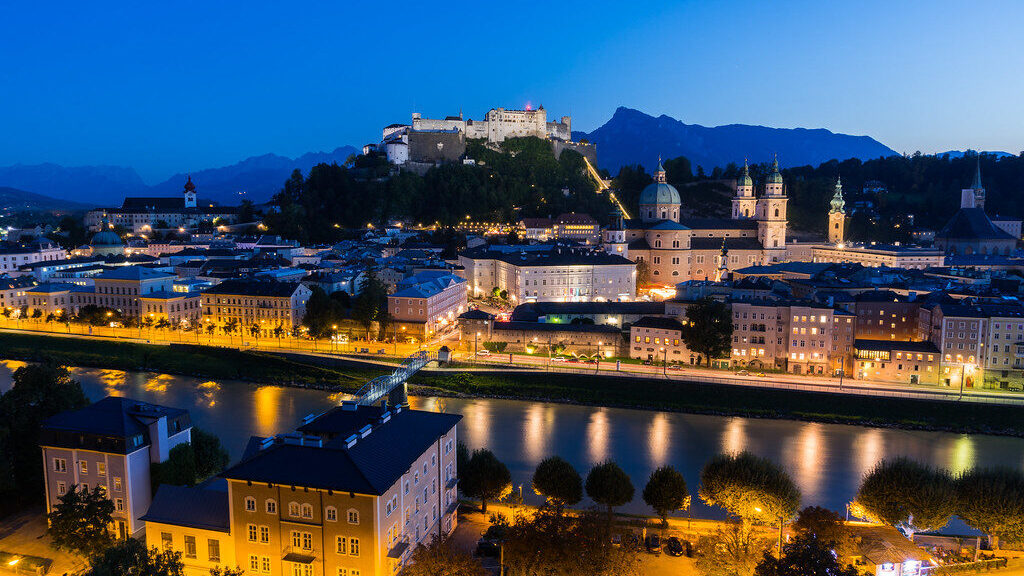
Rising directly from the right bank of the Salzach River, the Kapuzinerberg in Salzburg (originally known as the *Imberg*) stands as a green oasis and the highest of the city’s hills. It serves as a vital natural area and local recreation spot, featuring an extensive, protected forest and hiking zone right in the heart of the city that offers spectacular panoramic views of the Old Town and Hohensalzburg Fortress. Landmarks on the Kapuzinerberg include the Capuchin monastery that gives the hill its name, a historic 17th-century defensive wall, and the Franziskischlössl located to the north. The famous writer Stefan Zweig spent years working at the so-called *Paschinger-Schlößl* on the hill, and a bust commemorates Wolfgang Amadeus Mozart. Surprisingly, an independent, protected colony of chamois lives on the mountain, right in the middle of the city.
History and Religious Buildings
The Kapuzinerberg boasts a long history as both a spiritual and strategic site. Around 1599/1600, under Prince-Archbishop Wolf Dietrich von Raitenau, the decision was made to build a Capuchin monastery on what was then known as the Imberg.
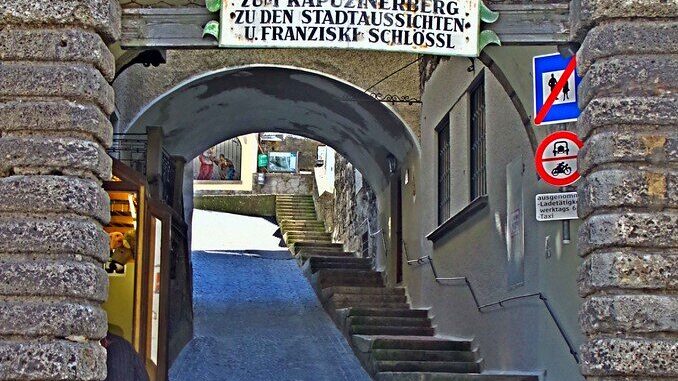
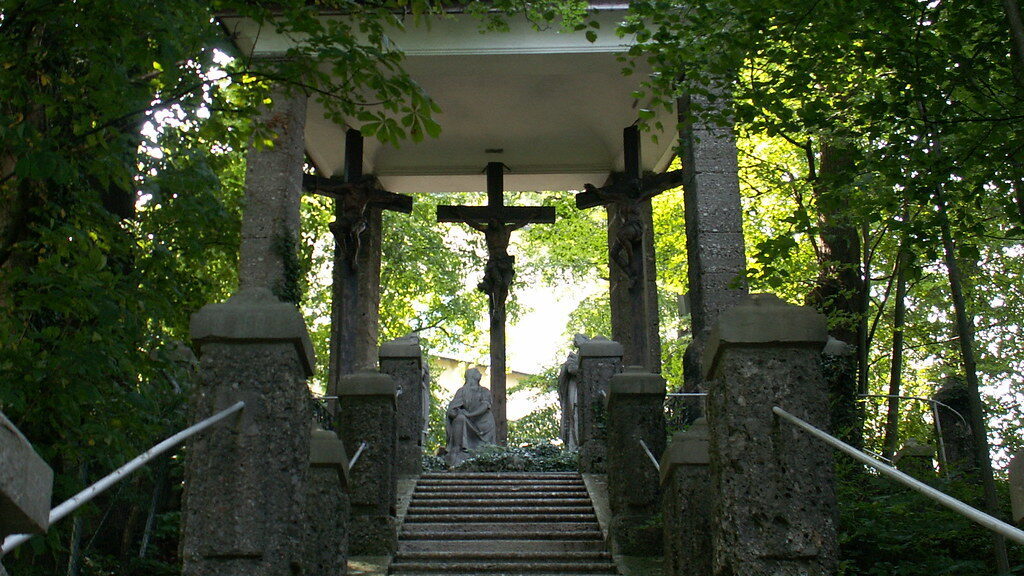
- The Stations of the Cross (Prügelweg): The traditional ascent begins on Linzer Gasse, behind the *Franziskuspforte* (St. Francis Gate/Felix Gate). Along the paved, partly steep path leading upwards, eleven historic Calvary chapels and an 18th-century Crucifixion group are lined up one after another.
- The Capuchin Monastery: Perched on a prominent rocky outcrop, it serves today—among other functions—as a joint novitiate for the German-speaking region.
Architecture and historic fortifications
In the 17th century, during the Thirty Years’ War, Prince-Archbishop Paris Lodron commissioned the construction of a massive defensive wall (the Lodron Wall) to protect the city; large sections of this wall still enclose parts of the mountain today. At the northern end of this historic fortification stands the Franziskischlössl (built in 1629). Originally designed purely as a defensive tower, it is now a popular destination featuring a restaurant.
Literary and musical connections
- Stefan Zweig: The Austrian writer lived at the Paschinger-Schlößl on the Kapuzinerberg from 1919 to 1934 (or 1937). It was here that he penned many of his significant works. A memorial plaque and a bust commemorate him.
- Mozart Bust: Along the walking paths, far removed from the city’s hustle and bustle, there is also a memorial erected in honor of Wolfgang Amadeus Mozart.
Paths and Nature Experience
The mountain is entirely car-free and accessible via various historic paths and trails:
- Imbergstiege: Leads steeply upwards from the picturesque Steingasse, ascending numerous steps and passing the idyllic Johanneskirchlein (St. John’s Chapel).
- Basteiweg: Offers stunning viewpoints (such as the Hettwerbastei or the Bayerische Aussicht) with direct views of the Salzach River and the historic Old Town.
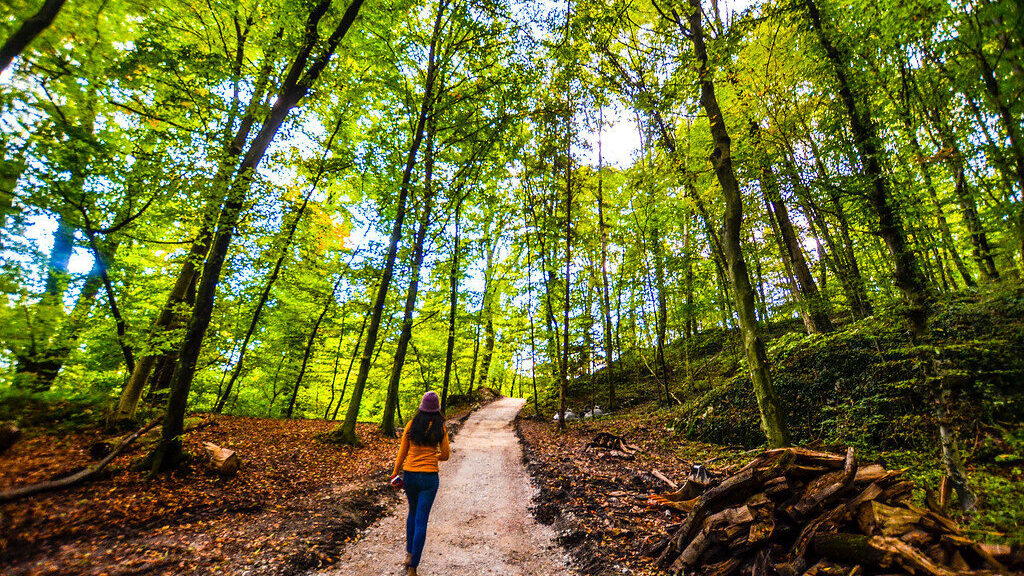
- Flora, Fauna, and Climbing: In addition to dense mixed forest and walking paths, the steep north face features an official via ferrata (the “City Wall”). With a bit of luck, hikers may even spot chamois, which are native to this urban nature reserve.
none
none
none
free




By Car
- No direct vehicle access: As the Kapuzinerberg is a protected recreational and forest area, there are no parking facilities or access roads for private vehicles at the top of the hill.
- Nearby parking: It is best to use the parking garages at the foot of the hill. The closest options are the Linzergasse Garage or the Mirabell Garage. From there, the access points to the Kapuzinerberg are just a short walk away.
By Public Transport
- “Makartplatz” or “Mirabellplatz” stops: Many major trolleybus lines (e.g., 1, 2, 3, 5, 6) stop at these central locations right near the right bank of the Salzach River.
- Walking to the access points: From these stops, it is just a short walk to the famous Linzer Gasse or Steingasse, where the classic ascent routes begin (such as the Imbergstiege or the Kapuzinerberg path at the Franziskuspforte).

