


Project Description
BIG BEN


Key Facts at a Glance
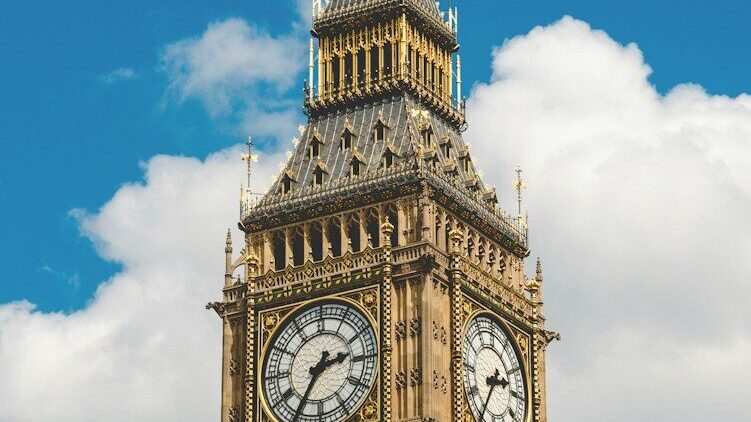
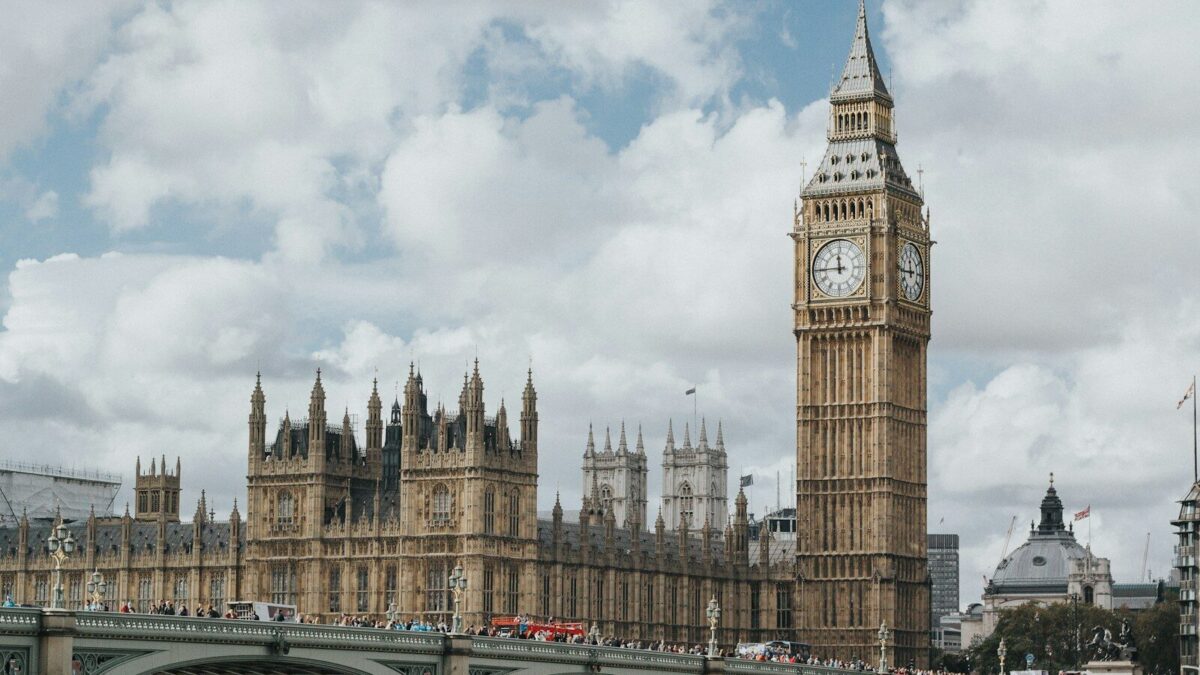
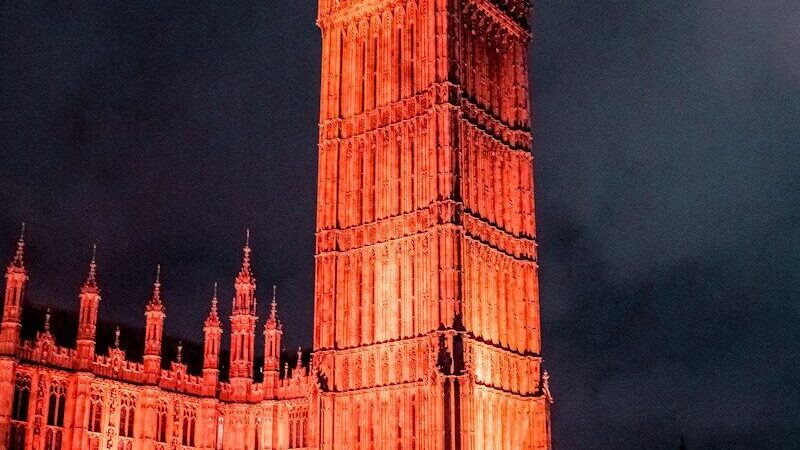
Big Ben is not only London’s most famous landmark but is also recognized worldwide as one of Great Britain’s most iconic architectural symbols. Originally built as the Clock Tower of the Palace of Westminster, the 96-meter-tall tower—officially renamed the Elizabeth Tower in honor of Queen Elizabeth II—stands as a testament to Victorian engineering and British steadfastness. For generations, the world-famous bell inside has defined the character of the British capital with its deep tone and the split-second precision of its clockwork mechanism.
History and Construction
The tower’s history is closely linked to a disaster: in 1834, a devastating fire destroyed most of the historic Palace of Westminster. During the subsequent reconstruction in the Neo-Gothic style—designed by architects Charles Barry and Augustus Pugin—a striking clock tower was intended to serve as a central architectural feature.
- Construction Phase: The foundation stone was laid in 1843, and following various construction and engineering delays, the tower was completed in the 1850s.
- The Name: Contrary to popular belief, the name “Big Ben” originally referred not to the entire tower or the clock itself, but specifically to the largest of the five bells, which weighs approximately 13.5 tons. There are various theories regarding the name’s exact origin; the most widely accepted legend is that it was named after Sir Benjamin Hall, who oversaw the construction project.
- Renovation and Restoration: In recent years, the Elizabeth Tower has undergone an extensive, multi-year restoration.
In the process, the cast-iron clock faces were meticulously cleaned, the historic clockwork mechanisms overhauled, and the handmade glass panels restored, allowing the tower to shine once again in all its glory.
Architecture and Mechanics
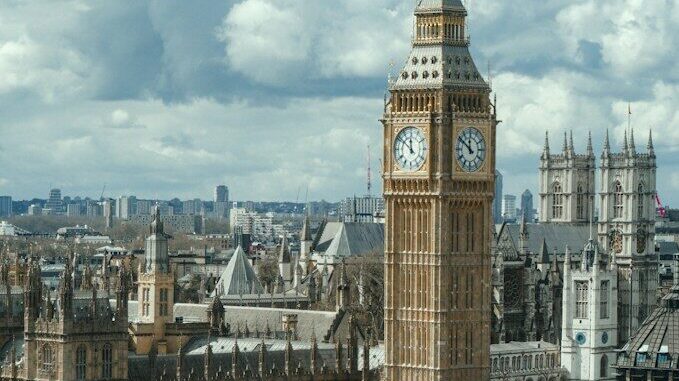
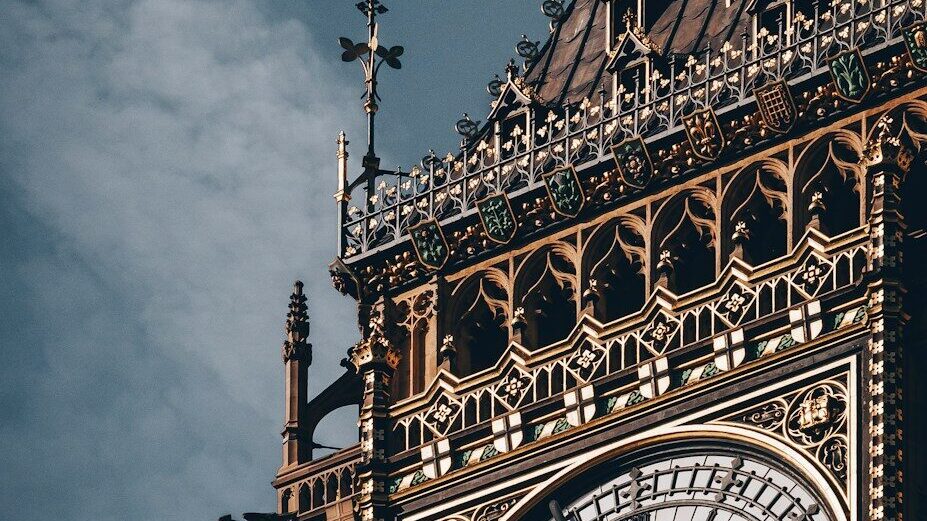
The tower rises in the Neo-Gothic style, blending seamlessly with the architecture of the Houses of Parliament. Its true centerpiece, however, is the monumental clock mechanism (the *Great Clock*), world-renowned for its exceptional reliability and precision.
- The Clock Mechanism: Developed by clockmaker Edward John Dent and astronomer George Biddell Airy, the system features a specialized “double three-legged gravity escapement” mechanism. This ensures that external factors—such as wind pressure on the large hands—have virtually no impact on the clock’s timekeeping accuracy.
- Fine-Tuning: In keeping with tradition, the clock’s accuracy is still fine-tuned using a time-honored method: if the clock runs too fast or too slow, mechanics place old British coins (pennies) on the pendulum to make minute adjustments to the weight and alter the beat rate.
- The Clock Faces: The four clock faces are composed of hundreds of small glass segments set within a cast-iron frame; these are illuminated from behind at night, lighting up the London skyline.
Cultural Significance
Big Ben serves as far more than just a functional tower clock. Its chime sequence—known as the “Westminster Quarters”—has been adopted as a melody by countless other clocks around the world. In modern pop culture, in news formats (particularly as the BBC’s audio signal), and in feature films, the Elizabeth Tower serves as the unmistakable visual calling card for London and the United Kingdom as a whole.
none
Big Ben does not have standard “opening hours” like a typical museum or commercial tourist attraction, as the tower is part of the Palace of Westminster.
Here are the key details regarding visits and tours:
- Restricted access: The interior and the tower are not open to the general public. Visits are possible only through strictly limited official tours.
- Advance booking required: These tours generally need to be booked many months in advance via the official UK Parliament website, as demand is extremely high and the number of available spots is very limited.
- Viewing from the outside: Naturally, the landmark itself can be viewed freely from the outside—for instance, from Westminster Bridge or the banks of the Thames—at any time, day or night.
The following prices apply to official guided tours of the Elizabeth Tower (Big Ben):
- Adults (aged 18 and over): £55.00
- Children and young people (aged 11 to 17): £35.00
Important information regarding tickets:
- Age restriction: For safety and health reasons (the tour involves climbing 334 steps with no elevator access), children under the age of 11 are not permitted to take the tour. Minors must also be accompanied by an adult.
- Free for UK citizens: UK residents have the option to request a free tour through their local Member of Parliament (MP); however, availability is strictly limited.
- Booking: Standard tickets can only be booked via the official UK Parliament website and, due to high demand, are usually fully booked months in advance.




By public transport:
London has an excellent transport network, and traveling directly by public transport is the most stress-free option:
- Underground (Tube): The nearest station is Westminster, served directly by the Jubilee, District, and Circle lines. As soon as you leave the station, you are practically right in front of the Elizabeth Tower. Alternatively, Embankment station is also just a short walk away.
- Bus: Numerous bus routes (including lines 3, 11, 12, 24, 53, 87, 148, 159, and 453) stop in the immediate vicinity of the Houses of Parliament or at Westminster Bridge.
By car:
Driving directly into central London is generally not recommended for tourists:
- Traffic & Parking: Parking around Westminster is subject to extremely strict regulations and high fees, and parking spaces are scarce.
- Tolls: Please note that driving into central London incurs the Congestion Charge and, depending on the vehicle, potentially the ULEZ (Ultra Low Emission Zone) fee for older or higher-emission vehicles.
- If you do travel by car, it is better to use out-of-town Park & Ride facilities or parking garages and switch to the Underground for the final leg of the journey.

